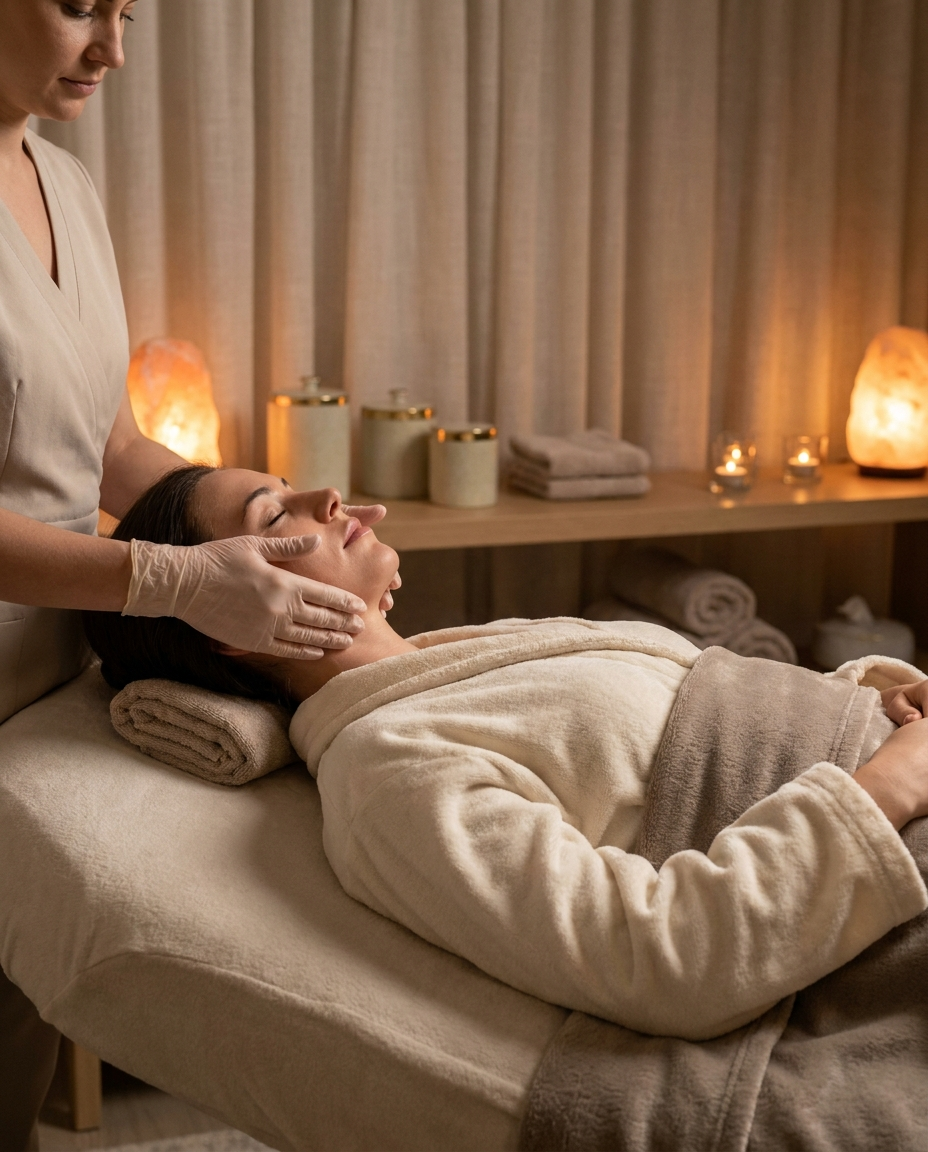
The temporomandibular joint is a small hinge with an outsized influence on wellbeing. When it is under tension — from grinding, from clenching, from the accumulated physical toll of years of dental anxiety and protective jaw-bracing — it radiates its distress outward in ways that can seem entirely unrelated: chronic headaches, ringing in the ears, aching temples, the stiff and tender waking of someone who has been fighting in their sleep. At Serenity Dental Spa, our TMJ massage therapy is delivered by a clinician trained in orofacial physiotherapy and myofascial release, and it addresses the jaw joint and its associated musculature with a specificity and gentleness that general massage simply cannot replicate. If you have been carrying tension in your jaw for so long that you have forgotten it was not always this way, this is where you begin to remember.
Understanding the Jaw and Its Muscles
The temporomandibular joint connects the mandible to the skull just in front of each ear, and it is supported by some of the most powerful muscles in the human body relative to their size — the masseter, the temporalis, the medial and lateral pterygoids. In a resting jaw, these muscles should be completely quiet: tongue resting on the palate, teeth slightly apart, the joint floating easily in its socket. In the jaw of someone who clenches, grinds, or exists in a state of chronic dental anxiety, they are rarely quiet. They are contracted, thickened, trigger-pointed, and frequently so accustomed to tension that they have lost the neurological template for what release actually feels like. Our TMJ therapist's first task is always to re-introduce that template — through touch, through warmth, through patient and deliberate manual work that reminds tissue what it is allowed to do.
Intraoral Work — The Deeper Release
The most impactful element of our TMJ massage protocol is intraoral massage — gentle, gloved work on the medial pterygoid and the internal surfaces of the masseter, accessed from inside the mouth. If this sounds alarming, we understand. We take considerable time to explain precisely what will happen before any intraoral work begins, and we proceed only with your explicit, ongoing consent. The sensation is intense — a kind of deep release-pressure that patients describe as immediately recognisable as therapeutic — and the relief that follows can be extraordinary. Headaches that have been present for months. Clicking that has been constant for years. A tightness in the jaw that has been mistaken for personality. When these structures release, patients often feel an unexpected emotional response: something very much like the relief of finally being heard.
After Your Session
Following a TMJ massage session, we provide guidance on self-care practices that will support and extend the treatment's effects: specific jaw stretches, a daily warm-pack routine, conscious resting-jaw position reminders, and breathing exercises that address the central nervous system's contribution to habitual clenching. For patients who grind at night, we often coordinate TMJ massage with our custom occlusal splint service, which addresses the structural component of the problem while the massage addresses the muscular. Most patients notice meaningful improvement in pain and jaw mobility from the first session; a series of four to six sessions is typically recommended for chronic presentations, with monthly maintenance thereafter. It is, many patients tell us, the treatment they did not know they needed — and the one they would least want to go without.
Your Ritual, Step by Step
- 1 Clinician takes a full history of your jaw pain and daily patterns
- 2 Warm pack applied to masseter and temples to prepare the tissue
- 3 Extraoral massage followed by gentle, consented intraoral work
- 4 Leave with a self-care guide and your first session already working