Architecture That Drinks the Sky
Astral Grid Dynamics dissolves the line between structure and generator. Our building-integrated photovoltaics replace facades, roofs and glazing with surfaces that produce power, turning the entire building envelope into a stellar collector.
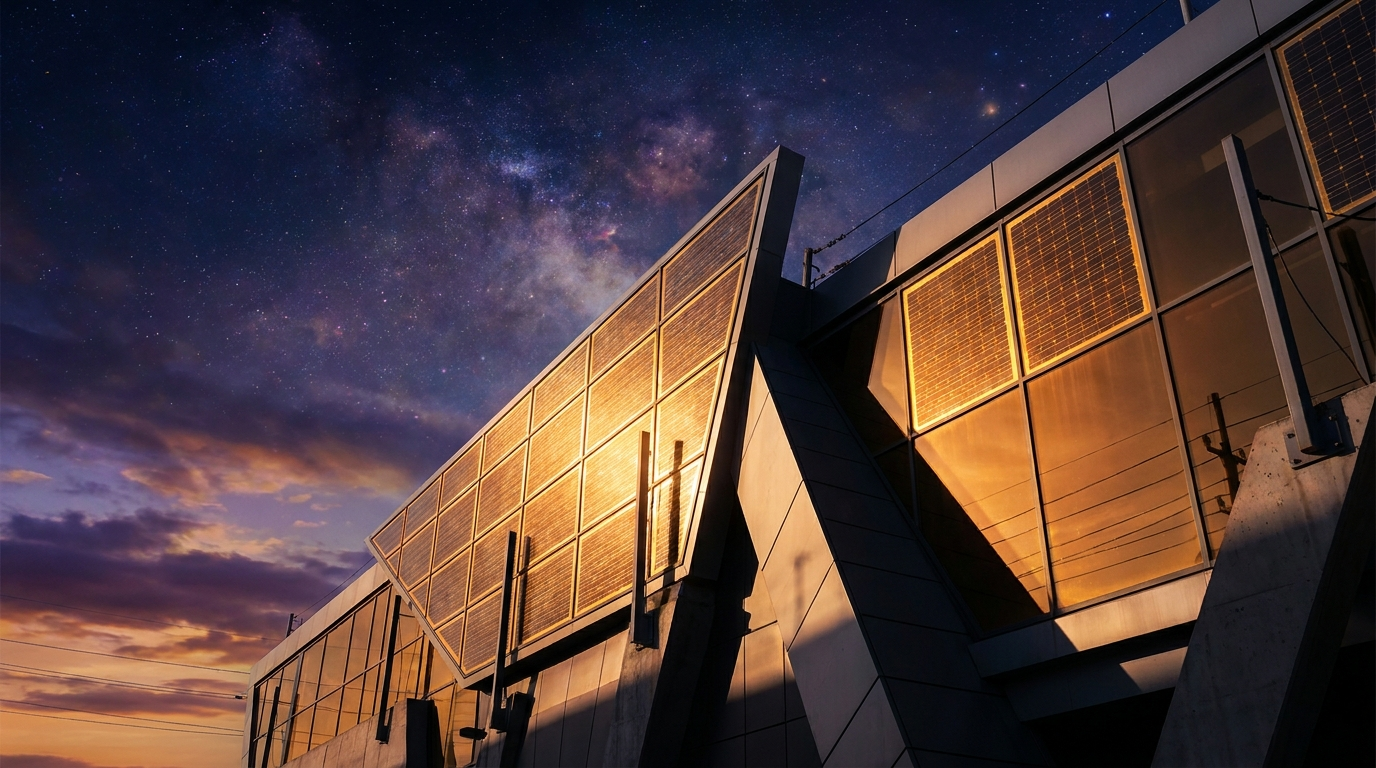
Conventional solar bolts panels onto a finished building. Building-integrated photovoltaics, or BIPV, do something far more ambitious: they make the building itself the power plant. With Astral Grid Dynamics, the very surfaces that keep weather out also pull energy in, so a facade earns its keep twice over as both envelope and generator.
This is solar for those who refuse to choose between performance and beauty. The hardware disappears into the architecture, and what remains is a structure that quietly drinks the sky.
Power woven into the envelope
BIPV technology embeds photovoltaic cells directly into construction materials. Instead of mounting modules above a roof, the roof tiles themselves generate. Instead of cladding a wall and then adding panels, the cladding is the panel. We work across the full palette of integrated products, matching each to the building's form, orientation and aesthetic intent.
- Solar roof tiles and standing-seam metal roof laminates
- Photovoltaic facade cladding and rainscreen systems
- Semi-transparent solar glazing for atria and skylights
- Solar canopies, awnings and balustrade integration
- Custom-coloured modules to match architectural finishes
Engineering for the envelope, not the roof
Integrating generation into the building skin demands disciplines that conventional installers rarely possess. These surfaces must satisfy structural loading, weatherproofing, fire ratings and thermal performance while also producing electricity reliably for decades. Our engineers coordinate with architects and builders from early design, resolving cable routing, ventilation and connection points before a single fixing is set.
Because integrated cells can run warmer than standalone panels, we model thermal behaviour carefully and design airflow paths that protect both output and longevity. Every assembly is detailed to meet Australian building codes and to last the life of the structure.
Yield across every face
A traditional array is confined to a roof, but a building has many faces, and BIPV unlocks them. East and west facades capture the long shoulders of the day, smoothing generation across morning and evening peaks rather than spiking only at noon. Using macro-scale yield forecasting, we model how light falls across every elevation through the seasons, then specify cell placement and density to extract the strongest possible return from the whole envelope.
The outcome is a building that generates a meaningful share of its own demand without a single conventional panel in sight, lifting both its sustainability rating and its asset value. For developers chasing green certifications and for owners who want their architecture to mean something, BIPV transforms the building from an energy consumer into a working collector of raw stellar power.
Building-Integrated Photovoltaics questions
Per square metre, integrated cells can produce slightly less than premium rooftop panels, partly due to higher operating temperatures. However, BIPV activates surfaces that would otherwise be inert, such as facades and glazing, so total building generation often exceeds what a roof alone could deliver.
Some products, such as solar roof tiles, suit re-roofing projects well. Facade and glazing integration is far more effective when planned during new construction or major renovation, since it must coordinate with structural and weatherproofing details. We assess feasibility case by case.
Our integrated systems carry performance warranties up to thirty years and are engineered to match the service life of the building envelope itself. Because the photovoltaics are part of the structure, they are protected and maintained as part of the building rather than as bolt-on equipment.
Ready to deploy building-integrated photovoltaics?
Tell us about your site and we will model the yield, returns and the fastest path to energised.