


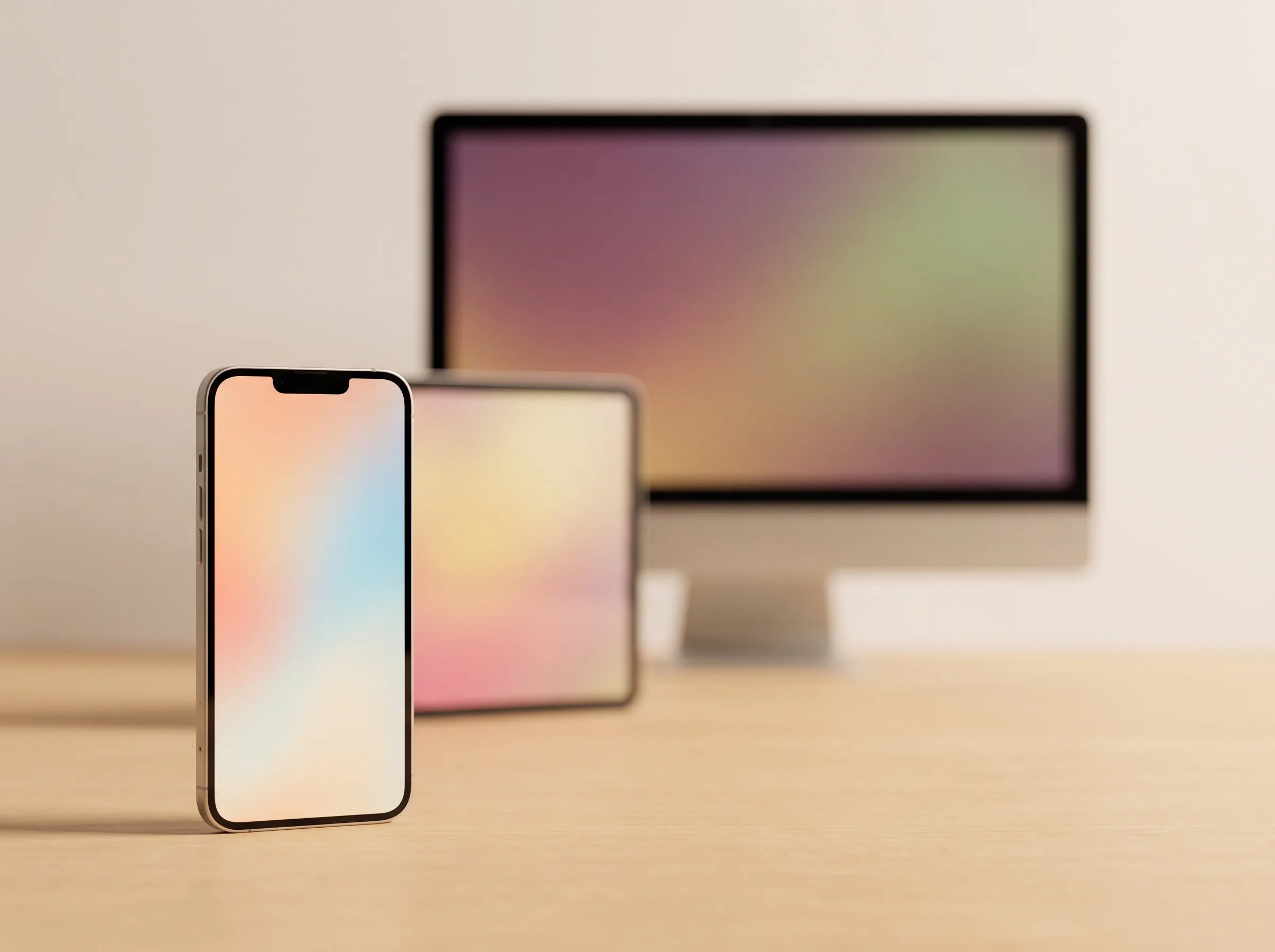


What mobile-first design means
Mobile-first design starts with the phone, not the desktop. We design the small screen first. Then we build up for tablets and larger screens.
This order matters. It forces a focus on your most important content. Anything that does not earn its place gets cut.
The result is a leaner, faster site. It works well on phones. And it still looks great on a big monitor.
Most of your visitors are on mobile, and mobile traffic keeps growing. So it makes sense to design for the smartphone first.
Mobile-first indexing and your SEO
Google uses mobile-first indexing. That means it looks at the mobile version of your site to decide your rankings.
If your mobile site is weak, your rankings can suffer. A strong mobile-first design keeps you on the right side of Google.
Mobile-first design is also naturally faster. It ships less code and fewer heavy elements. Page speed is a ranking factor, so this helps twice over.
Good mobile design lifts engagement too. People stay longer and click more. Those are healthy signals for search.
Key mobile-first design principles
We build every project on a few simple ideas.
Content prioritisation for the small screen
Content prioritisation comes first. On a small screen, space is tight. We show the essential information and actions right away. No clutter, no filler.
Progressive enhancement and breakpoints
Progressive enhancement comes next. We start with a solid mobile base. Then we add richer layouts at wider breakpoints for larger screens.
Touch targets and touch-friendly navigation
Touch-friendly interfaces are a must. Buttons, links, and navigation need room to breathe. We size touch targets and space them for fingers, not tiny cursors.
Flexible layouts and CSS media queries
Flexible layouts hold it together. We use fluid grids, media queries and scalable images. Content reflows cleanly across every screen size, so the mobile UX always feels right. A correct viewport setting keeps it mobile-friendly.
We also design with the network in mind. Many people browse on patchy connections. A light page loads well even on slow mobile data.
Our mobile-first design process
Discovery with a mobile focus
We start by learning your goals and your customers. We work out what mobile users need most from your site.
Mobile wireframes for every smartphone screen size
We sketch the mobile layout first. We plan the content order, the navigation, and the main calls-to-action.
Progressive enhancement for larger screens
Once the mobile design is solid, we scale up. We add extra detail and richer layouts for tablet and desktop.
Page speed tuning
We keep the site fast at every step. We optimise images, trim code, and use caching.
Touch-friendly interfaces
We make every button and form easy to tap. Spacing and size are set for real thumbs.
Responsive design testing on Android and iOS
We test on phones, tablets, and desktops. We check real browsers on both Android and iOS, at real screen sizes.
Responsive web design, mobile UX and user experience benefits
A mobile-first website feels fast and simple to use. Good usability lowers bounce rates and lifts conversions.
This approach pairs naturally with responsive design and responsive web design principles. It also aligns with mobile-first indexing, which supports your search visibility. And it adapts well as new devices appear.
There is an accessibility bonus too. A focus on clear, core content often makes a site easier for everyone to use.
Why choose 7Arx for mobile-first design
We design with mobile-first indexing in mind from day one. That supports both your rankings and your users.
We keep the mobile experience fast, clear, and engaging. Our developers write clean code that works across every breakpoint.
A mobile-first site is a smart long-term choice. It adapts to new screens and keeps serving your Brisbane customers wherever they are.