Guiding young smiles from the start
Phase 1 treatment uses early intervention to guide jaw growth and tooth development in children, often making later orthodontic treatment simpler and more predictable.
Phase 1, or early interceptive orthodontics, focuses on guiding the growth and development of a child's jaws and emerging teeth while they are still growing. By acting at the right developmental window, we can address issues such as crowding, crossbites and jaw imbalances early, often reducing the complexity of any treatment needed later in the teenage years. Working with a child's natural growth, rather than against a fully formed adult bite, lets us achieve changes — particularly to jaw width and shape — that become far harder to influence once growth has finished.
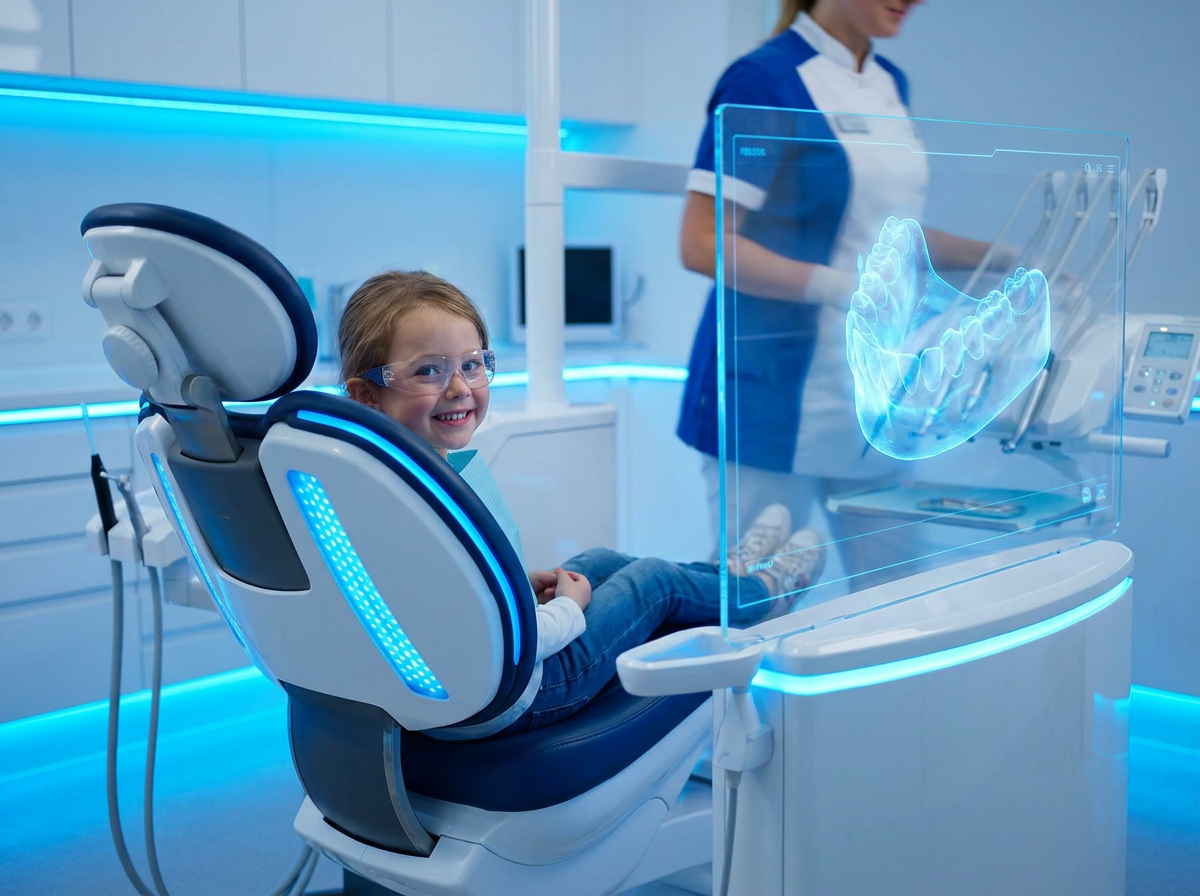
Australian orthodontic guidance suggests children have their first orthodontic assessment around age seven. At this age the mix of baby and adult teeth gives our orthodontists valuable insight into how the bite is developing. At AlignTech we use a gentle, child-friendly digital scan to build a 3D model of your child's teeth and jaws, giving us a clear, low-stress way to assess growth without uncomfortable impressions. The scan takes only a few minutes, feels like having photos taken, and gives us a permanent baseline we can measure all future development against.
What Phase 1 can achieve
Early treatment is not about straightening every tooth — it is about creating the right conditions for healthy development. Depending on the case, Phase 1 might create space for adult teeth, correct a crossbite, guide jaw width, or address habits that affect the bite. Our digital records let us monitor change precisely over time and intervene only when it genuinely benefits your child. Catching a developing crossbite or severe crowding early can prevent uneven wear, reduce the chance of extractions later, and make any future Phase 2 treatment shorter and more straightforward.
- Recommended first assessment around age seven
- Gentle, child-friendly 3D scanning — no messy moulds
- Guides jaw growth and creates space for adult teeth
- Can simplify or shorten future Phase 2 treatment
- Precise digital monitoring of your child's development
A measured, monitored approach
Not every child needs early treatment, and we will never recommend appliances your child does not need. For many young patients the right course is active monitoring — periodic reviews where we compare new scans against earlier records to track how the bite is developing. This data-led approach means we step in at exactly the right moment, and not before. By overlaying successive scans we can see subtle changes long before they are visible to the eye, which takes the guesswork out of deciding whether and when to begin treatment.
Supporting your child through treatment
When Phase 1 treatment is recommended, we keep it simple, comfortable and easy to understand for both child and parent. We explain each appliance, show your child their own 3D model, and set clear expectations about the path ahead. Our goal is a positive early experience that builds lifelong confidence about caring for their smile. Letting children see their own teeth on screen turns an unfamiliar visit into something genuinely interesting, and a relaxed first experience makes any future orthodontic care far easier for the whole family.
If your child is approaching seven, or you have noticed crowding, an unusual bite or thumb-sucking habits, an early assessment is a smart, low-pressure first step. Book a gentle screening and we will give you clear, honest advice about whether early treatment is worthwhile. If monitoring is all that is needed for now, we will tell you that plainly and set a sensible schedule for keeping an eye on things.
Phase 1 (Early) Orthodontics questions
We recommend a first orthodontic assessment around age seven, when the developing mix of teeth reveals how the bite is forming.
Not always. Phase 1 guides development and can simplify or shorten later treatment, but some children still benefit from a second phase in their teens.
Not at all. We use a gentle digital scan instead of moulds and keep the visit relaxed and child-friendly, explaining everything in simple terms.
Ready to start this treatment?
Book a free 3D scan and we'll build your personalised plan — then show you the predicted result before you commit.