No bone? We build the foundation
When a tooth has been missing for years, the bone beneath it fades away. Bone grafting rebuilds that foundation — so patients once told 'you don't have enough bone for implants' can finally hear yes.
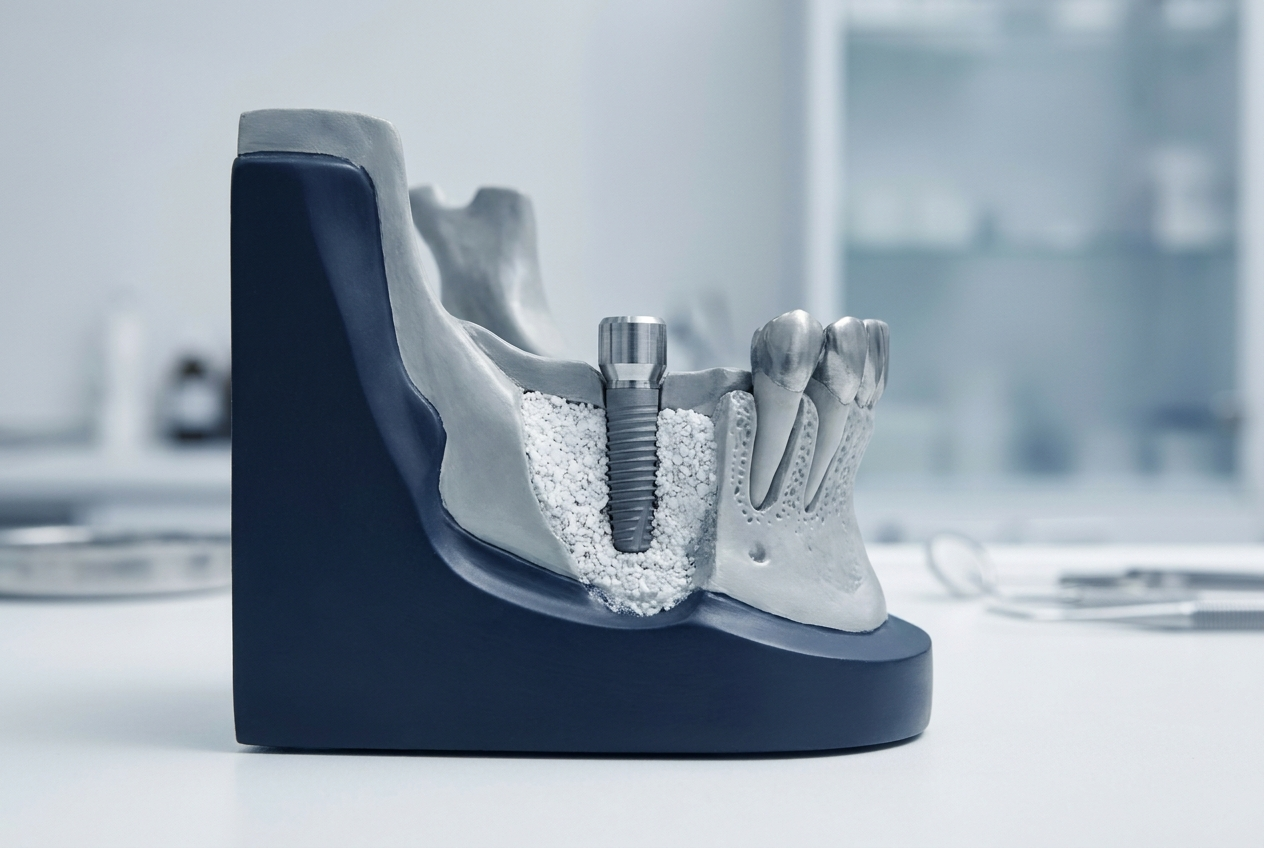
Here is something most people are never told: the moment a tooth is lost, the bone that held it begins to disappear. With no root to stimulate it, the jaw slowly resorbs, and after a few years there may not be enough bone left to anchor an implant. It's why so many people are turned away with the disheartening words, 'you don't have enough bone.' At Foundation, that sentence is rarely the end of the story — it's the beginning of one.
Bone grafting rebuilds the foundation an implant needs. We place graft material into the deficient area, where it acts as a scaffold that your own body fills in with new, living bone over the following months. It's a remarkably reliable, routine procedure, and it has allowed countless patients who were told implants were impossible to go on to receive them comfortably and successfully.
When grafting makes implants possible
- Teeth missing for years, with bone that has shrunk away
- Bone loss from gum disease or a previous extraction
- Preserving the socket immediately after a tooth is removed
- Widening or building up a thin or shallow ridge
- Creating a strong, lasting base for predictable implants
Grafting at the moment of extraction
Prevention is always easier than reconstruction, which is why we often place a graft at the very moment a tooth is removed. This socket preservation fills the space before the bone has a chance to collapse, keeping the ridge full and ready for a future implant. If you're facing an extraction, asking about grafting on the same day can save you a more involved procedure later — and it's one of the smartest things you can do for your future smile.
A path back from 'impossible'
We've welcomed many patients who'd given up on implants after being told they weren't a candidate. With modern grafting techniques and careful 3D planning, severely resorbed jaws can be rebuilt into a solid base for fixed teeth. Yes, it adds a stage to treatment and some healing time — but the destination is a permanent, natural-feeling smile that simply wasn't on the table before. For most, that trade is more than worth it.
Patience that pays off
Grafting does ask something of you: time. New bone forms gradually, and rushing it would undermine the very foundation we're trying to build, so we let your body do its work at its own pace before placing the implant. We know the wait can feel like a detour, but it is the difference between an implant that simply holds and one that thrives for decades. Throughout the healing months you're never left wondering — we monitor progress, keep you comfortable, and tell you clearly when the bone is ready. For patients who had been written off elsewhere, that short investment of time transforms an outright 'no' into a confident, lasting 'yes,' and keeps a repairable smile from being lost for good.
If you've been told there isn't enough bone, let us take a proper look. Book a consultation and we'll show you whether grafting can open the door to implants.
Bone Grafting for Implants — your questions
Most patients find graft procedures far more comfortable than they expect, similar to an extraction. They're done under local anaesthetic and any soreness is typically managed with simple pain relief.
Healing usually takes a few months while your body converts the graft into solid bone. Smaller grafts can sometimes be done at the same time as implant placement — we'll advise based on your scan.
There are several safe, well-proven options, including processed graft materials that your body remodels into your own bone. We'll explain the choices and recommend the best one for your case.
Take the first step toward your new smile
Book a consultation with our implant specialists and see a personalised 3D plan for your treatment — honest advice, fixed pricing, lasting results.