
Save the implant before it's lost
Sore, bleeding or loose gums around an implant are warning signs you shouldn't ignore. Peri-implantitis can destroy the bone holding your implant — but caught in time, it can very often be treated and reversed.
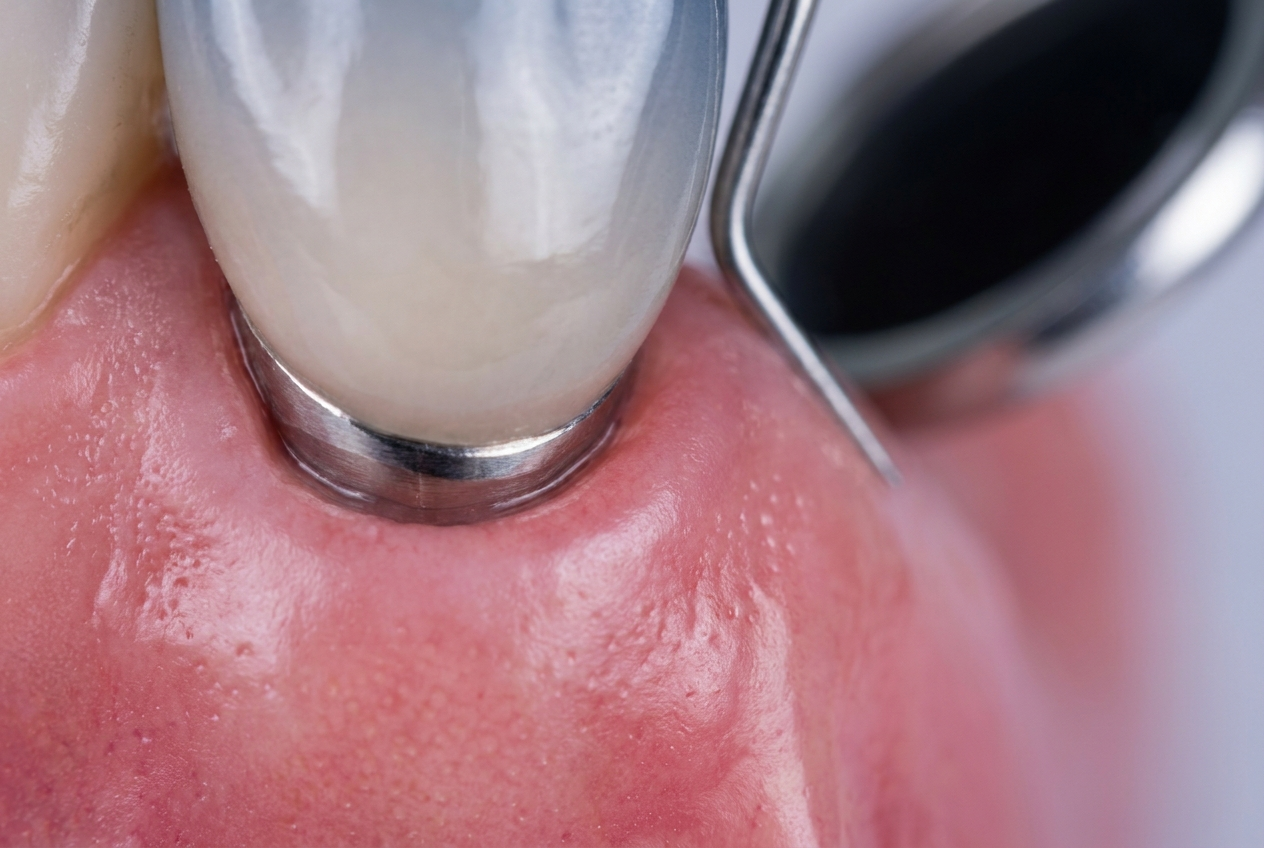
Implants are remarkably reliable, but they are not immune to disease. Peri-implantitis is an infection of the gum and bone surrounding an implant — the implant equivalent of gum disease — and it works quietly. Bleeding gums, tenderness, a change in how the implant feels, or a gum that looks puffy or recedes around the crown can all be early signals. Left unchecked, it dissolves the bone anchoring the implant and can ultimately cause it to fail. Caught early, it can very often be stopped and reversed.
The most important thing we can tell you is this: don't wait and hope. Peri-implantitis is usually painless in its early stages, which is exactly why people ignore it until the implant is loose — and by then options narrow. If something around your implant doesn't feel right, an early assessment is the difference between a simple, conservative treatment and the loss of the implant entirely.
Warning signs to take seriously
- Gums that bleed when you brush around the implant
- Redness, swelling or tenderness near an implant crown
- Gum recession exposing the metal collar or threads
- A bad taste, odour or discharge around the implant
- Any sense of looseness or change in the implant
How we treat an ailing implant
Our approach is staged and precise. We start by measuring the extent of bone loss with 3D imaging, then thoroughly decontaminate the implant surface to remove the bacteria driving the infection — using techniques designed specifically for implant surfaces. Where bone has been lost, regenerative grafting can often rebuild support around the implant. The earlier we intervene, the more conservative and successful the treatment, which is why prompt action matters so much.
Then we keep it from coming back
Treating the infection is only half the job; preventing its return is the other. We'll identify what allowed peri-implantitis to take hold — cleaning technique, bite forces, gum health, smoking or skipped maintenance — and address the root cause. You'll leave with a clear care plan and a closer maintenance schedule, so the implant we've worked hard to save stays healthy for the long term. Many implants we treat go on to serve faithfully for years more.
Prevention is the real cure
The best outcome with peri-implantitis is the case we never have to treat aggressively — and that's almost always achievable with vigilance. Most implants that run into trouble do so quietly, over months, while the warning signs go unnoticed or unmentioned. Regular professional monitoring catches the earliest inflammation long before bone is lost, when a simple clean and an adjusted routine are all that's needed. That's why, once we've stabilised an ailing implant, we focus just as hard on keeping it well: a tailored home-care plan, a closer recall schedule, and honest conversations about contributing factors like smoking or grinding. Treating the infection saves the implant today; building the right habits and check-ups around it is what keeps it healthy for the long run.
If something feels off around an implant, don't gamble on it settling. Book an assessment quickly — early action saves implants.
Peri-Implantitis Treatment — your questions
Often, yes — especially when treated early. The key factor is how much bone has been lost. The sooner we assess and decontaminate the implant, the better the chance of a full recovery.
Treatment is carried out under local anaesthetic and most patients find it very manageable. We'll keep you comfortable throughout and guide you carefully through aftercare.
By addressing the underlying cause and committing to specialist maintenance. We'll tailor a home-care routine and recall schedule to keep the tissues around your implant healthy for good.
Take the first step toward your new smile
Book a consultation with our implant specialists and see a personalised 3D plan for your treatment — honest advice, fixed pricing, lasting results.