Building-Integrated PV
Architecture that generates power
Building-Integrated Photovoltaics replace conventional materials with surfaces that generate electricity — solar roofs, façades and glazing that look intentional, not bolted-on. Clean power, beautifully built in.
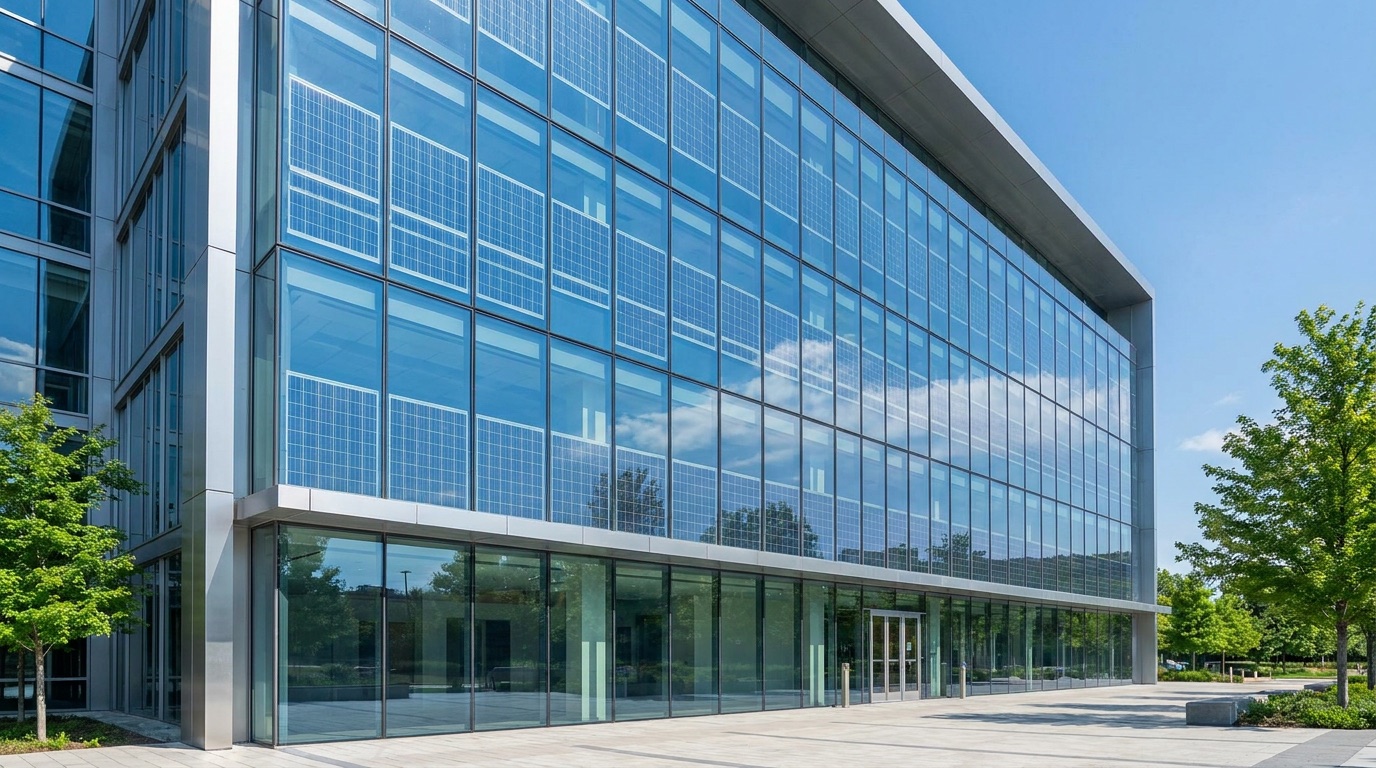
There’s a quiet revolution in how buildings make power. For decades, solar meant racking conventional panels on top of a finished roof — effective, but always an addition, always something sitting on top of the architecture rather than part of it. Building-Integrated Photovoltaics flip that thinking. Here the solar isn’t bolted on; it is the building. The roof tiles, the façade cladding, the glass in the curtain wall — these surfaces generate electricity while doing the structural and aesthetic job they were always there to do.
That’s a powerful idea for anyone who wants real energy independence without compromise. A BIPV envelope earns its keep twice: once as architecture and once as a power plant. You stop paying for two separate things — a weatherproof skin and a solar system — and buy a single integrated surface that shelters you and feeds you at the same time. It looks intentional because it is, and it owns its own power from the ground up. For a home or building meant to stand for generations, that kind of self-sufficiency is built into the bones, not strapped to the outside.
Solar that is the building
Conventional panels announce themselves. BIPV disappears into the design. Solar shingles read as a clean, continuous roof. Photovoltaic façade panels carry the same lines and finish as the rest of the elevation. Solar glazing lets daylight through while harvesting the rest. The result is a building that generates serious power without ever looking like a science project bolted to the rafters — independence that’s built in, not strapped on. You get the rugged, self-reliant payoff of making your own electricity, with none of the visual compromise that keeps some owners from going solar at all. It rewrites the trade-off most people think they have to make — a roof that looks right or a roof that makes power — by refusing to pick, because the generating surface is the finish itself and there’s nothing bolted across your best elevation as an afterthought.
Where it works
- Solar roofs and shingles that replace tile or metal while generating power
- Photovoltaic façade and cladding panels integrated into the building envelope
- Semi-transparent solar glazing for windows, skylights and atriums
- Carports, awnings and canopies that shade and power in one structure
- Balcony railings and spandrel panels that turn unused vertical area into generation
- New builds and major façade retrofits where the skin is already being replaced
A long-term, built-in payback
Because BIPV doubles as building material, the economics are sharper than they first appear. You offset the cost of the roofing, cladding or glazing you were going to buy anyway, then let the surface generate power for the lifetime of the structure. Over twenty-five years and beyond, an integrated envelope quietly pays itself down through the energy it makes — turning a one-time construction cost into a decades-long source of your own electricity. The grid keeps sending bills; an integrated envelope keeps sending power, year after year, long after the construction loan is forgotten.
If you’re planning a build, a façade upgrade or a new roof, that’s the moment to make every surface count — before the materials are ordered and the design is locked. Book a consult with our integrated-PV designers and we’ll show you how to turn your architecture into a power plant you own outright, generating clean energy quietly for as long as the building stands.
Common questions
How is BIPV different from regular solar panels?
Standard panels mount on top of an existing roof. BIPV replaces the building material itself — the roof, façade or glazing generates power while serving its structural and weatherproofing job, so the solar is built in rather than added on afterward.
Does building-integrated solar produce as much power?
Per square foot, BIPV is often slightly less efficient than premium rack-mounted panels, but it covers far more of the envelope and offsets the material it replaces, so total generation and value over the building’s life are very competitive.
When is the best time to install BIPV?
During a new build or a major roof or façade replacement, when the envelope is already being constructed. Integrating solar at that stage offsets material costs you’d pay anyway and avoids the expense of a separate add-on system later.
Keep exploring
The paradigm shift
Ready to own your own power?
Book a free assessment and we'll design a rugged solar, storage or off-grid system around your home, your loads and your appetite for independence.