Utility-Scale Farms
Solar farms, built to last
From greenfield site assessment to the last torque check, we develop and build utility-scale solar farms that deliver decades of clean megawatts and a dependable return on every acre.
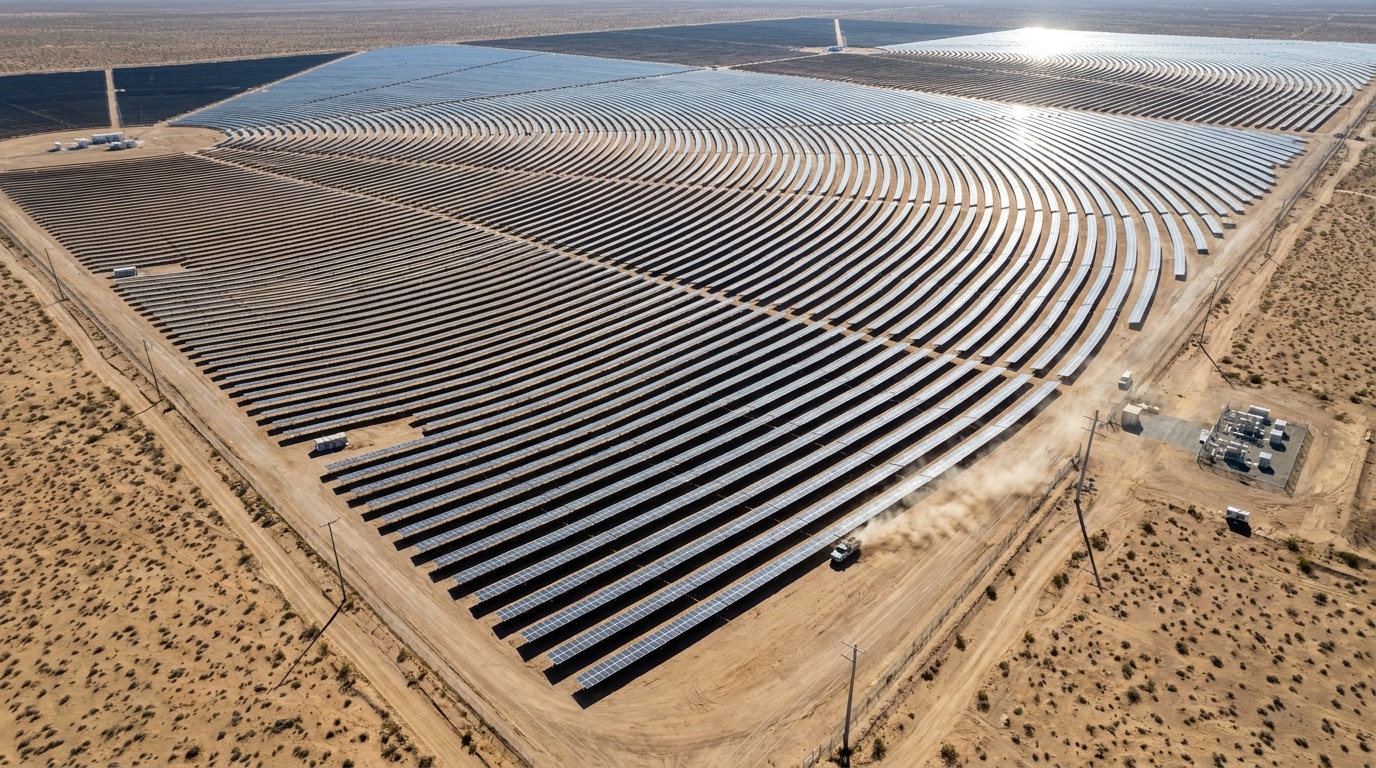
A solar farm is the long game played at scale — raw land turned into a steady stream of clean megawatts for a quarter century or more. We develop and build utility-scale projects from the ground up, starting where it matters most: the dirt. Soil studies, sun angles, grid proximity, and interconnection capacity all get assessed before a single pile goes in the ground, because a farm that pencils out on paper but not on site is no farm at all.
This is heavy infrastructure, and we treat it that way. Every farm we build is engineered to survive decades of weather, settle reliably into its terrain, and deliver dependable output that holds its value through the life of the offtake. The goal is simple and durable: turn idle acreage into an asset that produces power, revenue, and genuine energy independence for the region it serves — year after year, without drama.
From greenfield to grid
We own the full arc of development so you are not stitching together a dozen vendors. Site control, feasibility, environmental review, engineering, procurement, construction, and interconnection all run under one disciplined roof. That continuity is what keeps a multi-megawatt project on schedule and on budget, and it is what lets us hand over a farm that is built right the first time and ready to produce from commissioning day.
What goes into a farm that lasts
- Rigorous site assessment covering soil, topography, solar resource, and grid access
- Single-axis tracking to chase the sun and squeeze more yield from every panel
- Heavy-duty pile foundations and racking engineered for decades of wind and weather
- Full interconnection management, from study through energization with the utility
- Built-in O&M planning so the farm runs reliably long after construction wraps
- Storage integration to firm up output and capture value when the grid needs it
Built to survive the decades
A solar farm has to stand in the open and take everything the climate throws at it for 25 years and more. We engineer for that reality from the foundations up. Pile depth and racking are spec'd to the site's soil and wind loads, not a generic template. Tracker rows are laid out to shed snow, drain water, and minimize self-shading across the seasons. Cabling is buried and rated for the long haul. The result is a farm that holds its output curve year after year instead of degrading into an underperforming liability.
Long-term performance also depends on what happens after the ribbon-cutting. We build operations and maintenance planning into the design — accessible service roads, remote monitoring down to the string level, and a maintenance regime that catches a failing inverter or a dirty array before it eats into production. A farm that is easy to inspect and quick to repair is a farm that keeps its promises to the offtaker, the lender, and the landowner for the full life of the project.
A dependable return on every acre
Utility-scale solar is one of the most predictable long-horizon assets there is. Once a farm is energized, the fuel is free, the maintenance is modest, and the output is steady and forecastable across decades. That stability is exactly what makes these projects bankable — a clean, durable return on land that would otherwise sit idle, powering thousands of homes and businesses while it quietly earns its keep season after season.
Have land or a project pipeline you want to put to work? Book a feasibility conversation with our utility team and we will tell you straight whether the dirt, the sun, and the grid line up — and what it would take to build something that lasts.
Common questions
How much land does a utility-scale farm need?
As a rough rule, expect five to eight acres per megawatt, depending on terrain, tracking, and spacing. We confirm exact requirements during site assessment, accounting for setbacks, grading, and the layout that maximizes yield on your specific parcel.
What is the typical development timeline?
Utility-scale projects generally run two to four years from site control to energization. Interconnection studies and permitting drive most of that timeline. We manage every stage so the project keeps advancing instead of stalling between agencies.
Who handles the grid interconnection?
We do. Interconnection is one of the trickiest parts of any farm, so we manage the full process — application, system impact studies, and utility coordination — through to energization, keeping the project moving rather than leaving you to navigate it alone.
The paradigm shift
Ready to own your own power?
Book a free assessment and we'll design a rugged solar, storage or off-grid system around your home, your loads and your appetite for independence.