
Braking that gives energy back
EVs brake in two ways at once — recovering energy with the motor and using friction only when needed. We service and calibrate the blend so it feels seamless and stays safe.
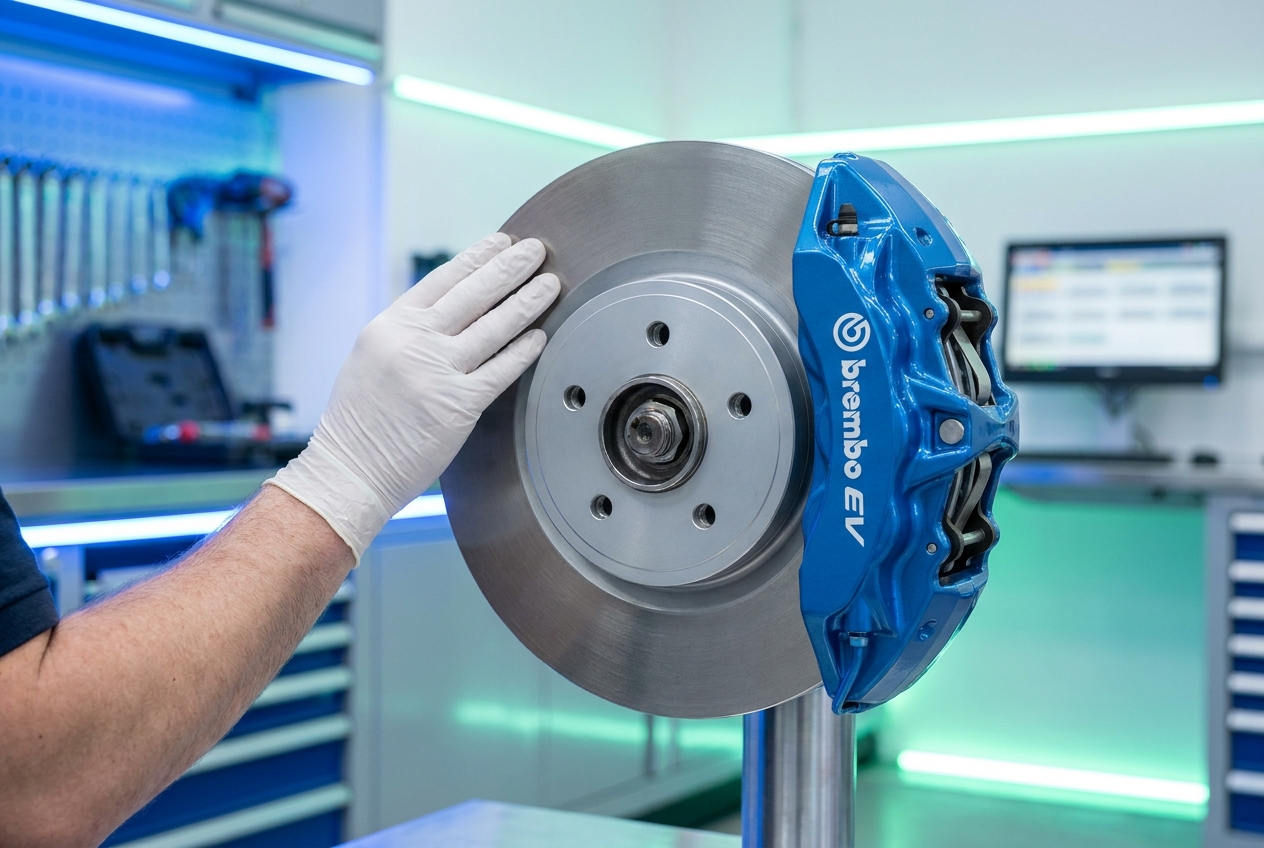
Braking in an electric vehicle is cleverer than most owners realise. When you lift off or press the pedal, the car first uses its electric motor as a generator, turning your momentum back into electricity and feeding it to the battery — that is regenerative braking, and it is why an EV can recover range every time you slow down. The traditional friction brakes only step in when extra stopping force is needed. Blending these two systems smoothly and safely is a delicate piece of engineering, and it needs proper care to keep working as it should.
Because regenerative braking does so much of the work, the friction brakes on an EV are used far less than on a combustion car — which sounds like good news, and largely is, but it creates its own problems. Brake components that are rarely used can seize, corrode and lose effectiveness precisely because they sit idle. So an EV brake service is not just about wear; it is about ensuring the friction system is still healthy and ready for the moments regen alone cannot handle, and that the handoff between the two feels natural under the pedal.
What our brake service covers
- Inspection of pads, rotors, calipers and slides for corrosion and seizing
- Verification of regenerative braking performance and energy recovery
- Calibration of the blend between regen and friction braking
- Brake fluid testing and replacement
- One-pedal driving setup and feel adjustment
- Diagnosis of warning lights and pedal-feel complaints
Less wear, different care
It is true that EV brake pads and rotors often last dramatically longer than on a petrol car, thanks to regen doing most of the slowing. But longevity brings a catch: lightly used brakes are prone to surface rust and sticking calipers, especially in damp climates. A proper EV brake service cleans, frees and lubricates these components so they are not just unworn but genuinely ready to perform. Ignoring them because 'EV brakes last forever' is how a rarely-used system quietly becomes an unsafe one.
Get the feel right
Much of what owners describe as a 'brake problem' on an EV is really a feel or calibration issue — a grabby transition from regen to friction, inconsistent one-pedal behaviour, or a pedal that feels different from one drive to the next. These traits are governed by software and sensor calibration, and we can read, test and adjust them so the car behaves predictably every time. Safe, smooth, confidence-inspiring braking is the goal, and on an EV that means treating the electronic and mechanical sides as one system.
If your EV's braking feels grabby, inconsistent or just not right, book a brake inspection and we will service both halves of the system and dial the feel back in.
Regenerative Braking Service questions
Generally yes, because regenerative braking handles much of the slowing. But the lightly-used friction brakes still need servicing to prevent corrosion and seizing.
That is usually the blend between regenerative and friction braking, which is software-controlled. We can test and recalibrate it for a smooth, predictable feel.
Yes. Brake fluid absorbs moisture over time regardless of how often the brakes are used, so periodic replacement remains important for safety.
Let's read your EV the right way
Honest, data-backed diagnostics and precise repairs from a high-voltage certified team — book with The EV Tech Center today.