Community Solar for Renters and Shaded Roofs
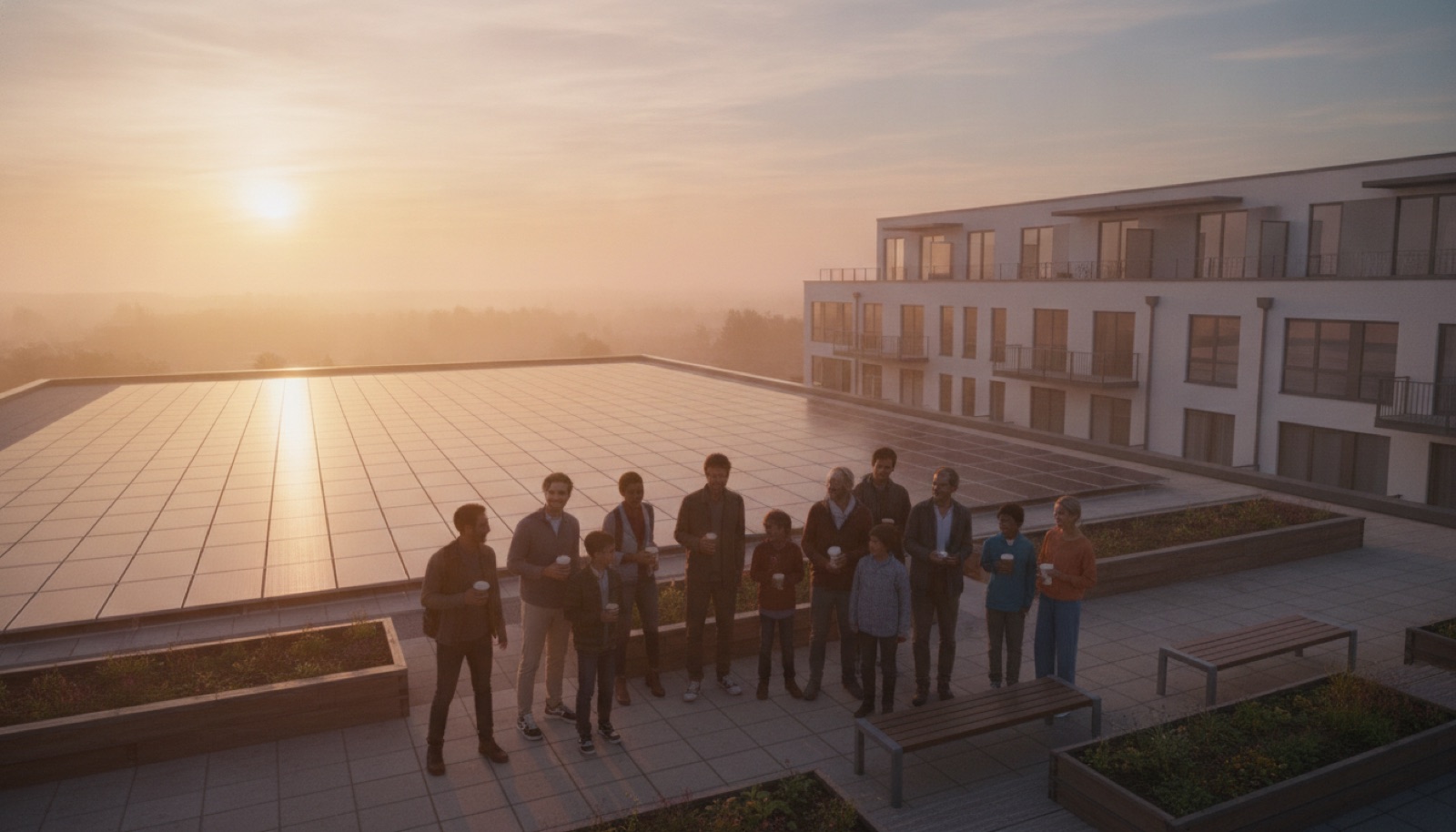
Rooftop solar has been a quiet revolution for homeowners, but for years it left millions of people on the sidelines. Renters cannot bolt panels to a roof they do not own. Apartment dwellers share a single roof among dozens of households. And plenty of homes sit under tall trees or in the shadow of taller buildings. Community solar changes all of that, opening the sunlit grid to everyone.
What is a community solar garden?
A community solar garden is a shared solar array, often built on a large warehouse roof, a council building or a patch of unused land, that many households subscribe to or buy a stake in. Instead of generating power on your own roof, you own or subscribe to a slice of a bigger system somewhere nearby. The energy it produces is credited to your electricity account, so you see the benefit on your bill without a single panel of your own.
It is solar without the rooftop. The garden is professionally sited for maximum sun, maintained by the operator, and shared fairly among members. Your share follows you in spirit even if your roof never sees a panel.
Why it works for renters and shaded homes
Community solar solves the exact problems that block traditional rooftop systems. You do not need to own your home, modify a roof or win a landlord's approval. You do not need a sunny, north-facing roof, because the garden's location does the work. And because many models are subscription based, you can join with little or no upfront cost and often leave or transfer your subscription if you move.
- Renters: access solar savings without touching the property
- Apartments: share clean energy beyond a single contested roof
- Shaded homes: rely on the garden's sunny location instead
- Movers: keep or transfer your subscription when you relocate
Joining the network
Getting started is usually straightforward. You choose a share or subscription size that matches your household's energy use, link it to your electricity account, and watch credits appear on your bills as the garden generates. Some gardens also feed into virtual power plants, so the community can support the grid together and share in those rewards too. The more neighbours who join, the stronger and more affordable the garden becomes.
Community solar is, at heart, a generous idea. It says that clean, affordable energy should not depend on owning the right roof in the right spot. It invites renters, apartment residents and shaded households into the same sunlit future as everyone else. At Helios Horizon we believe energy is something a community builds together, and a solar garden is one of the most beautiful expressions of that belief, a shared field of panels turning everyone's sunshine into everyone's savings.
Keep reading

How Virtual Power Plants Turn Neighbourhoods Into Power Stations
A virtual power plant links thousands of home batteries into one coordinated network that supports the grid and rewards the people who power it.
Is Home Solar Still Worth It in 2026?
Feed-in tariffs have softened, but self-consumption, batteries and smarter habits make rooftop solar more rewarding than ever in 2026.
Choosing the Right Home Battery: A Plain-English Guide
Sizing, chemistry, backup versus savings and VPP readiness, explained simply so you can choose a battery that fits your home and your goals.
Ready to join the horizon?
Let's design a clean-energy system that powers your place and strengthens the whole network around it.