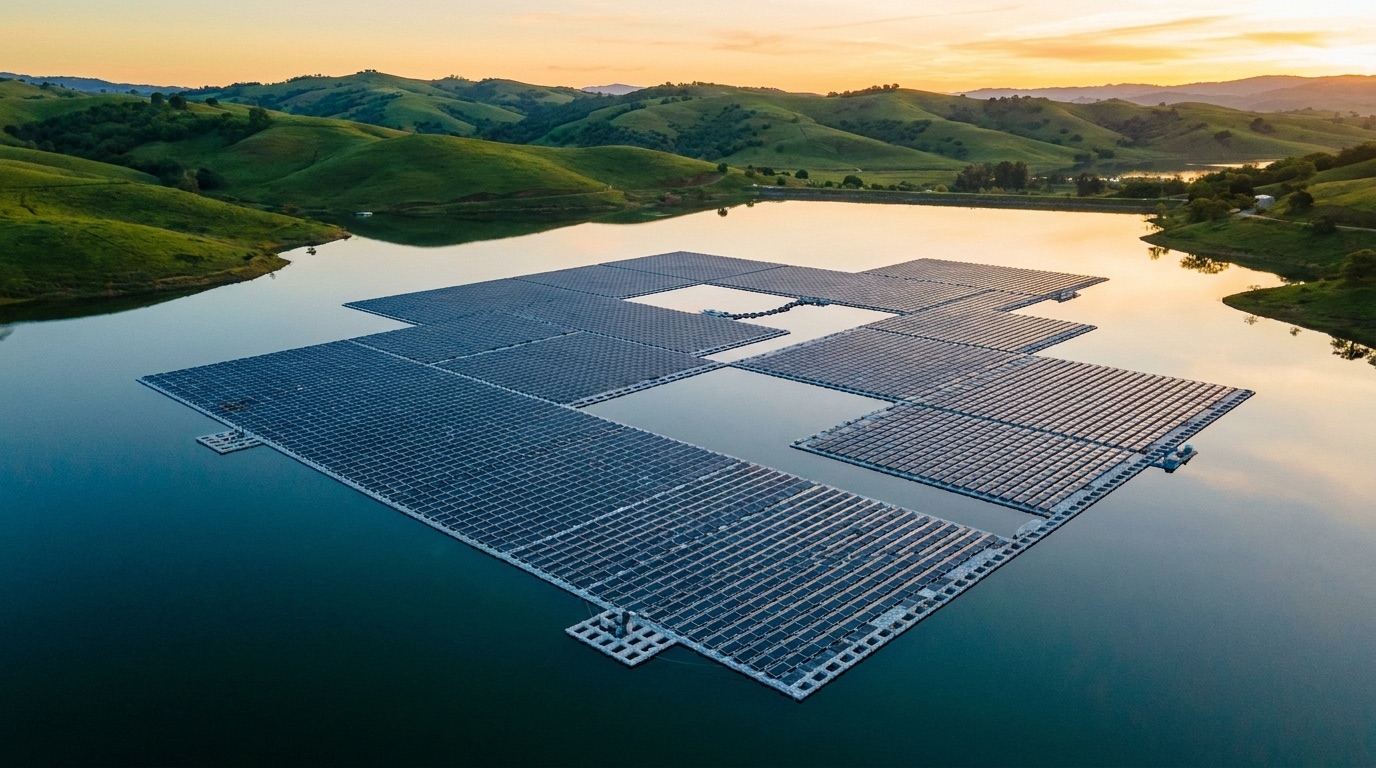
Where land is scarce or precious, water becomes the resource. PrismFlow engineers floating solar systems that turn reservoirs, irrigation dams, quarry lakes, and industrial ponds into productive power assets, capturing sunlight on surfaces that would otherwise sit idle while delivering a second dividend in water conservation.
The cooling advantage of water
Photovoltaic modules lose efficiency as they heat up. Mounted just above a water surface, floating arrays run noticeably cooler, lifting yield by around 11% over equivalent land-based systems. The reflective, unshaded expanse of open water also means clean, consistent irradiance with minimal obstruction.
At the same time, the array shades the water, suppressing evaporation by up to 70% and curbing algal blooms, a meaningful benefit for utilities and farms managing scarce supply.
Smart infrastructure that floats
Our HDPE pontoon platforms are engineered for decades of UV and wave exposure, with mooring systems designed for fluctuating water levels and wind loads. Marine-grade cabling and monitoring track each string, while remote sensors flag drift, fouling, or anchor tension before they become problems.
- HDPE pontoons rated for 25-plus years of exposure
- Dynamic mooring for changing water levels
- Cooling-driven yield gains over land arrays
- Up to 70% evaporation suppression
- Co-location with hydropower for shared grid connection
Seamless integration with existing assets
Floating solar pairs naturally with hydropower dams, sharing transmission infrastructure and balancing seasonal flows, sun by day and water-stored energy on demand. For water utilities and agribusiness, it adds generation revenue without consuming an acre of usable land. Our team handles bathymetric survey, anchoring design, and grid connection end to end.
If you manage a reservoir or process pond, let us model what its surface could produce.
Frequently asked questions
Why is floating solar more efficient?
The cooling effect of the water beneath the modules keeps them at lower operating temperatures, typically lifting yield by around 11% compared with land-based arrays.
Does it harm the water body?
On the contrary. The array reduces evaporation and limits light-driven algal growth, while our designs preserve oxygenation and aquatic health.
What water bodies are suitable?
Reservoirs, irrigation dams, quarry lakes, tailings ponds, and hydropower catchments are all strong candidates, subject to a bathymetric and wind survey.
How is it anchored?
We use dynamic mooring systems engineered for your site's depth, water-level variation, and wind loads, keeping the platform stable through seasonal change.