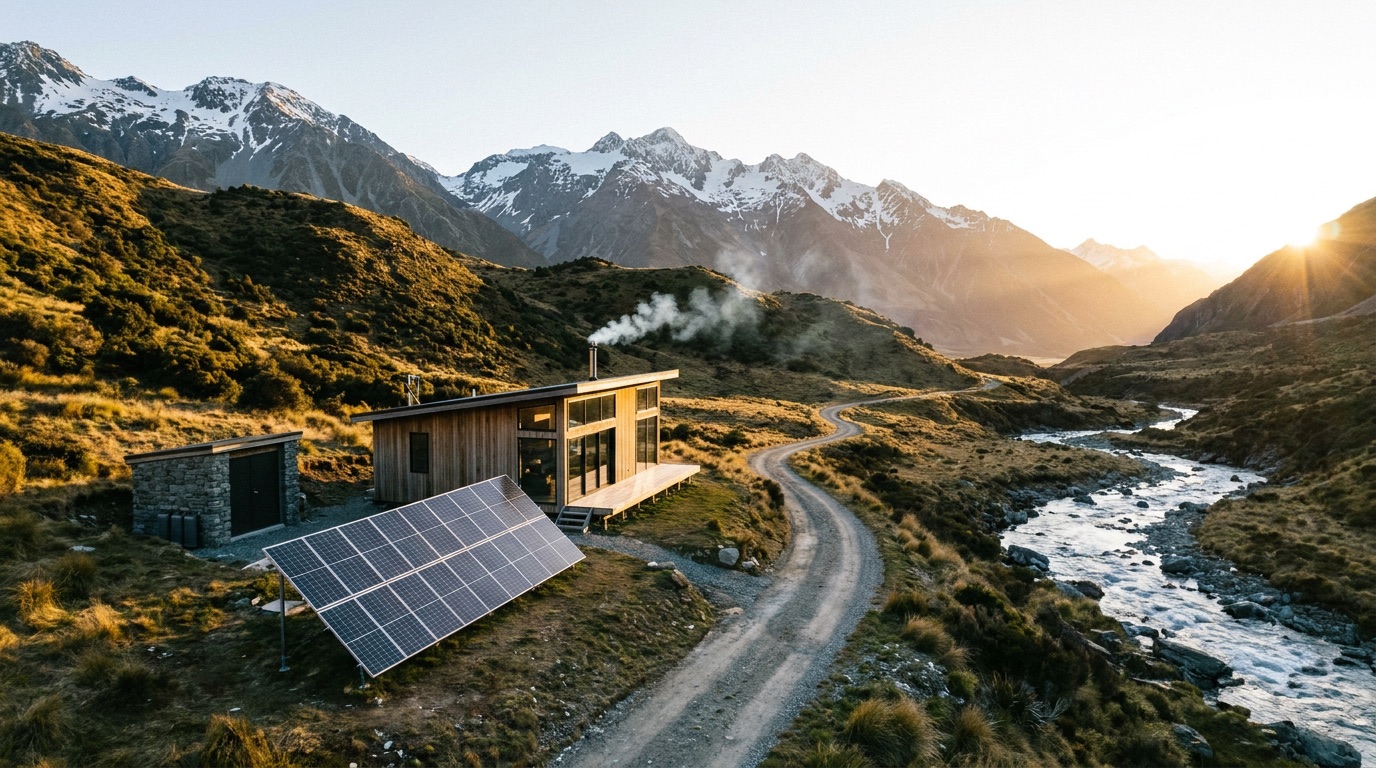
A microgrid is a complete, self-governing energy system: it generates power, stores it, and manages its own loads, connected to the wider grid or fully independent of it. PrismFlow builds microgrids for sites where reliability is non-negotiable, from remote operations beyond the utility's reach to campuses and facilities that simply cannot afford to go dark.
Generation, storage, and control
Each system pairs high-efficiency solar with LFP battery storage and intelligent controls that balance supply and demand in real time. Where round-the-clock certainty is required, we layer in generators or fuel cells as a backstop, all orchestrated by a single controller that always favours clean, light-captured energy and dispatches conventional fuel only as a last resort.
The microgrid controller is the brain of the system. It forecasts load, manages state of charge, prioritises critical circuits, and decides moment to moment how to keep the lights on at lowest cost and lowest carbon, with zero manual intervention.
Seamless islanding
When the grid fails, a PrismFlow microgrid disconnects and continues running on its own, a transition we engineer to be seamless so connected loads never see an interruption. When the utility recovers, the system resynchronises and reconnects automatically. To the people inside the building, the outage simply never happened.
- Instant, automatic islanding the moment grid faults are detected
- Critical-load prioritisation that protects your most vital circuits
- Black-start capability to bring the site up with no external power
- Automatic resynchronisation and reconnection when the grid returns
- Remote monitoring and control through the PrismFlow platform
Built for harsh and remote sites
Off-grid deployments demand hardware that survives where utilities will not go. We specify ruggedised enclosures, wide-temperature components, and redundant control paths so a microgrid in a remote location stays as reliable as one on a corporate campus. Every system reports home through secure connectivity, giving your team full visibility wherever the site sits.
Because the architecture is integration-first, a microgrid can start fully off-grid and later interconnect, or begin grid-tied and gain islanding resilience. It grows with your operation, adding generation, storage, and loads without a redesign.
Need power you can stake your operation on? Talk to our microgrid engineers and we will architect a system sized precisely to your mission and your site.
Frequently asked questions
What is the difference between off-grid and a microgrid?
Off-grid means no utility connection at all, while a microgrid can run connected or islanded. Every off-grid system we build is a microgrid, but many microgrids stay grid-tied and island only when needed.
Will my loads notice when the grid fails?
No. We engineer islanding to be seamless, so connected equipment continues running without interruption. The microgrid disconnects, sustains your loads, and reconnects automatically once the grid is stable.
Can a microgrid run entirely without fuel?
Often yes. With sufficient solar and storage many sites run fully renewable. Where uptime must be absolute, we add a generator or fuel cell as a rarely used backstop, dispatched only as a last resort.
Do you support remote, off-grid locations?
Yes. We use ruggedised, wide-temperature hardware and redundant controls, plus secure remote monitoring, so sites far beyond the utility network stay reliable and fully visible to your team.