Putting solar on the roof is the loud, visible half of energy independence. The quiet half is what you choose to run on that solar. As long as your furnace burns gas, your water heater burns gas, and your car drinks fuel, you are still on someone else’s pipeline and still exposed to someone else’s prices. Electrify those loads and your panels can finally power your whole life — and the heat pump is where that work begins.
Heating and cooling is usually the biggest single chunk of a home’s energy use. Get that one right and you have moved the largest piece of the board.
How a heat pump beats a furnace
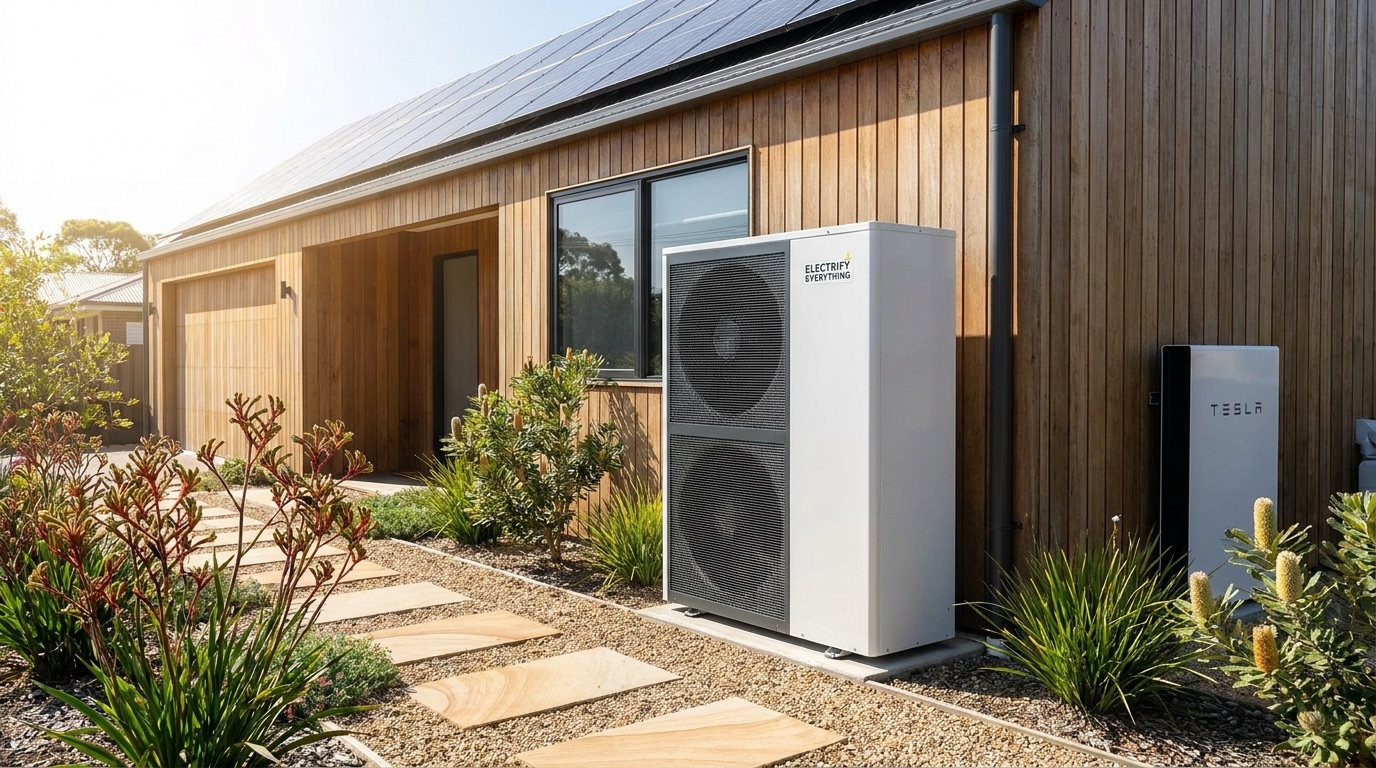
A furnace makes heat by burning fuel — for every unit of energy in, you get a little less than one unit of heat out. A heat pump does not make heat at all. It moves it, pulling warmth from the outside air even on a cold day and concentrating it indoors. Because moving heat is far cheaper than making it, a good heat pump delivers two to four units of heat for every unit of electricity it draws.
- Efficiency of three hundred percent or more, where a furnace tops out near ninety
- One unit heats in winter and cools in summer — no separate air conditioner
- Runs entirely on electricity, so it can run entirely on your solar
- No combustion indoors means no flue, no gas line, no fumes
- Cold-climate models now hold their output well below freezing
That efficiency multiplier is the whole point. Every kilowatt-hour your panels make does the work of three or four when it goes into a heat pump, which means a modest array can carry a load that would swallow a much bigger system if you tried to heat with straight electric resistance.
Why electrify the rest
Once the heat pump proves the principle, the same logic spreads through the house. A heat pump water heater sips a fraction of what a gas or resistance tank burns. An induction cooktop cooks faster and cleaner than a gas burner. An electric vehicle turns your commute into another load your roof can feed instead of the fuel station.
Every gas line you cut is one more bill the world can never raise on you again.
The deeper reason is independence. Every appliance you electrify is one fewer thing tied to a fuel you have to buy at whatever price the market sets. When your heat, your hot water, your cooking, and your driving all run on electrons your own roof can supply, a winter price spike on the news becomes someone else’s problem.
Doing it in the right order
You do not have to electrify everything at once, and you should not. The smart path is to replace fossil-fuel appliances as they wear out, leading with the biggest loads, and to size your solar with that electric future in mind so you are not adding panels twice.
- Start with heating and cooling — the largest load by far
- Tackle the water heater next, then cooking
- Plan an EV charger circuit even before the car arrives
- Size the array for the all-electric home you are heading toward
Solar gives you the power; electrification gives you somewhere worthy to spend it. Together they turn your home into a closed loop that answers to no pipeline and no fuel price. If you want a roadmap for electrifying your home in the right order — and an array sized to carry it — book a free assessment with Sunburst Paradigm and we will map it out with you.