A solar asset is only as valuable as the energy it actually produces, and the gap between a system rated performance and its real-world output is where returns quietly leak away. Traditional maintenance regimes, built around fixed inspection schedules and reactive repairs after something visibly fails, were adequate when solar was a marginal contributor. As portfolios scale into substantial infrastructure investments, that approach leaves unacceptable value on the table. Predictive maintenance, driven by data rather than the calendar, is rapidly becoming the standard for serious asset operators.
The premise is simple but powerful. Rather than waiting for a fault to manifest as lost generation, or servicing equipment on an arbitrary timetable regardless of its condition, predictive maintenance uses continuous monitoring and analytics to identify degradation and emerging faults before they materially affect output. The objective is not merely to fix things faster; it is to protect the production yield that underpins the entire investment case.
Why Reactive Maintenance Falls Short
The fundamental weakness of reactive maintenance is that the cost of a fault accrues silently from the moment it begins, not from the moment it is noticed. A failing inverter, a string brought down by a connector fault, or a gradual soiling problem can quietly suppress output for weeks before anyone investigates. Because solar degradation is often invisible to casual observation, the lost revenue compounds unseen. By the time a scheduled inspection or a customer complaint triggers a response, the cumulative shortfall can be substantial.
The Data That Drives Prediction
Effective predictive maintenance rests on capturing and interpreting the right signals continuously across the asset. The most valuable data sources tend to include the following.
- Inverter-level performance telemetry, revealing efficiency drift and fault codes
- String and module-level output, exposing localised underperformance
- Environmental data such as irradiance and temperature for performance normalisation
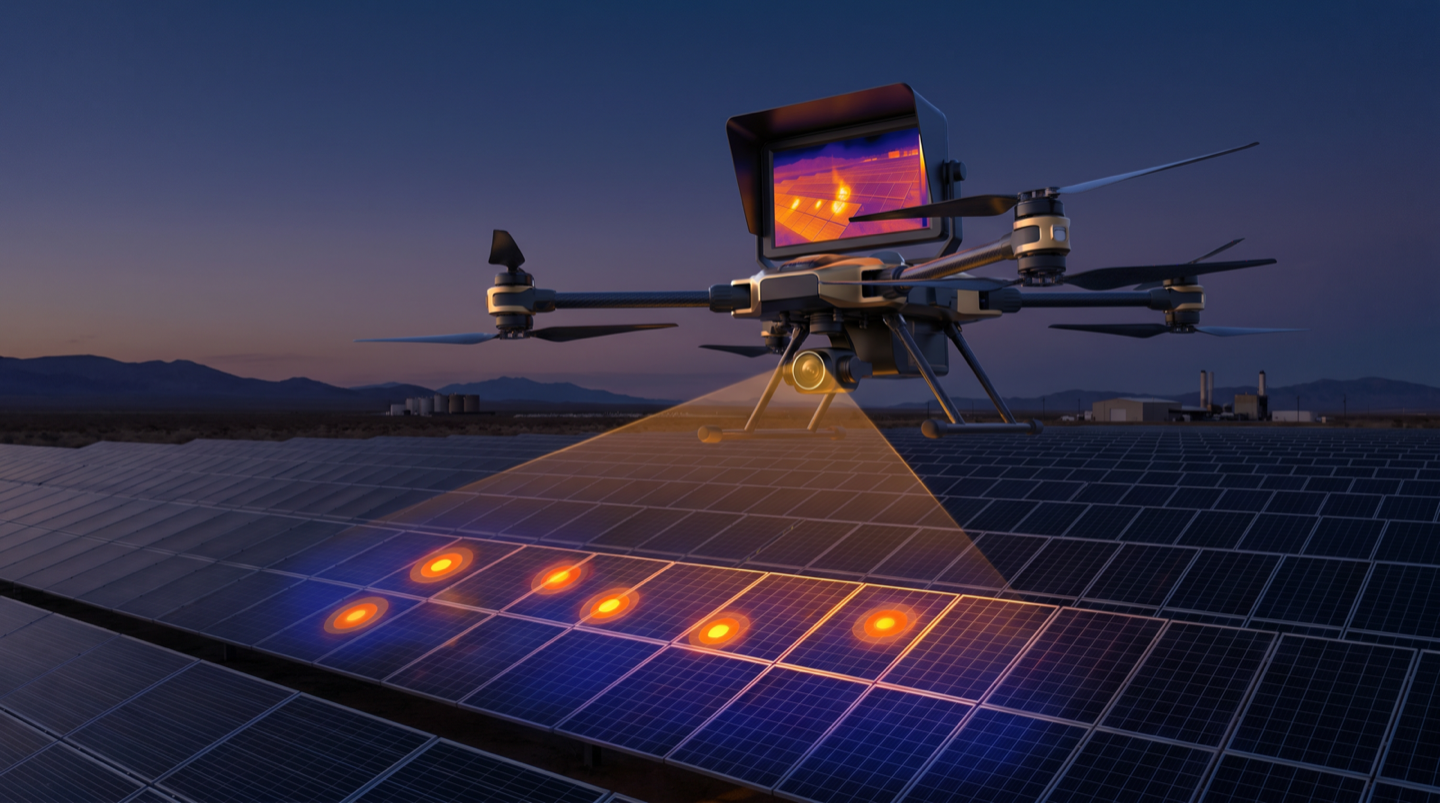
- Thermal imaging that detects hot spots and failing connections
- Historical performance baselines against which deviations can be measured
Turning Data Into Decisions
Raw telemetry alone changes nothing; the value emerges when analytics translate it into prioritised action. By comparing actual output against an expected production model that accounts for weather and season, an operator can isolate the difference attributable to the asset itself. Persistent deviations flag specific equipment for intervention, and trend analysis distinguishes a transient anomaly from genuine degradation. The most advanced operations apply machine learning to recognise the subtle signatures that precede particular failure modes, enabling intervention while a problem is still cheap to resolve.
The Economic Case for Prediction
The financial argument rests on three reinforcing effects. First, faults are caught early, minimising the lost generation that accrues during undetected underperformance. Second, maintenance resources are deployed where they deliver value rather than spread evenly across equipment that may not need attention, lowering the overall cost of operations. Third, the extended visibility into asset health supports better warranty claims, more accurate performance forecasting, and stronger valuations when assets are refinanced or sold. Each effect is modest in isolation; together they meaningfully lift lifetime returns.
Building the Capability
Adopting predictive maintenance is as much an organisational shift as a technical one. It requires monitoring infrastructure capable of capturing granular data, analytics able to convert that data into clear priorities, and field operations responsive enough to act on the resulting alerts before the value of early detection evaporates. Operators managing portfolios across multiple sites gain particular advantage, because patterns learned at one installation inform the diagnosis and prevention of faults across the entire fleet, turning scale into an analytical asset rather than a management burden.
As solar matures from emerging technology into core infrastructure, the discipline of keeping assets at peak performance will increasingly separate the strong portfolios from the mediocre. Predictive maintenance is the mechanism by which that discipline is delivered, converting the abstract promise of high availability into measured, sustained yield. The asset owners who invest in this capability now will compound its benefits year after year, while those who cling to reactive habits will watch their production, and their returns, drift quietly below potential.