Solar funded off the balance sheet
Power Purchase Agreements, leases, and structured capital that fund clean energy with zero upfront cost.

The strategic merit of on-site solar is rarely in dispute among commercial property owners. The obstacle is almost always the question of capital structure. Diverting balance sheet capacity into an energy asset competes directly with core business investment, and that tension has historically delayed projects that are otherwise economically compelling. Vanguard Energy Partners exists to dissolve that tension by aligning the right financing instrument with each client's accounting posture, risk appetite, and long-term energy strategy.
There is no single correct way to finance a commercial solar deployment. The optimal structure is a function of your cost of capital, your tax position, your tenure in the facility, and how your organisation prefers to recognise the asset and its associated obligations. Our role is to model each pathway transparently, present the trade-offs without distortion, and help your finance team select the instrument that maximises value while preserving the flexibility the business requires.
Power Purchase Agreements
The Power Purchase Agreement is the instrument that has done most to accelerate corporate renewable adoption, and for good reason. Under a PPA, a third party funds, owns, and maintains the generation asset, while your organisation simply contracts to purchase the electricity it produces, typically at a rate at or below prevailing grid prices. The result is immediate access to clean energy with no upfront capital outlay and no operational maintenance burden, while the ownership risks of the asset sit with the party best equipped to manage them.
PPAs are particularly attractive for organisations that wish to convert an unpredictable, escalating grid cost into a known, contracted energy rate. That predictability has real treasury value. It hedges exposure to volatile grid economics, supports long-range budgeting, and delivers a clean and demonstrable reduction in Scope 2 emissions that ESG officers can report with confidence. The structure also keeps the asset off the corporate balance sheet in many configurations, preserving borrowing capacity for the core enterprise.
- No upfront capital expenditure required to access on-site generation
- Contracted energy rates that hedge against grid price escalation
- Asset ownership, performance risk, and maintenance retained by the provider
- Verifiable Scope 2 emissions reductions for corporate disclosure
- Long-term agreements that convert variable cost into predictable expense
Operating Leases And Zero-Down Models
For organisations that prefer to operate the asset themselves while avoiding the capital charge, an operating lease offers a compelling middle path. The lease structure provides full use of the generation system in exchange for predictable periodic payments, often with treatment that keeps the obligation distinct from owned capital assets. This suits enterprises that value operational control and the option to acquire the asset at maturity, without committing scarce capital at the outset.
Zero-down financing models extend the same principle, structuring the deployment so that energy savings begin offsetting financing costs from the first billing cycle. The intent is to make the project cash-flow positive, or close to it, from inception, removing the requirement to fund the system from reserves. For many commercial owners this is the decisive factor, because it reframes solar from a capital project that must compete for budget into a self-funding initiative that improves the operating position immediately.
Selecting The Right Capital Structure
Ownership remains the right answer for organisations with available capital and a favourable tax position, because it captures the full lifetime value of the asset and the most aggressive return on invested capital. The discipline lies in matching instrument to circumstance rather than defaulting to a single model. Our financing specialists work alongside your treasury and finance functions to stress-test each scenario against your hurdle rate, your accounting standards, and your tenure assumptions, so that the chosen structure withstands board scrutiny. Whatever pathway you select, the outcome we engineer is the same: clean, cost-effective energy that strengthens rather than strains the financial position of the enterprise, with economics as robust as the engineering behind them.
At a glance
Financing & PPAs — your questions answered
Under a Power Purchase Agreement you pay only for the electricity the system generates, while the provider owns and maintains the asset. Under a lease you pay a fixed periodic amount for the use of the system itself, regardless of output, and you typically retain operational control with an option to purchase at term.
In well-structured zero-down arrangements, the energy savings generated by the system are designed to meet or exceed the financing payments from the first billing cycle. The precise outcome depends on your tariff, consumption profile, and the term selected, all of which we model transparently before any commitment.
Different instruments carry different accounting treatments. Many PPA and operating lease structures can keep the obligation off the corporate balance sheet, preserving borrowing capacity, whereas outright ownership recognises the asset and captures its full lifetime value. We work with your finance team to align the structure with your reporting objectives.
No. Across PPA, lease, and ownership models, the renewable energy consumed reduces your Scope 2 emissions and can be reported accordingly, provided the contractual rights to the environmental attributes are correctly assigned. We ensure those rights are structured to support your disclosure requirements.
Related capabilities

Solar Maintenance
Predictive O&M with drone thermography and remote monitoring that protects asset yield.
Learn more
Energy Auditing
Enterprise energy audits and decarbonisation roadmaps grounded in metered load data.
Learn more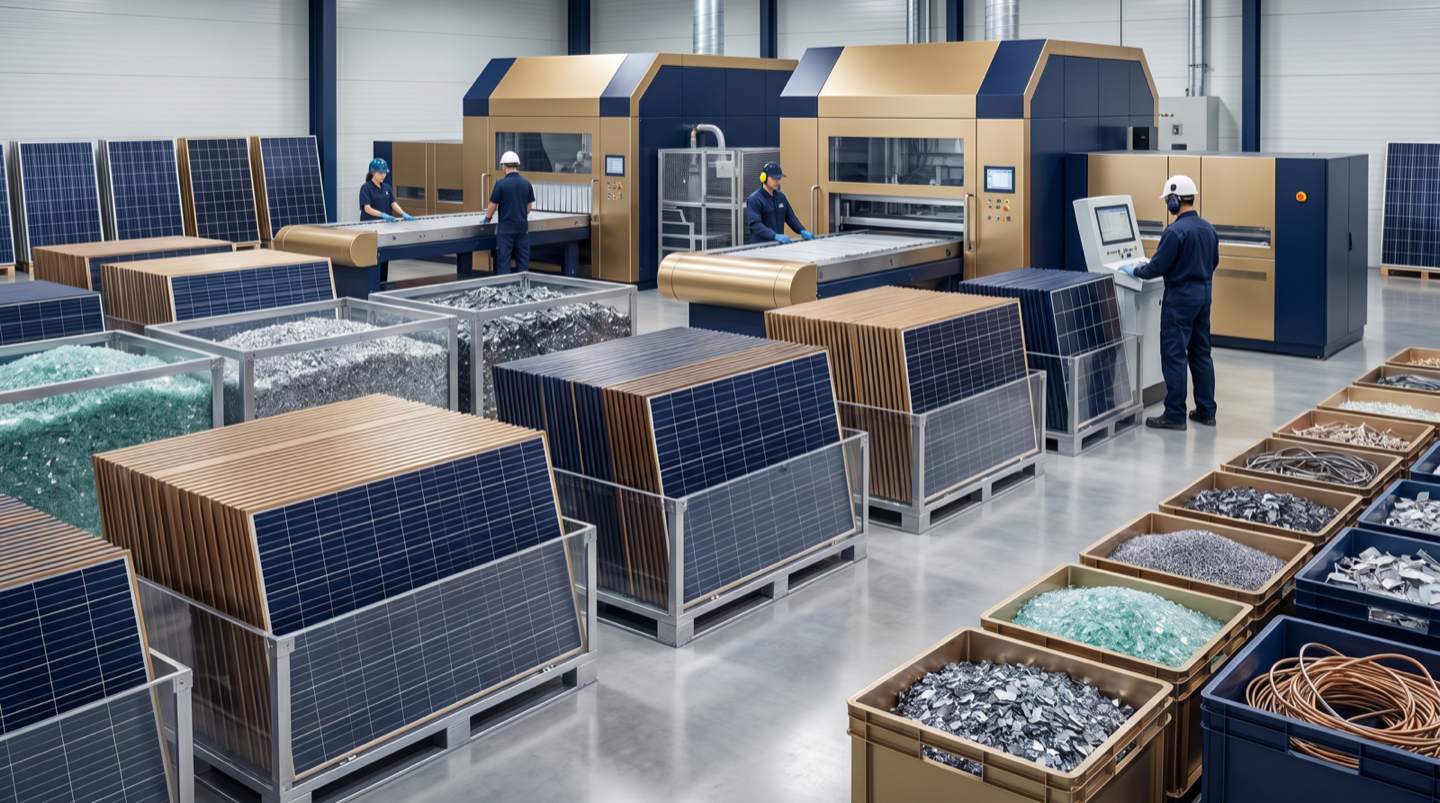
Panel Recycling
Responsible decommissioning and material recovery that close the solar circular loop.
Learn moreReady to scope your financing & ppas project?
Our engineers and capital advisors will assess feasibility, model returns, and structure the right path forward — with no obligation.