Closing the circular loop
Compliant decommissioning and high-rate material recovery that keep panels out of landfill.
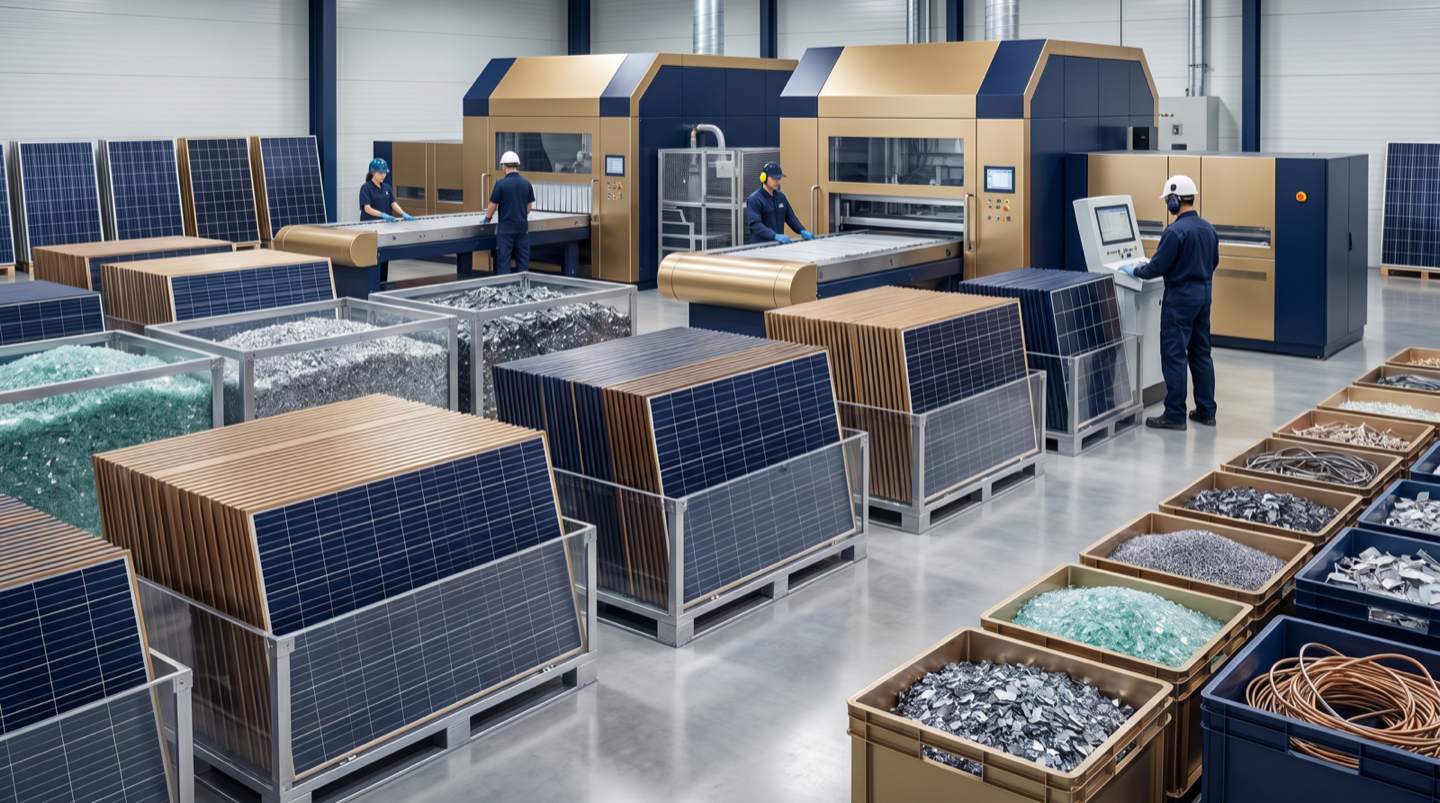
The first generation of large-scale commercial solar installations is now approaching the end of its productive life, and with it arrives a responsibility that the industry can no longer defer. Decommissioning and recycling photovoltaic assets is not a peripheral concern to be managed at disposal; it is an integral component of responsible asset stewardship and a measurable element of corporate environmental performance. Vanguard Energy Partners treats end-of-life management as a discipline in its own right, governed by the same rigour we apply to procurement and installation.
A solar panel is a sophisticated composite of glass, aluminium, silicon, copper, and trace high-value materials, much of which can be recovered and returned to productive use. Treating these assets as waste squanders embedded value and undermines the very sustainability rationale that justified their installation. Our decommissioning and recycling programs are engineered around the circular economy, ensuring that the environmental promise of solar is honoured across the full asset lifecycle rather than compromised at its conclusion.
Responsible Decommissioning
Decommissioning a commercial array is a controlled engineering operation, not a demolition. It demands careful de-energisation, methodical disassembly, and rigorous documentation to satisfy environmental, safety, and corporate governance obligations. Our teams manage the entire sequence, from electrical isolation and structural removal through to site reinstatement, ensuring that the process is safe, compliant, and fully auditable for your ESG reporting and regulatory record-keeping.
Documentation is central to our approach. Every panel, inverter, and balance-of-system component is tracked through its disposal or recovery pathway, producing a chain-of-custody record that demonstrates responsible end-of-life handling. For ESG officers, this traceability transforms decommissioning from a compliance liability into a demonstrable contribution to circular-economy objectives that can be reported to stakeholders and investors with confidence.
Material Recovery And The Circular Economy
The economic and environmental case for recycling rests on material recovery. Modern processing techniques can reclaim a substantial proportion of a panel's mass, returning glass, aluminium framing, and metals to manufacturing supply chains while recovering the silicon and specialty materials that carry the highest embedded energy. Diverting these materials from landfill reduces the demand for virgin extraction, lowers the embodied carbon of future generation assets, and closes the loop that defines a genuinely circular energy system.
- Glass recovery for reuse in manufacturing and construction applications
- Aluminium framing reclamation returned to metal supply chains
- Silicon and high-value material recovery to reduce virgin extraction
- Copper and conductive component separation for resale and reuse
- Diversion of recoverable mass from landfill with documented recovery rates
Material recovery also has a direct bearing on the carbon accounting of any subsequent installation. When recovered materials displace virgin inputs in new manufacturing, the embodied emissions of the next generation of panels fall. Organisations that integrate recycling into their procurement strategy can therefore strengthen the lifecycle emissions profile of their entire energy program, an advantage that increasingly matters as Scope 3 reporting expectations sharpen across the corporate landscape.
End-Of-Life Planning As Strategic Foresight
The most sophisticated asset owners plan for end of life at the point of acquisition, not at the point of failure. By establishing decommissioning and recycling provisions early, organisations avoid the cost shocks and reputational exposure that come with unmanaged disposal, and they secure recovery pathways before they are needed. Vanguard helps clients embed these provisions into their asset strategy from the outset, so that the eventual retirement of a system is a planned, value-preserving event rather than an unwelcome surprise. Responsible end-of-life management is ultimately a test of whether an organisation's sustainability commitments are genuine, and by ensuring that every retired asset is decommissioned safely and recycled to the highest recovery standard, we help our clients close the circle on their clean-energy investment and demonstrate, with evidence, that their environmental stewardship extends across the entire lifecycle.
At a glance
Panel Recycling — your questions answered
A significant majority of a panel's mass, principally the glass and aluminium, is readily recoverable, and advanced processing extends recovery to silicon, copper, and specialty materials. Exact recovery rates vary by panel type and processing facility, and we document the achieved rate for each decommissioning project to support your reporting.
Responsibility depends on the ownership and financing structure of the asset. Where you own the system, the obligation is yours, and we recommend provisioning for it early. Under some PPA and lease arrangements the provider retains responsibility. We help clarify these obligations and ensure recovery pathways are secured regardless of structure.
By returning recovered materials to manufacturing supply chains, recycling displaces virgin extraction and reduces the embodied carbon of future products. We provide chain-of-custody documentation and recovery data so your sustainability team can substantiate circular-economy claims to stakeholders and investors.
Yes, and we strongly recommend it. Establishing decommissioning and recycling provisions at acquisition avoids cost shocks, secures recovery pathways in advance, and turns asset retirement into a planned, value-preserving event. We help embed these provisions into your broader asset strategy from the outset.
Related capabilities

Solar Maintenance
Predictive O&M with drone thermography and remote monitoring that protects asset yield.
Learn more
Energy Auditing
Enterprise energy audits and decarbonisation roadmaps grounded in metered load data.
Learn more
Heat Pump Electrification
Building electrification that displaces gas with high-efficiency heat-pump systems.
Learn moreReady to scope your panel recycling project?
Our engineers and capital advisors will assess feasibility, model returns, and structure the right path forward — with no obligation.