Dental abscess? Don't wait it out
An abscess is a pocket of infection that can spread quickly and become dangerous. Swelling, throbbing and fever are signs to be seen today — we drain the infection, relieve the pressure and treat the source.
What to do right now
- Rinse with warm salt water several times a day.
- Take pain relief as directed — paracetamol or ibuprofen.
- Do not apply heat to the swelling.
- Never try to burst or squeeze an abscess yourself.
- Call us today — seek urgent care if swelling reaches your eye or throat.
A dental abscess is a collection of pus caused by a bacterial infection, usually at the root of a tooth or deep in the gum. It is one of the few dental problems that can become genuinely serious, because infection in the mouth can spread to the face, the jaw and, rarely, the airway. The reassuring part is that abscesses respond well and quickly to proper treatment — the key is not to wait, and certainly not to rely on painkillers to mask it.
How to recognise an abscess
The classic signs are a severe, throbbing pain that may spread to your jaw, ear or neck; a tooth that feels tender or 'high' when you bite; redness and swelling in the gum or face; a bad taste from draining pus; and sometimes fever or swollen glands. If you develop facial swelling that is spreading, difficulty opening your mouth, or any trouble swallowing or breathing, treat it as an emergency and seek care immediately — these are signs the infection is moving and needs to be controlled without delay.
What you can do right now
Before your appointment, rinse gently with warm salt water several times a day to encourage drainage and soothe the gum, and take paracetamol or ibuprofen at the recommended dose. Do not apply heat to a facial swelling, and never attempt to pierce or squeeze an abscess yourself — this can push the infection deeper. Keep the area clean and avoid chewing on that side.
How we treat it
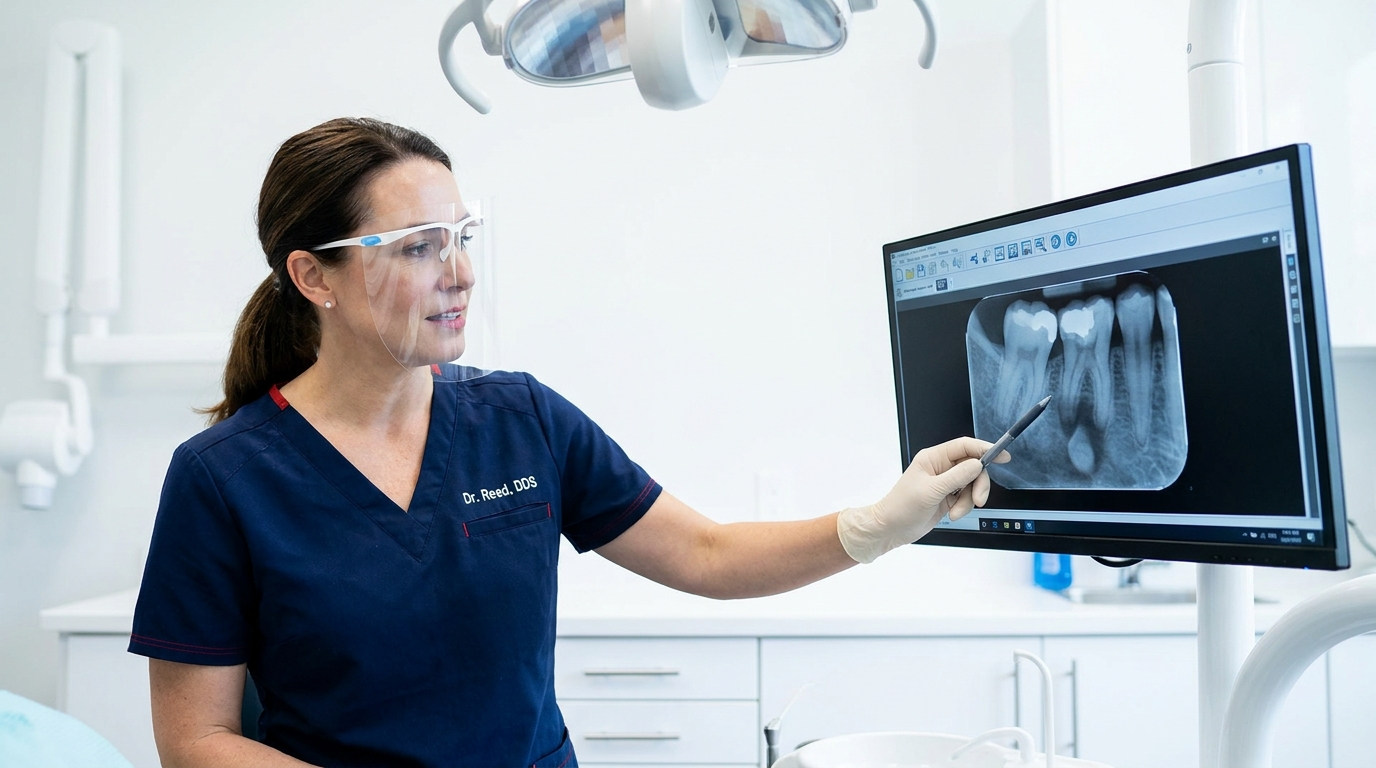
Our first priority is to relieve the pressure, which usually brings dramatic, fast relief. After numbing the area thoroughly, we drain the abscess and clean out the infection. We then treat the underlying cause: this is most often root canal therapy to save the tooth, or, where the tooth cannot be saved, a gentle extraction that removes the source entirely. A digital X-ray helps us see the extent of the infection and plan precisely. Antibiotics may be prescribed alongside treatment when the infection is spreading, but they are a support — not a substitute for clearing the source.
- Same-day drainage that relieves pressure and pain fast
- Root canal or extraction to remove the infection at its source
- Antibiotics prescribed where clinically appropriate
- Clear guidance on warning signs and follow-up care
An abscess will not heal on its own, and the pain often returns worse than before once tablets wear off. Call Rapid Response Dental Care today — the sooner we drain it, the faster you'll feel human again.
Common questions
Often the opposite. Sudden relief can mean the abscess has burst, but the infection remains. You still need treatment to clear it properly.
No. Antibiotics may slow the infection, but it returns unless we remove the source through drainage and root canal or extraction.
If swelling spreads to your eye or neck, or you struggle to swallow or breathe, seek emergency medical care immediately — don't wait for a dental appointment.