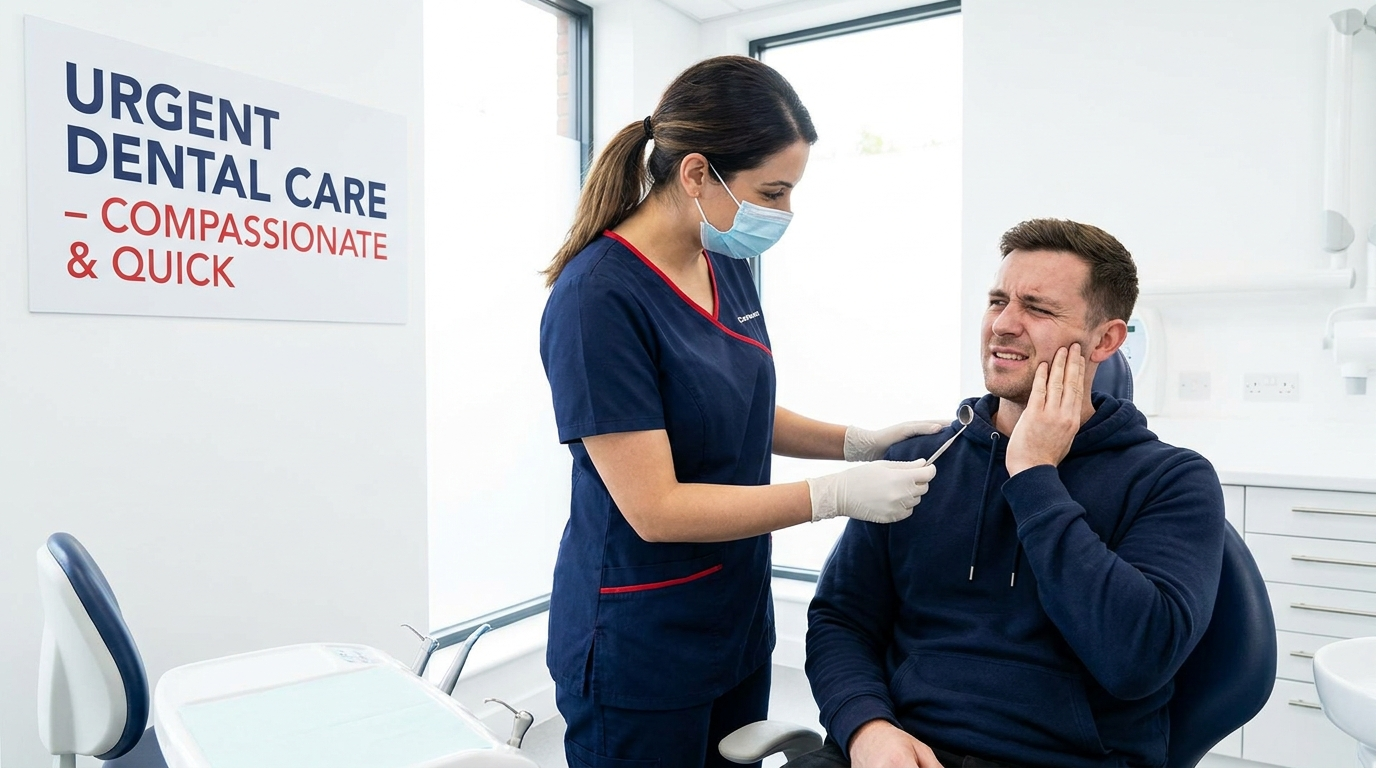
Jaw pain or locking? Let's find relief
A jaw that aches, clicks, or locks can make eating and talking miserable — and it's often misunderstood. We pinpoint the cause, ease the immediate pain and set out a plan to keep it from coming back.
What to do right now
- Eat soft foods and avoid wide yawning or gum.
- Apply a warm compress to relax tight jaw muscles.
- Take anti-inflammatory pain relief as directed.
- Gently massage the jaw muscles and rest them.
- Call us if your jaw locks or pain is severe.
Jaw pain has a way of touching everything — chewing, speaking, sleeping, even concentrating. It often comes from the temporomandibular joint (the TMJ) that hinges your jaw just in front of each ear, or from the muscles around it, and it can be triggered by clenching, grinding, stress, an uneven bite, an injury or a dental infection. Because the causes overlap, jaw pain is frequently misdiagnosed and left to grumble on. Our job is to work out precisely what's driving yours and bring you relief.
What might be causing it
Common sources include teeth grinding and clenching (often during sleep), which overloads and tires the jaw muscles; TMJ dysfunction, which can cause clicking, popping, stiffness and even locking; an abscess or impacted wisdom tooth radiating pain into the jaw; and trauma from a knock or fall. Pain that arrives with facial swelling, fever, or a jaw that won't open or close properly needs prompt attention, as it may signal infection or a joint that has locked.
Easing it before you're seen
Give the joint a rest: choose soft foods, cut food into small pieces, and avoid wide yawns, chewing gum and hard or chewy snacks for now. A warm compress held against the jaw relaxes tight muscles, while gentle self-massage of the cheeks and temples can release tension. Anti-inflammatory pain relief such as ibuprofen, taken as directed, helps with both pain and swelling. Try to notice and ease daytime clenching — keeping your teeth slightly apart with lips together is the jaw's natural resting position.
How we diagnose and treat it
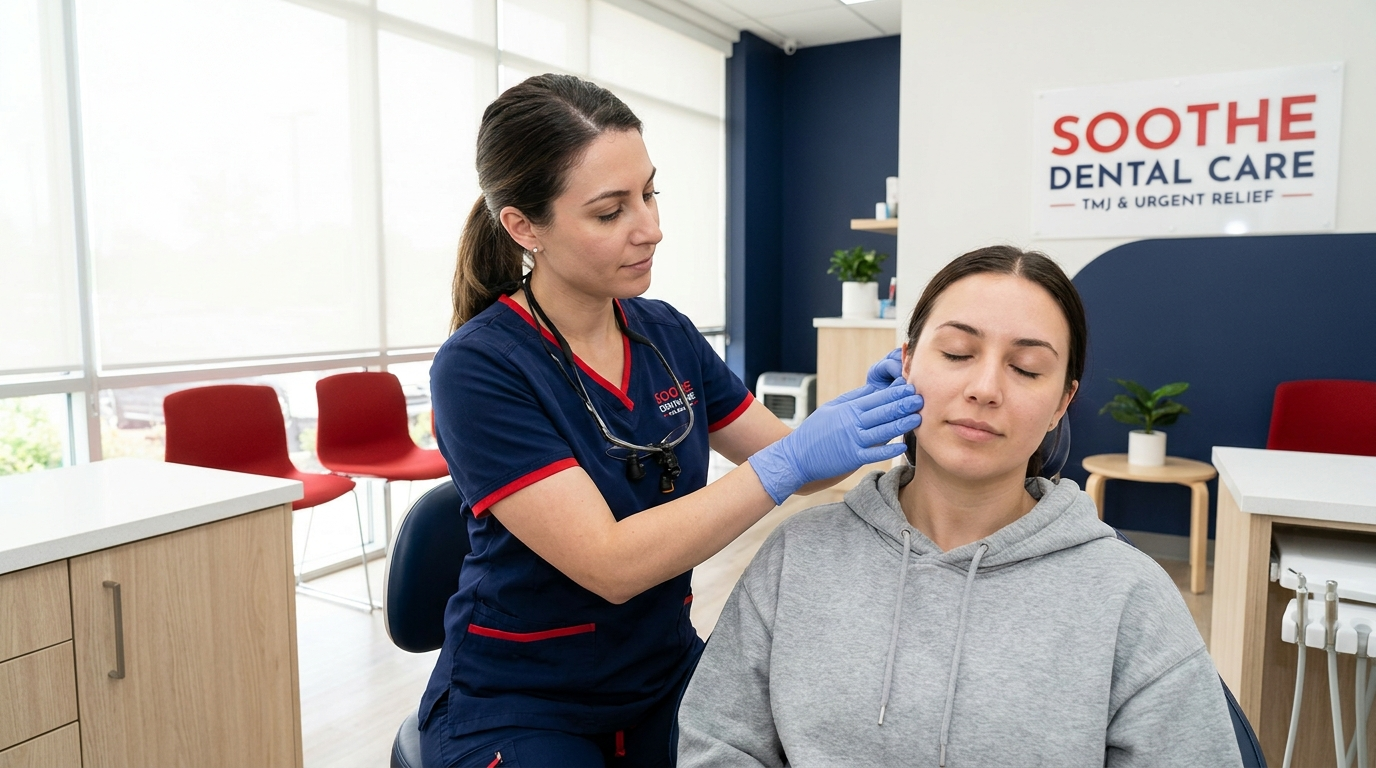
We start by examining your jaw, bite and teeth and listening to how the pain behaves, using X-rays where they help us see the joint, the teeth and any infection. Treatment is tailored to the cause: a custom night splint to protect the jaw from grinding, adjustments to relieve an uneven bite, treatment of any infected or impacted tooth, and guidance on exercises and habits that calm the joint. Where helpful, we'll coordinate with other specialists. Most jaw pain improves markedly once the true cause is addressed rather than masked.
- Careful diagnosis of TMJ, grinding and bite issues
- Custom night guards to protect against clenching
- Infected and impacted teeth treated at the source
- Practical exercises and habits to keep pain away
You don't have to live around a sore or locking jaw. Call Rapid Response Dental Care and we'll find the real cause and a path to lasting comfort.
Common questions
Not always — it can stem from the jaw joint, muscles, grinding, stress or infection. We assess all of these to find the true cause.
Painless clicking is common and often harmless. But if it becomes painful, stiff or starts locking, have it assessed promptly.
Yes. For grinding and clenching, a custom-fitted night guard protects your teeth and rests the jaw, easing pain for most patients.