Cut inside your mouth? We'll calm the bleed
Injuries to the lips, gums, cheeks and tongue can bleed dramatically and look frightening. Most settle with the right first aid — and we're here to clean the wound, check for hidden damage and help it heal cleanly.
What to do right now
- Apply firm pressure with clean gauze for 10–15 minutes.
- Use a cold compress to reduce swelling and slow bleeding.
- Rinse gently with salt water once bleeding slows.
- Sit upright and stay calm — mouth wounds bleed a lot.
- Seek urgent care for deep cuts or bleeding that won't stop.
The soft tissues of the mouth — the lips, gums, inner cheeks and tongue — have a rich blood supply, which is why even a small cut can bleed alarmingly and look far worse than it is. Most of these injuries, from a bitten cheek to a split lip after a fall, settle quickly with calm, correct first aid. Our role is to stop the bleeding, clean the wound thoroughly, rule out damage to the teeth and jaw beneath, and help everything heal without infection or scarring.
First aid that works
Stay calm and sit upright. Apply firm, steady pressure to the wound with a clean piece of gauze or a folded cloth for a full ten to fifteen minutes without peeking — lifting to check restarts the bleeding. A cold compress held against the outside of the lip or cheek reduces swelling and helps slow the flow. Once the bleeding eases, a gentle warm salt-water rinse keeps the area clean. Because the mouth bleeds freely, the amount of blood is often misleading; what matters is whether steady pressure brings it under control.
When to seek care urgently
Call us, or seek emergency medical care, if bleeding won't slow after fifteen minutes of firm pressure, if a cut is deep, gaping or longer than about a centimetre, if the wound was caused by a dirty or biting injury, or if there's a possibility that debris or a tooth fragment is lodged inside. Puncture wounds, injuries that go right through the lip, and any cut accompanied by a possible broken tooth or jaw also need prompt, professional attention.
How we treat it
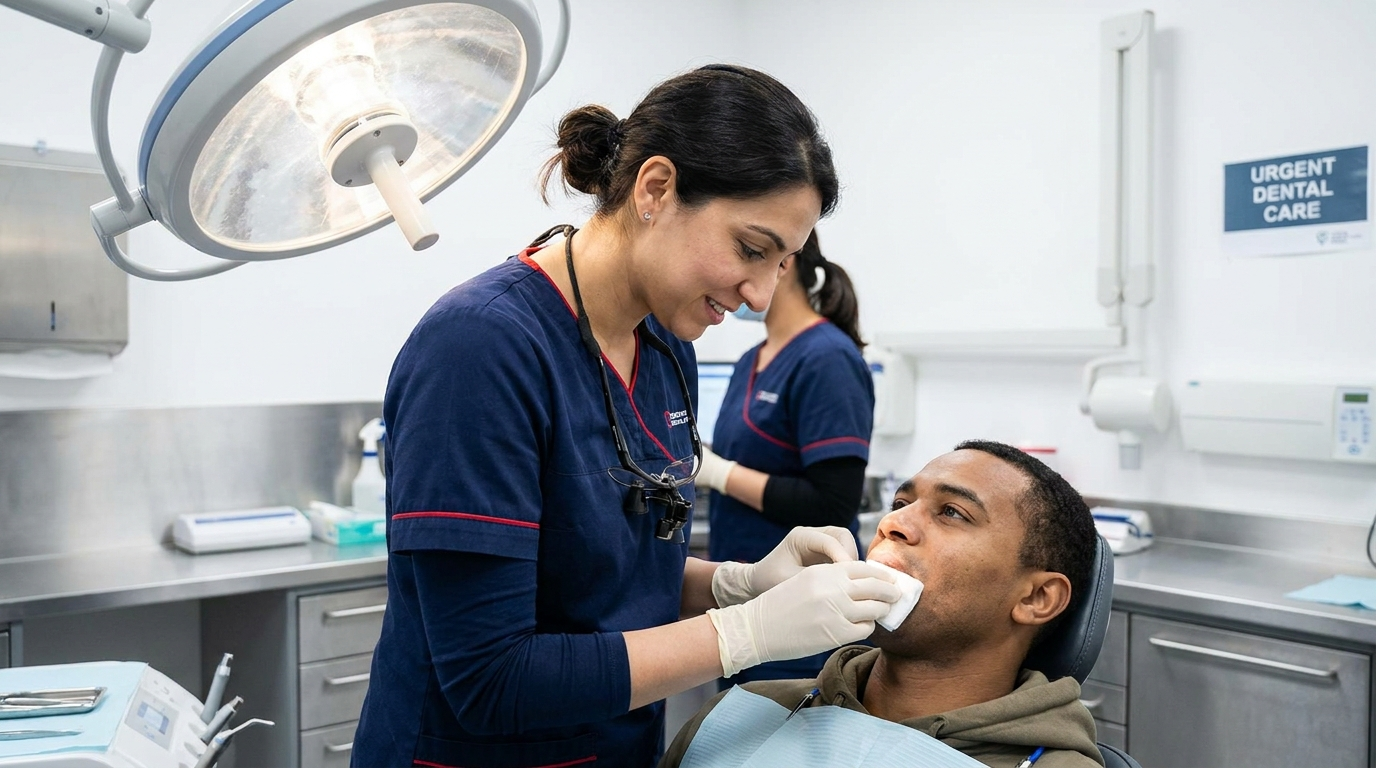
We begin by controlling the bleeding and cleaning the wound carefully to remove any grit or fragments — a common hidden cause of later infection. We check the teeth, gums and jaw for damage that the soft-tissue injury may be masking, taking an X-ray if there's any chance a fragment is embedded or a tooth is involved. Some wounds heal beautifully on their own; others benefit from a few dissolvable stitches to bring the edges together neatly. We'll advise on keeping the area clean, managing discomfort, and what to eat while it heals, and arrange a review if needed.
- Bleeding controlled and wounds thoroughly cleaned
- Hidden tooth and jaw damage checked with X-rays
- Gentle stitching where it helps healing
- Clear advice to prevent infection and scarring
A bleeding mouth is frightening, but you're not on your own. Call Rapid Response Dental Care and we'll talk you through the first aid and see you quickly to make sure it heals safely.
Common questions
Mouth wounds bleed freely, so volume can mislead. The real test is control — if firm pressure for 15 minutes doesn't slow it, seek urgent care.
Many heal alone, but deep, gaping or through-and-through wounds heal better with a few dissolvable stitches, which we can place comfortably.
Sometimes. A blow that cuts the lip can also chip a tooth or embed a fragment, so we check beneath the surface and X-ray if needed.