Power on water, land left free.
Reservoirs, dams and tailings ponds are untapped power stations. NexusCore designs and deploys floating photovoltaic systems that lift yield through water cooling, cut evaporation and free valuable land for its highest use.
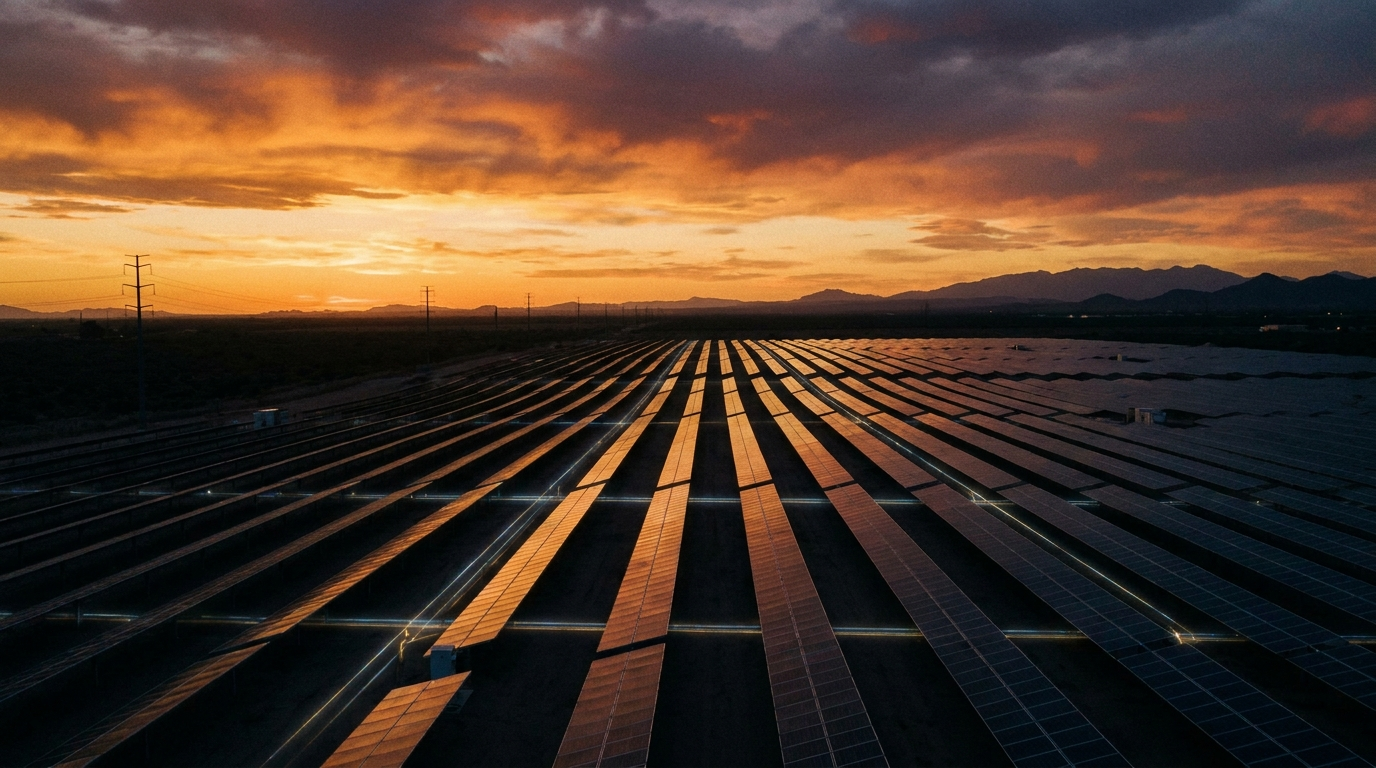
Land is expensive, contested and often the single biggest constraint on a large solar project. Water bodies, by contrast, frequently sit idle. Floating solar, or floating photovoltaics, mounts arrays on engineered pontoons across reservoirs, irrigation dams, treatment lagoons and industrial ponds. For water-rich sites with limited buildable ground, it unlocks generation capacity that would otherwise be impossible, while leaving farmland, yards and roofs free for their primary purpose.
The physics works in your favour on water. Panels run cooler when mounted above a water surface, and because photovoltaic efficiency falls as cells heat up, that cooling lifts energy yield compared with an equivalent hot rooftop or ground array. The covered water surface also loses far less to evaporation, a genuine asset in drought-exposed Australian catchments, and reduced light penetration can suppress algal blooms in some bodies. One installation can therefore deliver electricity, water conservation and water-quality benefits at once.
Why water-mounted generation
- Higher yield from natural water cooling of the photovoltaic modules
- Significant evaporation reduction across the covered water surface
- No competition with land needed for agriculture, buildings or operations
- Algal-bloom suppression and water-quality benefits on suitable bodies
- Rapid modular deployment that scales with the available surface area
Engineered for Australian conditions
Floating arrays live in a demanding environment, so engineering discipline is everything. We design anchoring and mooring systems to handle fluctuating water levels, wind loading and wave action specific to each site. Balance-of-system components are specified to marine-grade standards to resist humidity and corrosion, and cabling is routed and protected for long service life on water. Every layout is modelled for the body's depth, bank profile and seasonal level changes, so the system stays stable and safe through the full range of conditions it will face.
Integration, storage and independence
A floating array is most powerful as part of a complete energy strategy. We integrate generation with on-shore battery storage so surplus midday output is captured and shifted into peak demand periods rather than spilled. That pairing supports load-shifting, demand-charge reduction and participation in grid services, moving your operation toward genuine energy independence. For mines, utilities and agribusinesses with both water and heavy load, floating solar plus BESS turns an idle surface into a strategic asset.
Put your water to work. Ask NexusCore to assess your reservoir or pond and model the generation, evaporation and storage upside together.
Floating Solar questions
Calm, controlled bodies work best: irrigation dams, reservoirs, treatment lagoons, tailings ponds and similar industrial water. We assess depth, bank profile, level fluctuation and water use before recommending a system, since anchoring and layout depend heavily on the specific characteristics of your water asset.
Yes. By shading a large portion of the water surface, floating arrays cut evaporative losses meaningfully, which is valuable in drought-exposed catchments. The exact saving depends on coverage, climate and the body itself, so we model it for your site rather than quoting a single generic figure.
Floating systems carry additional marine engineering and anchoring costs, but they avoid land acquisition and preparation while delivering higher yield and water savings. Whether the overall case beats ground-mount depends on your land value and water needs, which our feasibility modelling quantifies before any commitment.
We design walkways and access into the layout so technicians can safely inspect, clean and service modules without disturbing the array. Monitoring is remote and continuous, flagging issues early, while marine-grade components are selected specifically to minimise the frequency of hands-on intervention.
Let's power your independence
Transparent modelling, accredited engineering and storage that pays for itself — start with a free NexusCore energy model.