Power your home, shift the grid in your favour
NexusCore residential systems are designed around self-consumption, not just generation. We size every array, inverter and battery to flatten your demand curve and reclaim control from volatile retail tariffs.
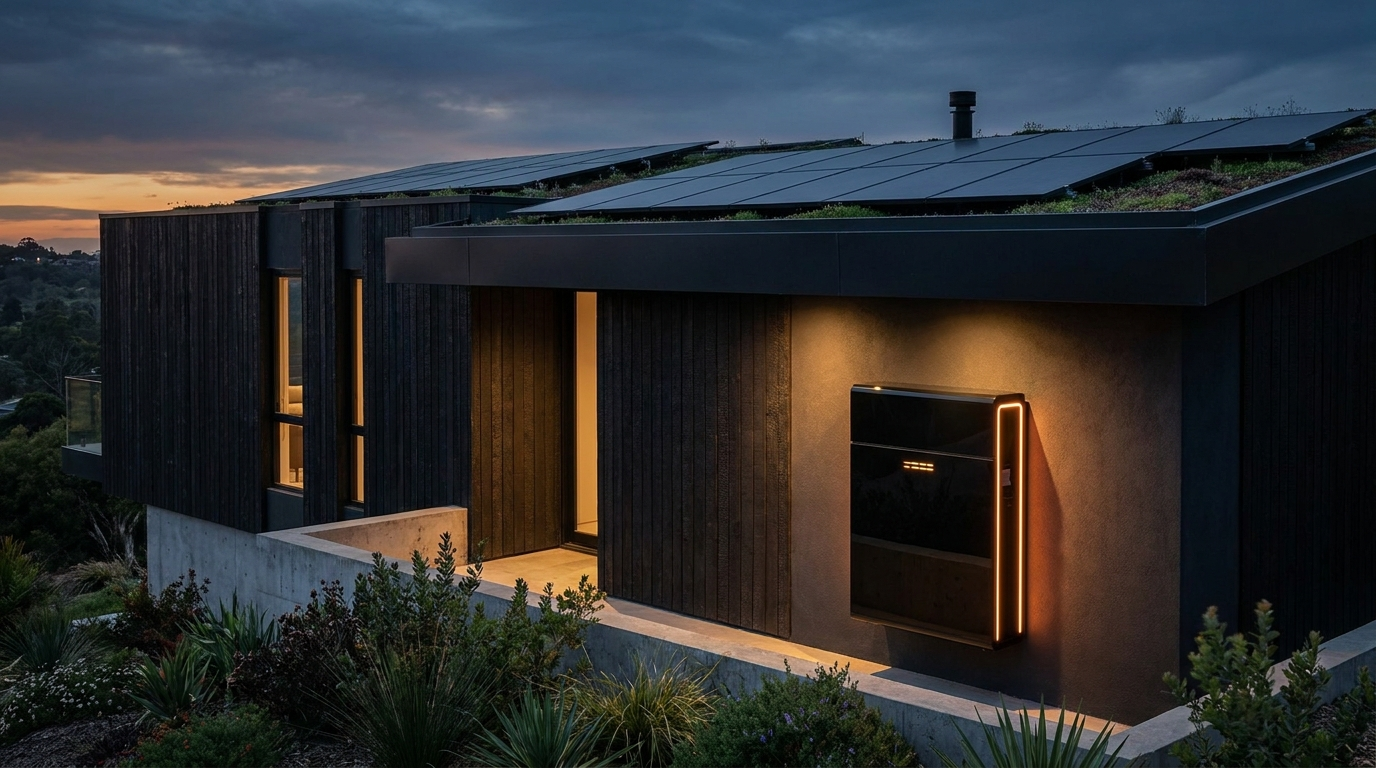
A modern rooftop array is only as smart as the energy logic running behind it. NexusCore designs residential solar from the load profile up: we analyse your interval data, identify peak-demand windows, and size the system to maximise self-consumption rather than dumping cheap kilowatt-hours back to the grid for shrinking feed-in tariffs. The result is a household that quietly shifts its own load — running hot water, pool pumps and EV charging when the sun is highest — so every kWh you generate offsets a retail kWh you would otherwise buy at peak rates.
Most Australian homes export between 50 and 70 per cent of what they generate, earning a feed-in tariff that has collapsed in recent years. We invert that ratio. By pairing a correctly sized array with intelligent control and, where it stacks up, a battery, we push self-consumption north of 80 per cent. That single shift is where the real economics live: avoided peak imports are worth far more than exported surplus, and they compound every single billing cycle.
What a NexusCore residential system delivers
- Load-profile design that targets your actual peak-demand windows, not a generic average
- Hybrid inverters ready for battery and EV-charger integration from day one
- Self-consumption optimisation and automated load-shifting of major appliances
- Real-time monitoring with kW, kWh and tariff-aware reporting
- A clear ROI and payback projection grounded in your own usage data
Load-shifting and the path to independence
Energy independence is not about going off-grid — it is about no longer being exposed to the grid's worst hours. With time-of-use tariffs now the norm, the difference between drawing power at 7pm versus 1pm can be three or four times the price. NexusCore controllers learn your habits and pre-cool, pre-heat and charge during solar surplus, then ride through the evening peak on stored energy. You consume your own cheapest electrons first and treat the grid as a backstop rather than a lifeline.
Battery-ready by design
Even if you start with panels alone, we future-proof the system. A hybrid inverter and correctly rated switchboard mean adding a battery later is a one-day upgrade, not a rebuild. When storage arrives, your home gains overnight resilience, blackout protection and eligibility for virtual power plant programs — turning a household asset into a grid-services participant that can earn while it protects you.
Ready to see the numbers for your own roof? Share twelve months of interval data and our engineers will return a system design, self-consumption forecast and payback timeline within days. Book your free residential assessment and start shifting the economics of your home in your favour.
Residential Solar questions
It depends on your load profile, not just your roof size. We analyse your interval data to find your daytime base load and peak windows, then size the array to maximise self-consumption. Most homes land between 6.6kW and 13kW, but the right number is whatever flattens your demand curve and shortens your payback.
For many households, yes — especially on time-of-use tariffs with high evening peaks. A battery lets you ride through the most expensive hours on stored solar and unlocks blackout protection plus VPP earnings. We model it honestly: if the payback does not stack up for your usage, we will tell you and design battery-ready instead.
Feed-in tariffs have fallen sharply, which is exactly why we design for self-consumption. Every kWh you use yourself offsets a retail import worth far more than the export credit. Surplus still earns a tariff, but the core economics come from avoiding peak-priced grid power, not from selling cheap energy back.
A standard grid-tied system shuts down during an outage for safety. To keep the lights on you need a battery with backup capability, which isolates your home and continues running off stored energy. We configure backup circuits for essentials like fridges, comms and lighting so your household stays resilient when the grid does not.
Let's power your independence
Transparent modelling, accredited engineering and storage that pays for itself — start with a free NexusCore energy model.