Boost, power and proper economy
Lost power, black smoke, poor economy or a screaming turbo all point to the same place — the air and fuel that make your diesel pull. We diagnose and repair turbo and injection faults so your engine breathes and burns right.
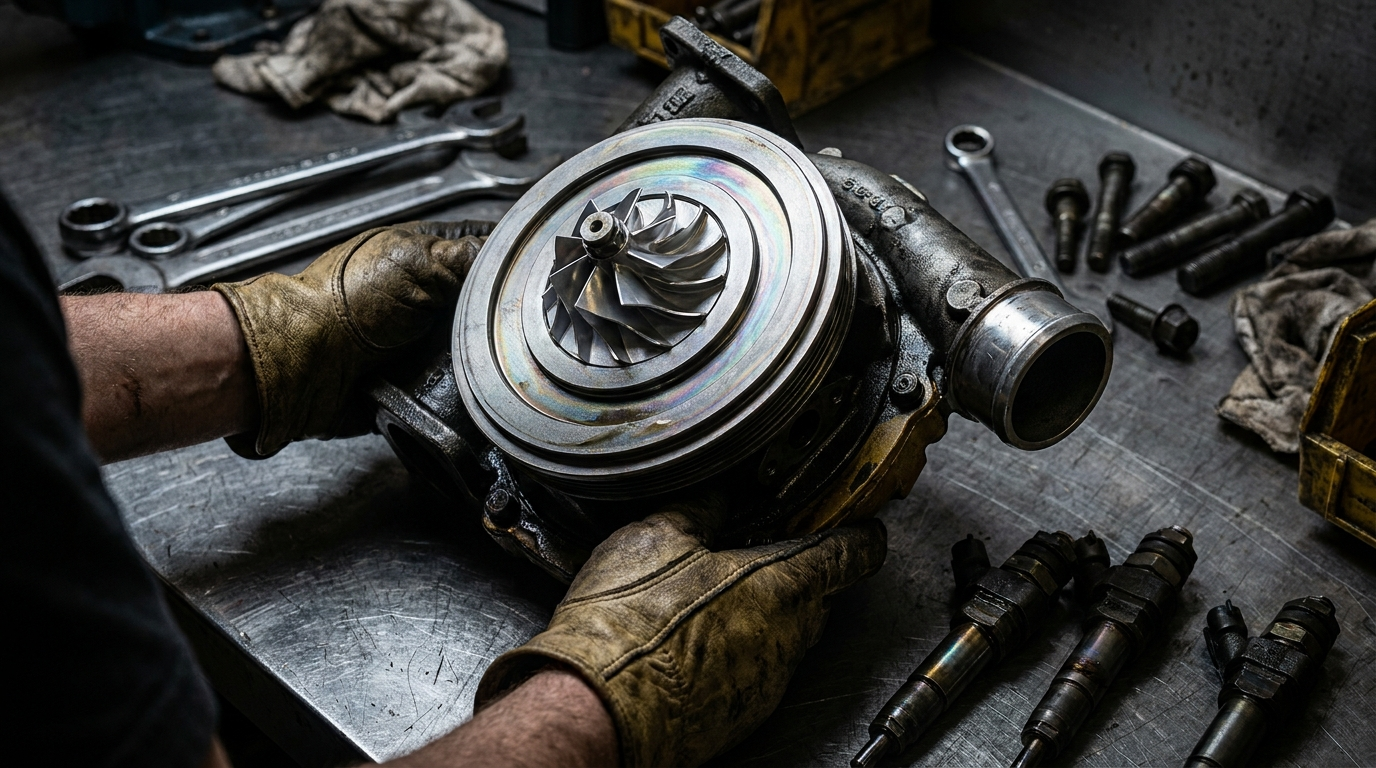
A diesel engine makes its power from precisely the right amount of fuel meeting precisely the right amount of compressed air at exactly the right moment. The turbocharger forces that air in, and the injection system delivers that fuel — and when either one drifts out of spec, you feel it immediately. The truck goes soft on the hills, blows black or blue smoke, drinks fuel, idles rough or simply will not make the boost it used to. These are not faults to ignore: a failing turbo or a leaking injector can quickly take the rest of the engine with it.
We diagnose turbo and fuel faults methodically, because the symptoms overlap and guessing is expensive. Low power and smoke can come from the turbo, the injectors, the fuel pump, a boost leak, a blocked filter or the emissions system — and the only way to know is to test. We check boost pressure and actuator operation, test injectors and fuel delivery, inspect for air and boost leaks, and read the engine's own data to pinpoint exactly where the problem lies before we recommend a single part.
Turbo and fuel services
- Turbocharger testing, repair and replacement
- Variable-geometry turbo (VGT) actuator faults and cleaning
- Injector testing, replacement and correct coding
- High-pressure fuel pump and common-rail diagnosis
- Boost-leak and intake-system pressure testing
- Fuel filtration, water-in-fuel and contamination faults
Smoke is a symptom, not the disease
The colour of the smoke tells a story. Black smoke usually means too much fuel or not enough air — worn injectors, a tired turbo or a boost leak. Blue smoke points to oil getting where it should not, often a failing turbo seal or worn engine internals. White smoke can mean unburnt fuel, a cold-start or injection-timing problem, or coolant entering the combustion chamber. We read those signs alongside the engine data to diagnose the real cause, rather than simply replacing the most expensive part and hoping.
Protect the engine, protect the economy
Turbo and injection faults are rarely just a power problem — they are an economy and reliability problem too. A leaking injector washes oil off a cylinder bore and can score it; a failing turbo can send metal and oil through the engine. And every one of these faults quietly costs you at the bowser, day after day, on a truck that might burn tens of thousands of litres a year. Fixing them properly does not just restore performance — it protects the engine and pays you back in fuel.
Notice your truck going soft, smoking or drinking fuel? Book a turbo and fuel diagnosis and we'll find out exactly why — before it costs you an engine.
Turbo & Fuel Injection questions
Usually too much fuel or not enough air: worn injectors, a failing turbo, a boost leak or a clogged emissions system. We test to find the actual cause rather than guessing at parts.
It depends on the failure. Some turbos can be repaired or have actuator and VGT faults rectified; others need replacement. We test it and give you the most economical option that lasts.
On modern common-rail engines, yes. Injectors must be correctly coded to the ECU so the engine runs smoothly and efficiently. We fit and code them properly as part of the job.
Get this booked in
Straight talk, fixed quotes and heavy-diesel work done to last. Book your truck in or call the 24/7 breakdown line.