
Precision microsurgery for the tooth root
When a root canal alone cannot resolve infection, apicoectomy treats the problem directly at the root tip — preserving your natural tooth with remarkable precision and comfort.
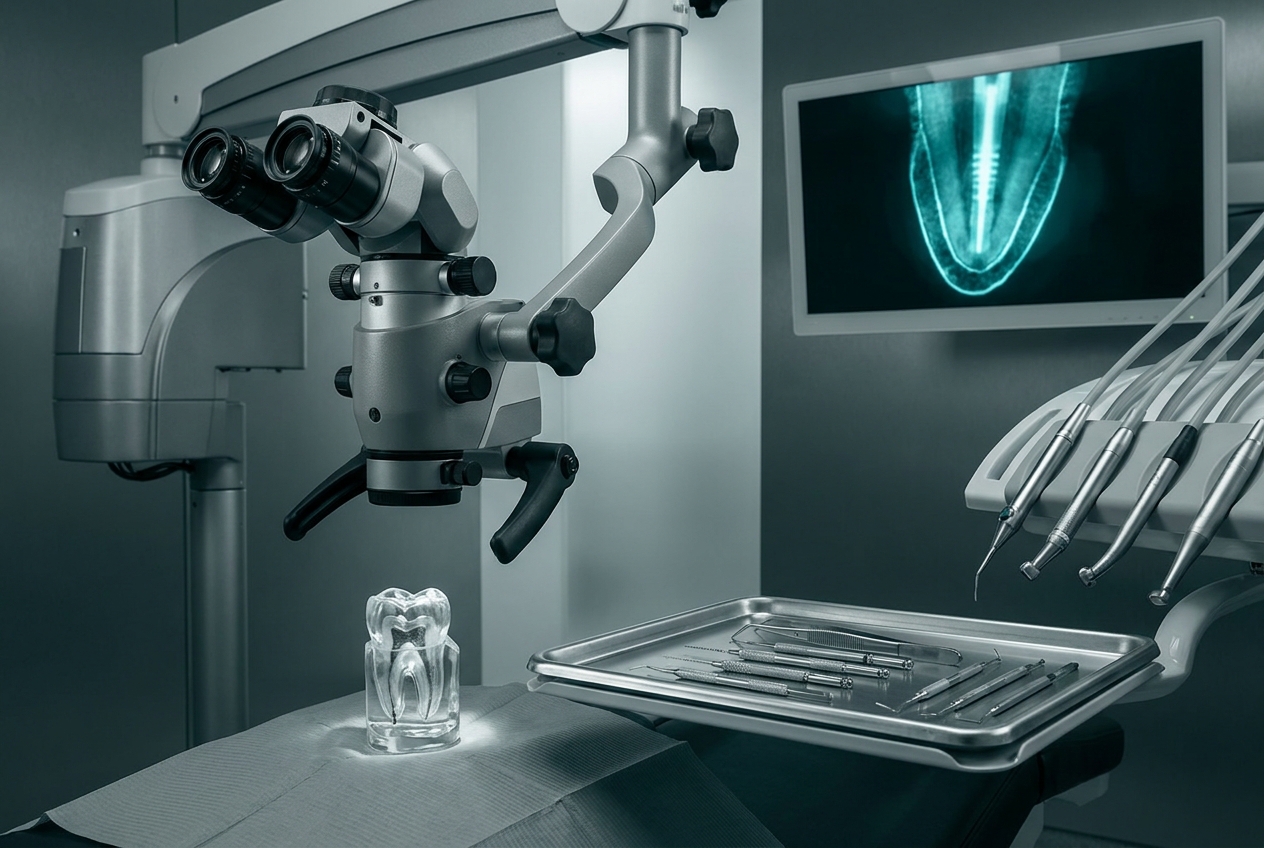 3D-Guided Surgical Planning
 An apicoectomy, also known as root-end surgery, is a specialised microsurgical procedure performed when infection or inflammation persists at the very tip of a tooth root after conventional root canal treatment. Rather than removing the tooth, this approach allows us to treat the source of the problem directly, preserving the natural tooth and the supporting bone around it.
Our surgeons perform apicoectomy under high-magnification using a surgical operating microscope, allowing the root tip and surrounding tissues to be visualised in extraordinary detail. This level of precision is central to a careful, conservative procedure and to protecting the delicate structures nearby.
When an apicoectomy is recommended
This procedure is typically considered when a tooth that has already had root canal therapy continues to show signs of infection, or when the internal anatomy of the root makes a repeat root canal impractical. Before recommending surgery, we undertake a thorough assessment, often including 3D cone-beam imaging, to map the root anatomy and surrounding bone with accuracy.
- Persistent infection or a recurring abscess after root canal treatment
- Complex or curved root canals that cannot be fully re-treated conventionally
- A fractured or blocked root tip identified on imaging
- Inflammatory cysts or lesions at the root apex requiring removal
- A desire to preserve a structurally sound natural tooth
What to expect during and after
On the day of surgery, the area is thoroughly numbed with local anaesthesia, and intravenous sedation is available for patients who would prefer to be in a deeply relaxed state throughout. A small opening is made in the gum to access the root tip, the infected tissue is removed, and the end of the root is cleaned and sealed with a biocompatible material to prevent further infection.
Most patients are surprised by how manageable recovery is. Mild swelling and tenderness for a few days are normal and are usually well controlled with simple measures we will discuss with you. We provide clear, written aftercare guidance and remain available throughout your healing.
If you have been told that a previously treated tooth is failing, an apicoectomy may offer a way to keep it. We warmly invite you to arrange a consultation so we can review your imaging, answer your questions, and explain every option clearly and without pressure.
Apicoectomy — your questions
The procedure itself is carried out under local anaesthesia, so you should feel no pain during surgery. Many patients also choose IV sedation for added comfort. Any post-operative tenderness is generally mild and well managed with the guidance we provide.
Most people return to normal daily activities within a day or two. Minor swelling typically settles within a few days, and the gum heals over the following weeks. We will see you for follow-up to confirm healing is progressing well.
Preserving your natural tooth is almost always preferable, as it maintains your bite, bone and appearance. An apicoectomy aims to save a tooth that would otherwise be lost, avoiding the need for an implant or bridge where possible.
Discuss apicoectomy with our team
Specialist assessment, 3D imaging and a calm, clearly-explained plan — arrange a consultation with the team at Maxilla Surgical Arts.