Calm, controlled wisdom teeth removal
When wisdom teeth become impacted or painful, timely surgical removal protects the surrounding teeth and gums. Our specialist team plans every step around your comfort and safety.
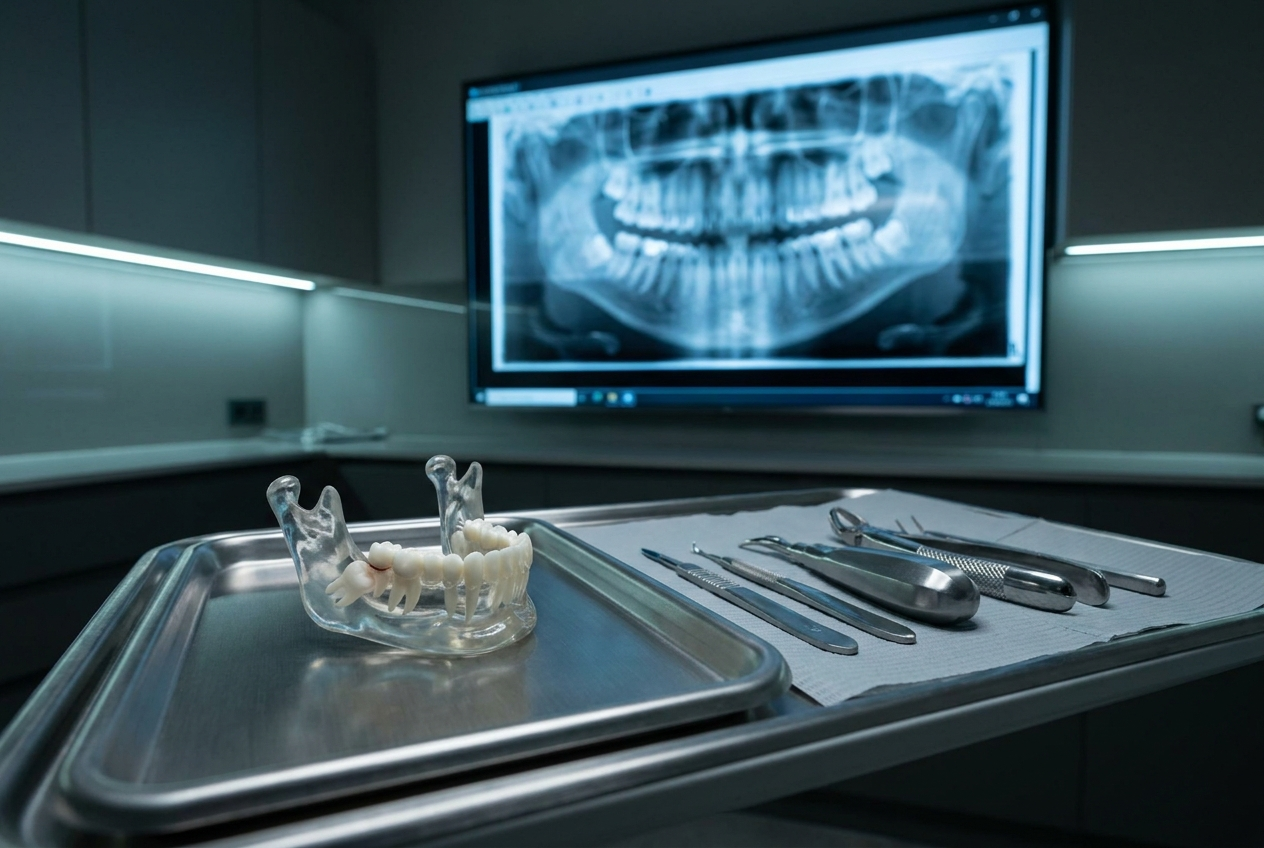 3D-Guided Surgical Planning
 Wisdom teeth, or third molars, are the last teeth to develop and frequently lack the space needed to erupt correctly. When they become impacted against neighbouring molars, the jawbone or the gum tissue, they can cause pain, swelling, recurrent infection and damage to adjacent teeth. As specialist oral and maxillofacial surgeons, we assess each case individually to determine whether removal is genuinely warranted and, if so, how it can be performed as safely and comfortably as possible.
Your treatment begins with a thorough consultation. Using 3D cone-beam computed tomography, we map the precise position of each tooth and its relationship to important structures such as the inferior alveolar nerve and the maxillary sinus. This detailed imaging allows us to anticipate the surgery accurately, minimise risk and explain exactly what to expect before anything is decided.
A procedure tailored to your comfort
Wisdom teeth removal is most often carried out as a day procedure. Depending on the complexity of the case and your personal preference, we offer local anaesthesia, local anaesthesia with intravenous sedation, or general anaesthesia in an accredited facility. IV sedation in particular allows anxious patients to remain deeply relaxed and largely unaware of the procedure while recovering quickly afterwards.
During surgery, the tooth is carefully accessed and, where necessary, divided into smaller sections so it can be removed with minimal disturbance to the surrounding bone and gum. This refined, tissue-sparing technique helps to reduce post-operative swelling and supports a smoother recovery.
- Comprehensive 3D imaging to map nerves and sinuses before surgery
- A choice of anaesthesia options, including IV sedation for anxious patients
- Gentle, tissue-conserving surgical technique to limit swelling
- Clear written aftercare instructions and direct access to our team
- A planned review to confirm healing is progressing well
Recovery and aftercare
Most patients return to normal activities within a few days. Mild swelling and discomfort are expected in the first 48 to 72 hours and are well managed with simple measures and any medication we prescribe. We provide detailed guidance on diet, oral hygiene and rest, and our team remains available should you have any questions during your recovery.
If you have been told your wisdom teeth need attention, or you are experiencing pain or swelling at the back of your mouth, we invite you to arrange a consultation. We will listen to your concerns, explain your options clearly and ensure you feel fully informed and reassured before any decision is made.
Wisdom Teeth Removal — your questions
The area is fully numbed before we begin, so you should not feel pain during surgery. With IV sedation you will also feel deeply relaxed. Any discomfort afterwards is usually mild and well controlled with the measures we recommend.
No. Many wisdom teeth that are healthy and well positioned can be left in place. We only recommend removal when there is a clear clinical reason, which we will explain to you using your 3D imaging.
Most people feel substantially better within three to five days. Swelling typically peaks at around 48 hours and then settles. We provide clear aftercare instructions to help you recover as comfortably as possible.
Discuss wisdom teeth removal with our team
Specialist assessment, 3D imaging and a calm, clearly-explained plan — arrange a consultation with the team at Maxilla Surgical Arts.