
Lasting relief for jaw joint disorders
When jaw pain, clicking or limited movement persists despite conservative care, specialist surgical treatment can help. We assess each case carefully and recommend intervention only when it is genuinely warranted.
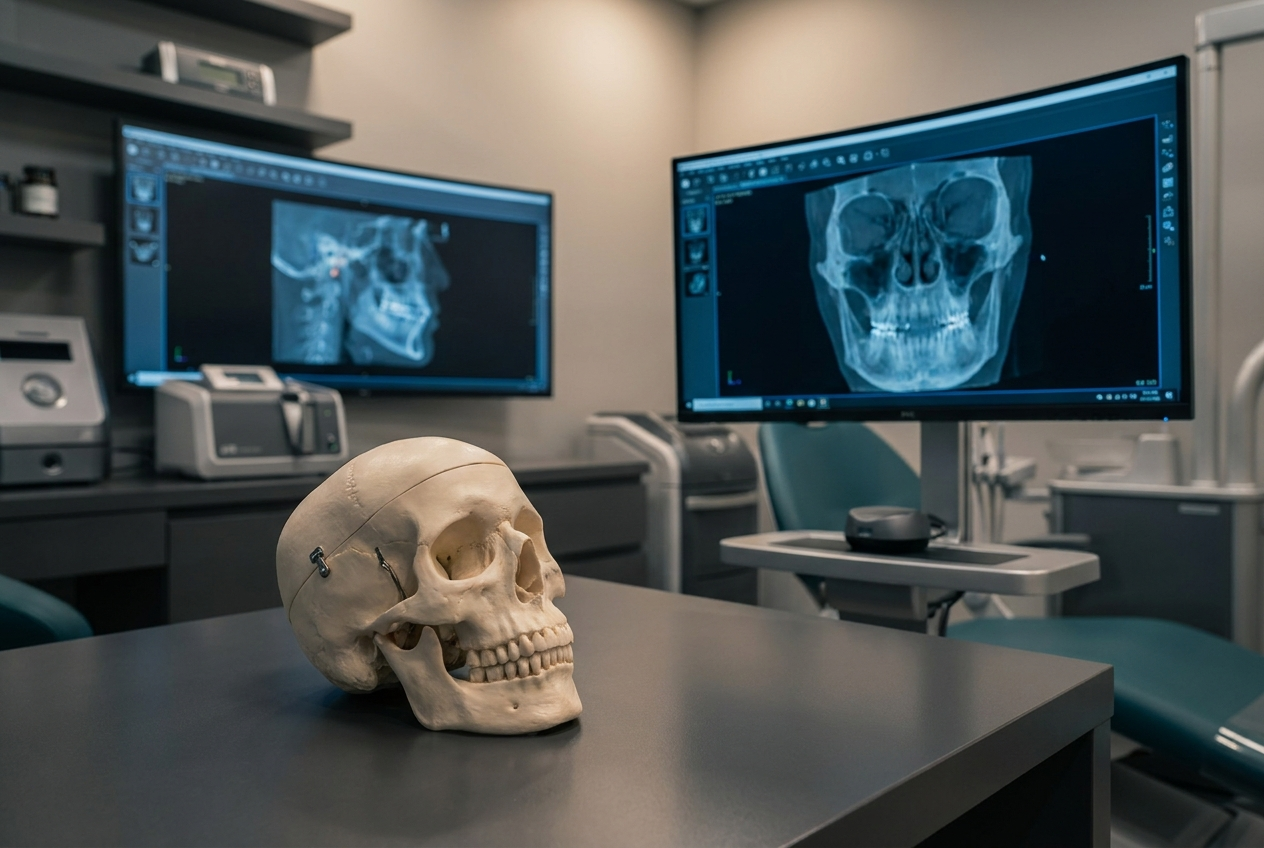 3D-Guided Surgical Planning
 The temporomandibular joints connect the lower jaw to the skull and are among the most frequently used joints in the body. When they are affected by disorder, the result can be persistent pain, clicking or grating sounds, restricted opening and difficulty chewing. These symptoms can have a significant impact on daily life, and they deserve careful, specialist assessment.
As oral and maxillofacial surgeons, we are trained specifically in the structure and function of the jaw joint. Our first priority is always an accurate diagnosis. Using clinical examination alongside advanced imaging, including 3D cone-beam scans and where appropriate magnetic resonance imaging, we build a clear picture of what is causing your symptoms before any treatment is recommended.
A considered, staged approach
Surgery is never the first step. The majority of jaw joint disorders respond well to conservative measures such as activity modification, physiotherapy, splint therapy and medication. We will always explore these options thoroughly first, and we recommend surgical treatment only when non-surgical care has not provided adequate relief and the clinical picture supports intervention.
When surgery is appropriate, a range of options exists, from minimally invasive techniques to more involved reconstructive procedures. The right choice depends on your specific diagnosis, and we will explain it clearly so you understand both the rationale and what to expect.
- Thorough diagnosis using clinical examination and advanced imaging
- Conservative, non-surgical treatment explored first
- Minimally invasive options such as arthrocentesis and arthroscopy
- Open joint surgery reserved for clearly indicated cases
- A treatment plan tailored to your individual diagnosis
Care and reassurance throughout
Procedures are performed in an accredited facility with appropriate anaesthesia, and your comfort and safety are our constant priority. After treatment, we guide you through a structured recovery and rehabilitation plan, often working alongside physiotherapy to restore comfortable jaw function, and we review your progress at every stage.
If you are living with ongoing jaw pain or dysfunction, you do not have to manage it alone. We invite you to arrange a consultation so we can listen carefully, reach an accurate diagnosis and explain every option available to you with honesty and compassion.
TMJ Surgery — your questions
Most jaw joint disorders improve with conservative, non-surgical care, which we always explore first. We recommend surgery only when these measures have not given lasting relief and your diagnosis clearly supports it.
It depends on your diagnosis. Many cases are treated with minimally invasive techniques such as arthrocentesis or arthroscopy, while more involved procedures are reserved for specific indications. We explain exactly what your case requires.
Surgery aims to reduce pain and improve function, and many patients experience meaningful relief. Because every joint is different, we discuss realistic expectations openly with you so you can make a fully informed decision.
Discuss tmj surgery with our team
Specialist assessment, 3D imaging and a calm, clearly-explained plan — arrange a consultation with the team at Maxilla Surgical Arts.