
Rebuilding a strong foundation for your smile
When jawbone has been lost to missing teeth or injury, bone grafting restores the volume needed to support implants. Our precise, planned approach gives your future treatment a dependable foundation.
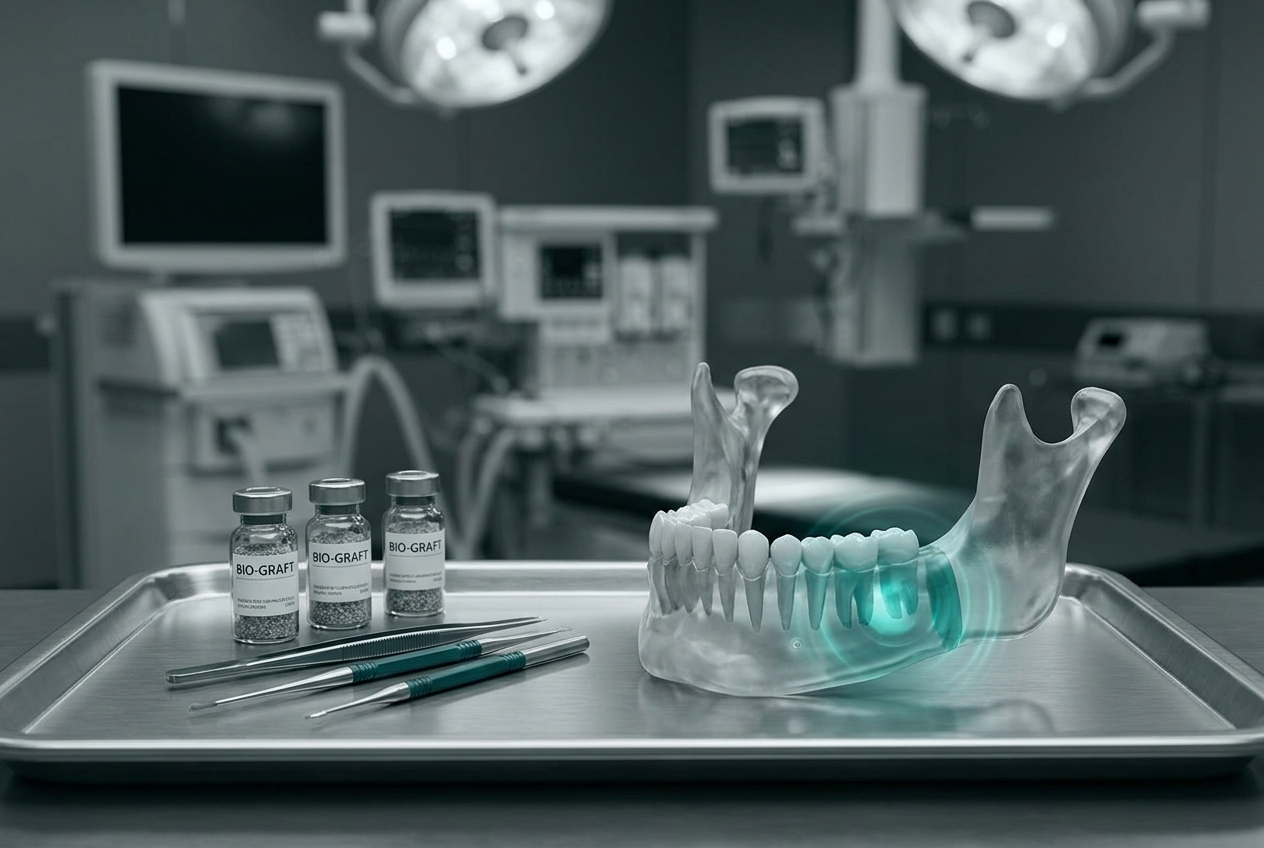 3D-Guided Surgical Planning
 After a tooth is lost or removed, the surrounding jawbone gradually resorbs because it is no longer stimulated by the tooth root. Over time this loss of bone can compromise the stability of dental implants and alter the contour of the face and gums. Bone grafting is a well established reconstructive procedure that rebuilds this lost volume, restoring a healthy foundation for future treatment.
As specialist oral and maxillofacial surgeons, we use 3D cone-beam imaging to measure bone height and width with precision and to plan exactly where grafting material is needed. This careful planning allows us to graft conservatively and predictably, optimising the result while keeping the procedure as comfortable as possible.
Grafting techniques we use
The most appropriate technique depends on the amount of bone required and the site being treated. In many cases, grafting can be performed at the same time as a tooth extraction to preserve the socket and prevent collapse. Larger defects may require a separate procedure to build sufficient bone before an implant is placed. We will explain which approach suits your situation and why.
Modern grafting materials are biocompatible and act as a scaffold that your own bone gradually replaces as it heals. Depending on your needs, we may use your own bone, processed donor or animal-derived materials, or synthetic substitutes, each selected for safety and predictable integration.
- Socket preservation grafting performed at the time of extraction
- Ridge augmentation to rebuild width and height of the jaw
- Block grafting for larger areas of bone loss
- Carefully selected biocompatible graft materials
- 3D-guided planning to optimise volume and position
Healing and what to expect
Bone grafting is typically a day procedure carried out under local anaesthesia, often with IV sedation for added comfort. After surgery, the graft needs time to integrate and mature, usually over several months, before implants are placed. We monitor your healing with planned reviews and imaging to confirm the bone is developing as intended.
If you have been told you have insufficient bone for implants, this does not mean treatment is out of reach. We invite you to arrange a consultation so we can assess your jaw, explain your options clearly and design a staged plan that gives your future implants the strongest possible support.
Bone Grafting — your questions
Dental implants need a sufficient volume of healthy bone to anchor securely. If bone has been lost, grafting rebuilds that foundation so the implant can be placed safely and remain stable for the long term.
The procedure is carried out under anaesthesia, with IV sedation available, so you should not feel pain during surgery. Most patients experience only mild discomfort afterwards, which is well managed with the measures we provide.
Healing time varies with the size of the graft, but bone usually needs several months to mature before an implant is placed. We confirm readiness with imaging and reviews before progressing to the next stage.
Discuss bone grafting with our team
Specialist assessment, 3D imaging and a calm, clearly-explained plan — arrange a consultation with the team at Maxilla Surgical Arts.