Restoring form and function after injury
Facial injuries require specialist surgical skill to restore both appearance and function. Our team manages fractures and soft tissue trauma with precision, care and a focus on the best possible recovery.
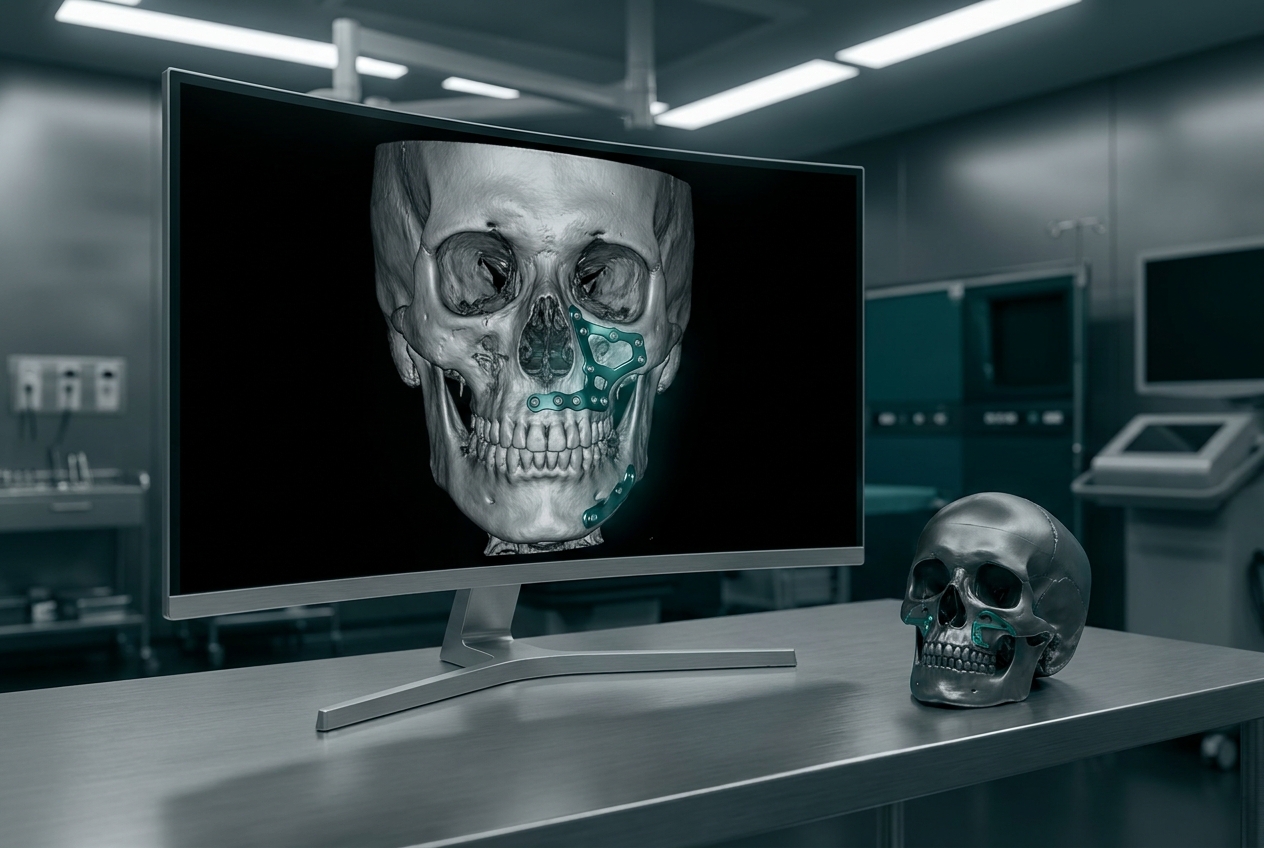 3D-Guided Surgical Planning
 Injuries to the face, whether from sport, falls, road accidents or assault, can affect the delicate balance of structures that allow us to see, breathe, eat, speak and express ourselves. Facial trauma also has a profound personal impact, because the face is so closely tied to identity and confidence. Treating these injuries demands a combination of surgical precision and genuine understanding.
Oral and maxillofacial surgeons are the specialists trained to manage the full spectrum of facial trauma, from soft tissue lacerations to complex fractures of the jaw, cheekbone, eye socket and nose. Our goal is always to restore both function and appearance, returning the face as closely as possible to its natural form.
Precise diagnosis and planning
Accurate assessment is essential in facial trauma. We use 3D cone-beam imaging and computed tomography to map fractures in fine detail, understanding exactly how the bones have been displaced. This allows us to plan reconstruction precisely and, where appropriate, to use guided surgical techniques that improve accuracy and outcomes.
Treatment is tailored to the nature and severity of the injury. Some fractures heal well with conservative management, while others require surgical repositioning and fixation using fine titanium plates and screws that hold the bone securely as it heals. Soft tissue injuries are repaired with meticulous technique to support healing and minimise scarring.
- Management of jaw, cheekbone, orbital and nasal fractures
- Detailed 3D imaging to map and plan complex repairs
- Precise fixation using biocompatible titanium plates
- Careful soft tissue repair to optimise healing and appearance
- Coordinated care with other specialists when required
Recovery and ongoing support
Procedures are performed in an accredited facility under appropriate anaesthesia, with your safety as the foremost priority. We guide you through every stage of recovery, providing clear instructions on diet, hygiene and activity, and we review your healing closely to confirm that both function and appearance are restored as fully as possible.
If you or a loved one has experienced a facial injury, prompt specialist assessment gives the best opportunity for an excellent recovery. We invite you to arrange a consultation so we can examine the injury thoroughly, explain the treatment required and support you with skill and compassion throughout your care.
Facial Trauma Repair — your questions
Facial injuries are best assessed promptly, as many fractures are easier to treat before swelling and early healing set in. Early specialist review gives the best opportunity to restore both function and appearance.
We use meticulous repair techniques and, wherever possible, hidden incisions to minimise scarring. While some marks may be unavoidable, our aim is always to restore your appearance as naturally as possible.
In most cases the small titanium plates and screws used to stabilise fractures remain safely in place permanently and are well tolerated by the body. If any ever need attention, we will discuss this clearly with you.
Discuss facial trauma repair with our team
Specialist assessment, 3D imaging and a calm, clearly-explained plan — arrange a consultation with the team at Maxilla Surgical Arts.