
Creating space for secure upper-jaw implants
When the upper back jaw lacks the bone height needed for implants, a sinus lift gently creates it. Our guided, meticulous technique makes this a safe and predictable step toward restoration.
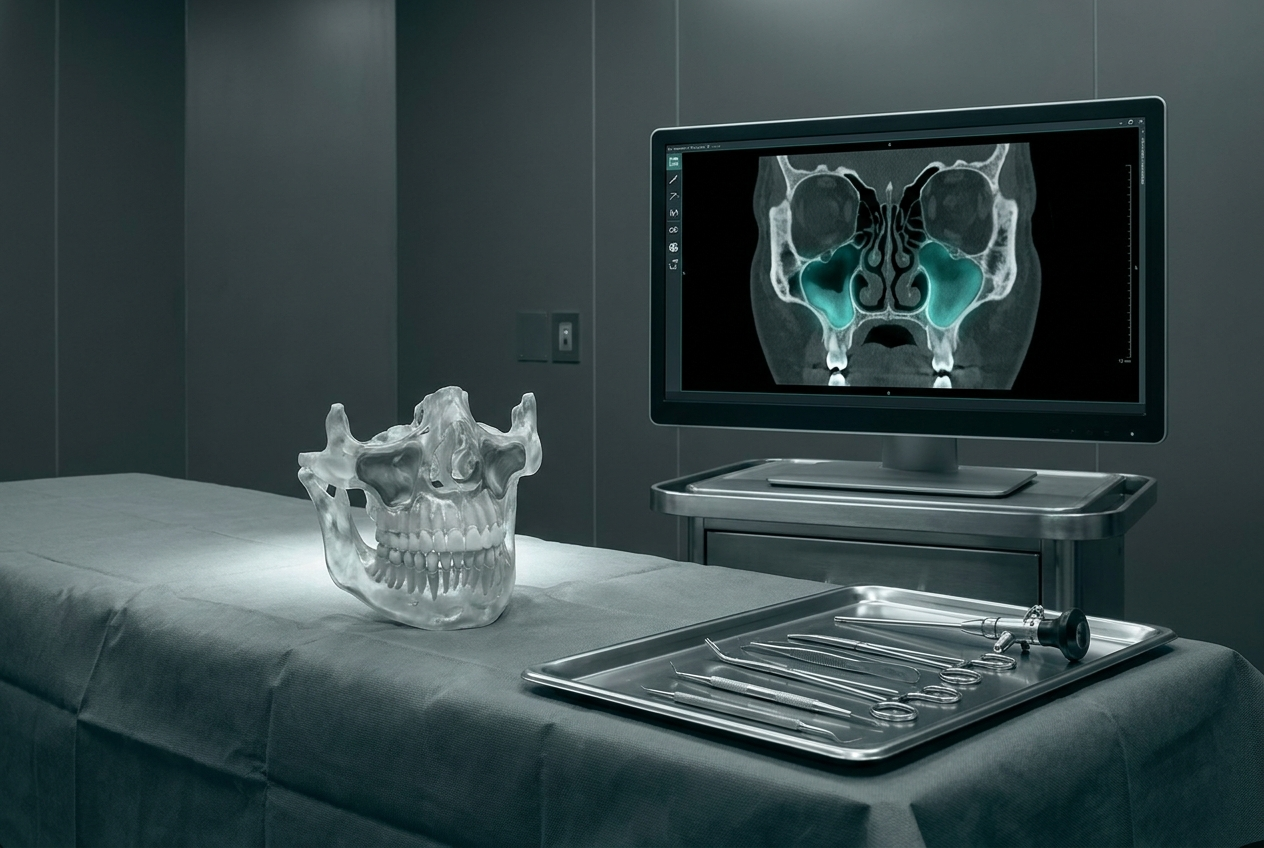 3D-Guided Surgical Planning
 The upper back jaw is one of the most challenging areas in which to place dental implants. The maxillary sinuses sit directly above the molar and premolar roots, and when these teeth are lost the bone here is often thin or has resorbed over time. A sinus lift, also known as sinus augmentation, carefully creates additional bone height in this region so that implants can be placed securely.
As specialist oral and maxillofacial surgeons, we plan every sinus lift using detailed 3D cone-beam imaging. This allows us to assess the size and shape of your sinus, measure the available bone precisely and identify the safest approach before treatment begins. Thorough planning is central to making this procedure both predictable and comfortable.
How a sinus lift is performed
During the procedure, the thin membrane that lines the floor of the sinus is gently lifted upward to create a protected space. Biocompatible grafting material is then placed beneath it, where it gradually matures into new bone capable of supporting an implant. The technique used depends on how much height is required and on the position of your sinus.
Where only a modest amount of bone is needed, the lift can sometimes be carried out through the implant site itself at the same time as implant placement. Larger requirements are addressed through a separate, carefully controlled approach to the side of the jaw, allowing the graft to heal fully before implants are placed.
- Detailed 3D assessment of sinus anatomy and bone height
- Gentle elevation of the sinus membrane to protect it
- Placement of biocompatible bone graft material
- A technique selected to match your individual anatomy
- Planned reviews to confirm bone maturation before implants
Recovery and aftercare
A sinus lift is usually performed as a day procedure under local anaesthesia, with IV sedation available for added comfort. Mild swelling or congestion may follow and typically settles within a few days. We provide clear guidance, including advice on protecting the healing site, and remain available throughout your recovery.
If you have been told there is not enough bone in your upper jaw for implants, a sinus lift may be the solution. We invite you to arrange a consultation so we can review your imaging, explain the procedure in detail and reassure you at every stage of your treatment.
Sinus Lifts — your questions
Yes. It is a well established procedure performed routinely by specialist surgeons. We plan each case with detailed 3D imaging and use refined techniques to protect the sinus membrane, making the procedure safe and predictable.
A sinus lift does not impair normal sinus function. You may notice mild congestion for a few days as the area heals, which settles with the simple aftercare measures we provide.
The graft generally needs several months to mature into bone strong enough to support an implant. We confirm this with imaging before placing your implants, and in some cases both can be performed together.
Discuss sinus lifts with our team
Specialist assessment, 3D imaging and a calm, clearly-explained plan — arrange a consultation with the team at Maxilla Surgical Arts.