Data-led cuts to energy spend
Metered energy audits, power-factor correction, LED and controls upgrades, and load analysis — a costed roadmap to lower bills and demand.

Energy cost is an operating expense that most commercial and industrial facilities have never properly interrogated. The bill arrives, the total is accepted, and the underlying drivers remain opaque. Apex Current Solutions changes that dynamic by delivering metered energy audits that translate raw consumption data into a precise, evidence-based account of where energy is being spent, how much of it is avoidable, and what the realistic financial return is on each identified intervention. Our audits are not desktop exercises built on industry averages and estimation. They are instrument-led investigations that quantify the actual energy behaviour of your facility under real operating conditions.
The economic case for a properly conducted energy efficiency audit is compelling. For a facility spending two hundred thousand dollars annually on electricity, a fifteen percent reduction represents thirty thousand dollars of recurring savings every year, savings that compound across the life of the improvements without any additional marketing spend, additional headcount, or additional risk. Our role is to identify that reduction potential with measurement certainty, model the investment required to capture it, and sequence the interventions in an order that maximises return on capital while managing operational disruption.
Metered Load Analysis and Power-Factor Assessment
Every meaningful energy audit begins with measurement. We install temporary sub-metering and power quality analysers across the facility distribution network, capturing granular interval data on real consumption, demand peaks, reactive power, harmonics, and power factor. This telemetry is collected under representative operating conditions, including peak production periods and after-hours base-load runs, so that the analysis reflects the full range of the facility's energy behaviour rather than a single snapshot that may misrepresent material variation.
Power-factor correction is among the most financially significant findings in industrial and large commercial facilities. A poor power factor increases the current drawn from the network for a given useful load, inflating reactive energy charges and driving up maximum demand readings that flow directly into network tariff components. Where sub-unity power factor is identified, we model the capital cost and payback of capacitor bank correction, quantify the tariff reduction achievable, and provide a technical specification suitable for procurement or direct tender. In many facilities, power-factor correction alone delivers a payback inside twelve months.
- Temporary sub-metering and power quality logging across distribution boards, major plant, and high-consumption process loads under representative operating conditions
- Interval demand analysis to identify demand peaks driving network capacity charges and to inform demand-management or storage intervention sizing
- Power-factor measurement and correction modelling with capital and payback calculations aligned to current network tariff structures
- Lighting load surveys and LED upgrade modelling including lumen-equivalence verification, controls integration, and maintenance cost reduction
- Itemised savings roadmap ranking every identified intervention by capital cost, annual saving, simple payback period, and five-year net present value
LED Upgrades, Controls, and Lighting Efficiency
Lighting consistently represents a material share of commercial energy consumption and is among the highest-confidence opportunities in any audit finding set. The gap between maintained fluorescent or metal-halide systems and modern LED equivalents is substantial, both in energy consumption per lumen and in the avoided maintenance cost of lamp replacements in high-bay or hard-to-access installations. Our auditors survey every luminaire type, measure maintained illuminance levels against the requirements of AS/NZS 1680, and model the LED replacement that achieves compliance while minimising energy draw.
Controls integration multiplies the saving. Occupancy sensors, daylight harvesting, and scheduled switching eliminate consumption during unoccupied periods without requiring behavioural change from staff. In warehouse and manufacturing environments, high-bay LED with motion-triggered dimming can reduce lighting energy by sixty to eighty percent against an uncontrolled fluorescent baseline. We specify the controls architecture, provide compliant wiring designs, and manage the installation through our licensed electrical workforce, delivering the completed project as a single accountability rather than a fragmented multi-contractor arrangement.
The Savings Roadmap and Post-Implementation Verification
The audit concludes with a structured savings roadmap that gives your finance team and board a clear, defensible basis for capital allocation. Each identified opportunity is presented with its measured baseline, the projected saving expressed in kilowatt-hours and dollars at your current tariff, the capital investment required, and the simple payback and net present value over a five-year horizon. Interventions are ranked so that the fastest-returning, lowest-complexity projects can be progressed immediately while longer-horizon investments are staged into future capital cycles. Apex Current Solutions is available to implement every recommendation in the roadmap, creating a continuous accountability from measurement through to installation, commissioning, and post-implementation verification that confirms the modelled savings have been realised in practice. Contact our team to commission a metered energy efficiency audit and begin the structured reduction of your electricity operating expenditure.
At a glance
Energy Efficiency Audits — your questions answered
Temporary sub-metering equipment is installed outside operational hours wherever possible, and the data loggers operate passively without interfering with any plant or process. The site walkthrough and load surveys are conducted around your operating schedule, and we design the entire data-collection phase specifically to avoid any interference with production, processing, or tenancy.
Projections are based on measured consumption data and verified against your current network tariff structures, so they reflect the actual operating conditions of your facility rather than generic industry averages. Post-implementation measurement and verification confirms realised savings against the model, providing documented evidence required for internal reporting or incentive-program acquittal.
Our standard scope covers the electrical distribution infrastructure, lighting, HVAC, and building services plant. For major process loads including compressed air, refrigeration, and production machinery, we can extend the scope with specialist sub-metering and process analysis. Scope is agreed with you at engagement so the audit addresses the consumption areas of most significance to your operations.
We do both, and the majority of our clients prefer a single point of accountability. Our licensed electrical workforce implements every electrical intervention identified in the audit, including power-factor correction, LED upgrades, controls installation, and distribution modifications, with all work performed to AS/NZS 3000 compliance and certified upon completion.
Related capabilities

Emergency Electrician
24/7 rapid response to outages, faults, and storm damage — make-safe and continuity when it matters.
Learn more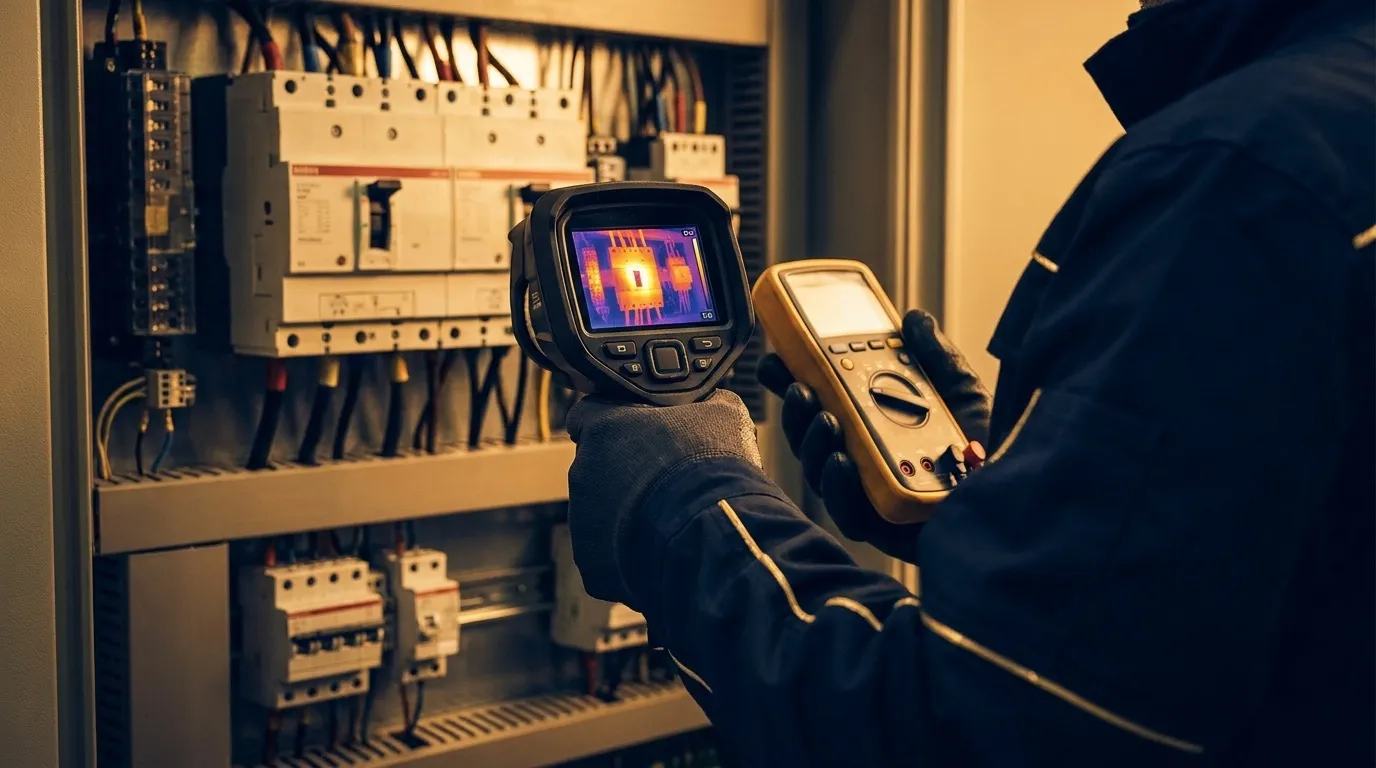
Fault Finding & Diagnostics
Systematic diagnosis of tripping and intermittent faults with thermal imaging and insulation testing.
Learn more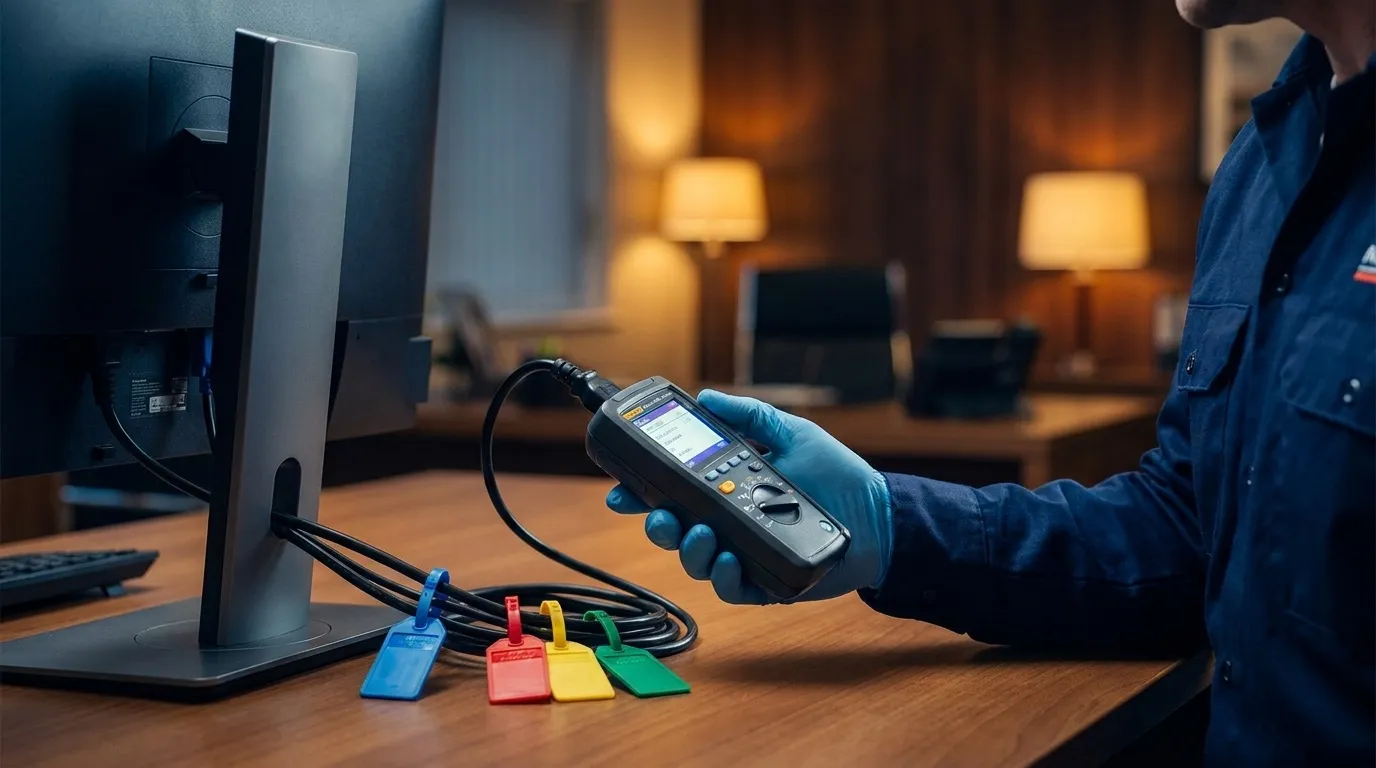
Test & Tag
Portable appliance testing and RCD testing to AS/NZS 3760, with asset registers and scheduled compliance.
Learn moreReady to scope your energy efficiency audits project?
Our licensed electricians and estimators will assess your site, define a compliant scope, and deliver a clear fixed quote — with no obligation.