Life-safety systems, installed to standard
Fire detection, EWIS, and emergency and exit lighting — designed, installed, monitored, and maintained to AS 1670 and AS 1851.
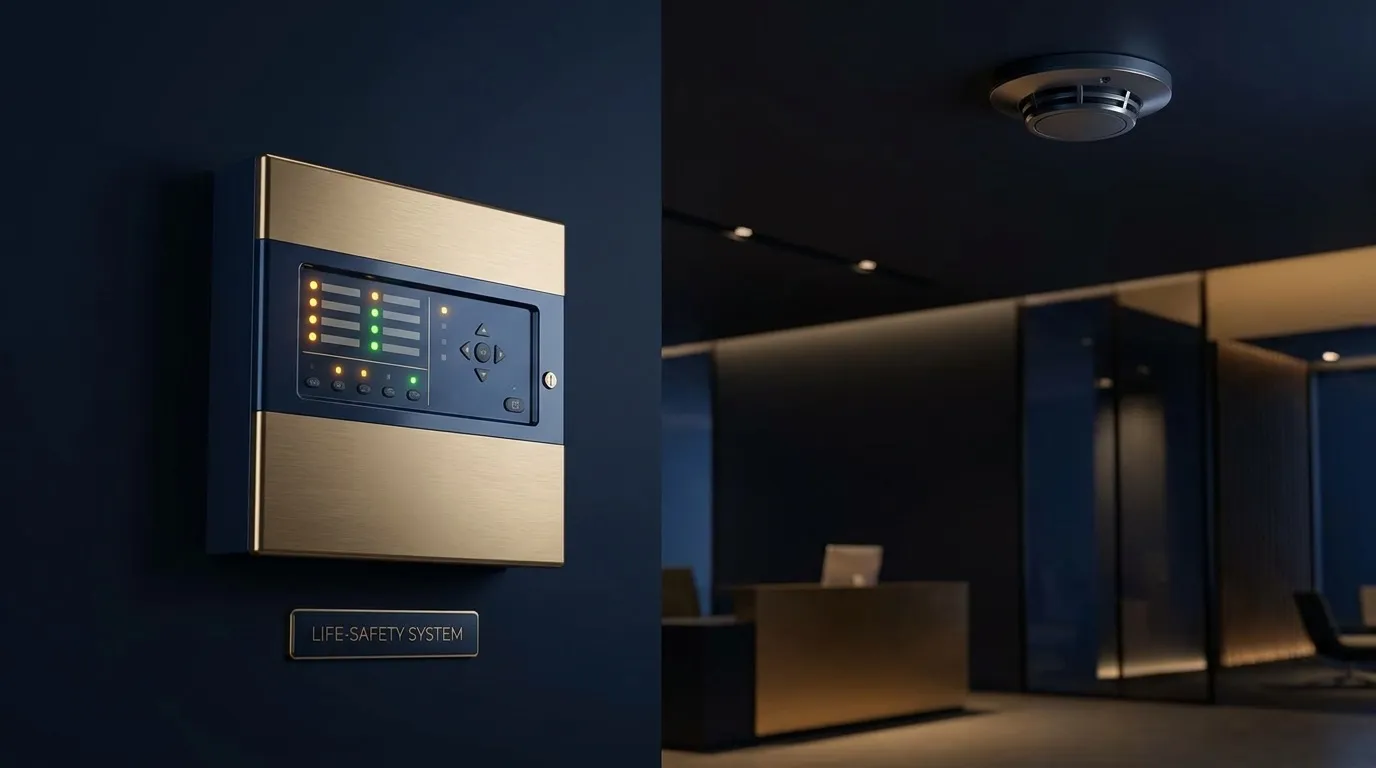
Fire detection and emergency warning systems are among the most consequential electrical installations in any commercial or industrial building. They are not infrastructure where lifecycle risk can be deferred, maintenance skipped, or compliance treated as a paperwork exercise. Apex Current Solutions installs, services, and maintains fire alarm systems, emergency warning and intercom systems, and emergency and exit lighting as a specialist discipline, governed by the standards that exist to protect life. Our project engineers and technicians understand that every system they commission will be tested not by a compliance audit but by the moment it is actually needed.
Our fire systems capability spans conventional and addressable detection, aspirating smoke detection, EWIS design and installation, and the emergency and exit lighting that must perform when primary power fails. We hold the relevant electrical contractor licences and work under the engineering oversight that complex life-safety installations demand, coordinating with fire engineers, building surveyors, and hydraulic and mechanical consultants to deliver systems that comply with the Building Code of Australia, the relevant Australian Standards, and the specific performance solutions documented in each project fire engineering report.
Detection, EWIS and System Design to Australian Standards
A fire alarm system is only as effective as its detection layer. We specify and install conventional zone-based detection and fully addressable systems with device-level intelligence, selecting the appropriate technology for the occupancy, the risk profile, and the response requirements documented in the fire engineering brief. Aspirating smoke detection, which actively draws air samples across a monitored zone and can detect combustion products orders of magnitude earlier than spot detectors, is specified where early warning is critical to protecting high-value assets or enabling occupant egress from large undivided spaces.
Emergency Warning and Intercom Systems bring voice communication capability to evacuation management, allowing wardens to address specific zones with intelligible, targeted instructions rather than relying solely on alarm tones. EWIS design and installation is performed to AS 1670.4, with zone mapping, speaker coverage, and intelligibility calculations documented and verified. We engage with the fire engineer from the design phase to ensure that the communication strategy reflected in the system architecture aligns with the emergency management plan for the building.
Emergency and Exit Lighting and AS 1851 Maintenance
- Addressable fire detection systems with device-level diagnostics and panel event logging.
- Aspirating smoke detection for high-sensitivity applications and large undivided spaces.
- EWIS design, installation, and commissioning to AS 1670.4 with intelligibility verification.
- Emergency and exit lighting installed to AS 2293 with maintained and non-maintained fittings specified by occupancy.
- AS 1851 preventive maintenance programs with documented monthly, quarterly, and annual inspection regimes.
Emergency and exit lighting must operate autonomously when the building power supply is disrupted, and the only way to know it will is to maintain it systematically. We install emergency and exit lighting to AS 2293 and establish AS 1851-compliant maintenance programs that govern the frequency and scope of testing, lamp and battery replacement, and documentation of results. The AS 1851 standard is explicit about what must be inspected, tested, and recorded at each maintenance frequency, and our technicians follow it without exception, providing the facility manager and building owner with a maintenance history that demonstrates ongoing compliance.
Monitoring, Commissioning and Lifecycle Accountability
A fire system that is not monitored is a fire system that can fail silently. We connect systems to Type 1 monitoring providers where required by the approval conditions or the building insurer, establishing the link between the local system and the fire brigade that ensures faults and alarms are responded to regardless of whether the building is occupied. Commissioning documentation captures the as-installed configuration, the zone schedule, the cause-and-effect matrix, and the commissioning test results, creating the system record that future maintenance and any modifications must be reconciled against.
If your building has ageing detection infrastructure approaching the end of its serviceable life, or a maintenance program that has not kept pace with AS 1851 requirements, we invite you to contact our fire systems team. We will assess your current installation, identify compliance gaps, and present a clear remediation and maintenance plan that restores your system to the standard it was designed to meet.
At a glance
Fire Alarm Systems — your questions answered
A conventional system divides the building into detection zones and reports an alarm from whichever zone has activated, without identifying the specific device. An addressable system assigns a unique identifier to each device, allowing the panel to report the precise location of an alarm or fault, which dramatically accelerates investigation and response in large or complex buildings.
AS 1851 specifies the minimum frequency and scope of preventive maintenance for fire protection systems, including monthly self-testing, quarterly inspection by a competent person, and annual full commissioning tests. Each inspection must be documented with results recorded in a maintenance logbook that is retained on site for audit by the relevant authority.
Yes. Where monitoring is required by approval conditions, the building insurer, or the client, we manage the commissioning of the monitoring connection to a Type 1 monitoring provider. This ensures faults and activations are reported to the fire brigade around the clock, even when the building is unoccupied.
Yes. We can absorb maintenance responsibility for existing installations regardless of the original installer, provided we can obtain the system documentation and commissioning records. Where records are incomplete, we perform a system audit to establish the current configuration before taking on maintenance accountability.
Related capabilities
Commercial Electrical
Office, retail, and hospitality fit-outs delivered on programme, after-hours, with full tenancy coordination.
Learn more
Industrial Electrical
Heavy-duty power and control — HV/three-phase distribution, motor control, switchgear, and PLC wiring.
Learn more
Lighting Design
Photometric lighting design and LED retrofits with DALI controls — engineered to perform and to save.
Learn moreReady to scope your fire alarm systems project?
Our licensed electricians and estimators will assess your site, define a compliant scope, and deliver a clear fixed quote — with no obligation.