Diagnostics that find the real cause
Methodical diagnosis of tripping circuits and intermittent faults — thermal imaging, insulation-resistance testing, and rapid, certified resolution.
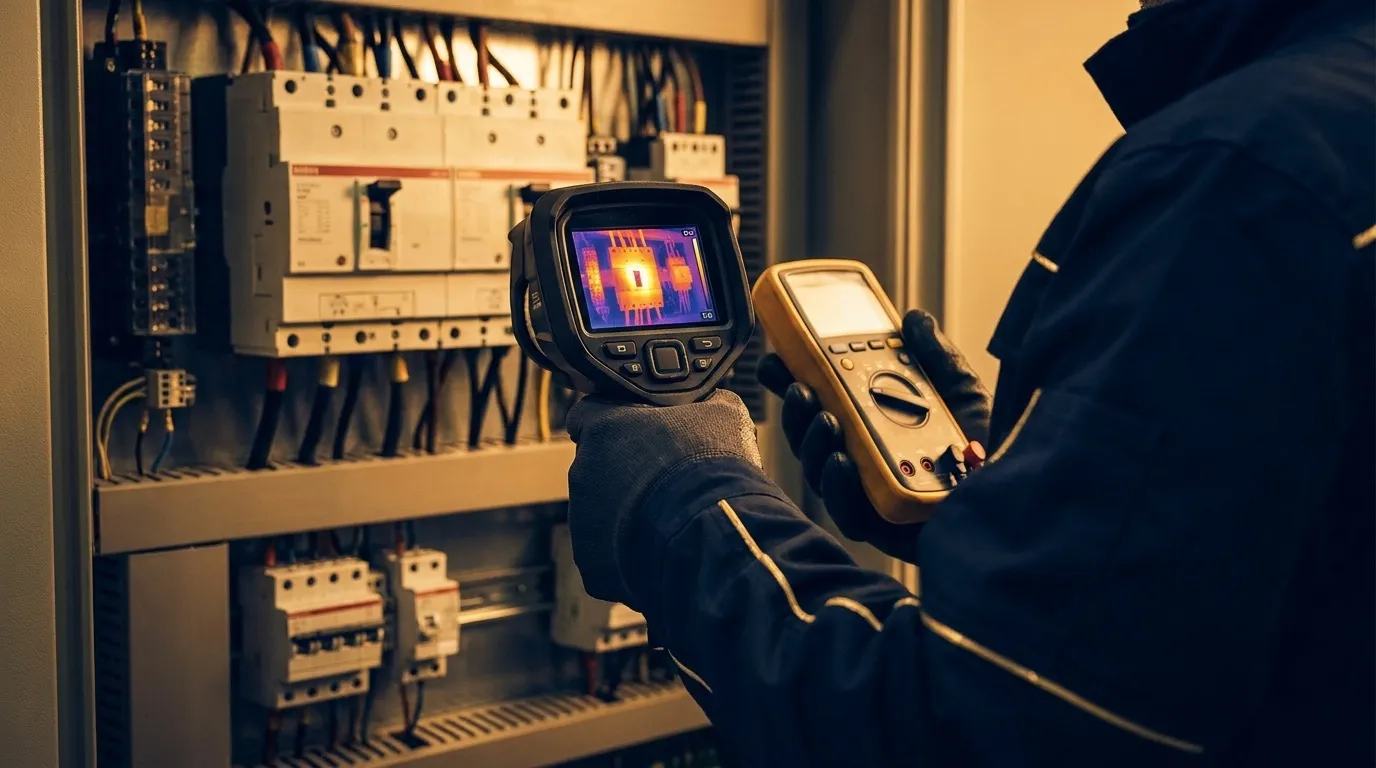
Electrical faults rarely announce themselves clearly. A circuit that trips without warning, an intermittent overload that strikes at the worst possible moment, or a persistent nuisance disconnection that no previous contractor has been able to isolate: these are the conditions that erode confidence in a facility and, left uncorrected, escalate into genuine safety and operational continuity risks. Apex Current Solutions brings a structured, instrument-led diagnostic methodology to every fault engagement, treating each investigation as a forensic exercise rather than a guessing game. Our licensed master electricians do not swap components until something works. They locate the root cause, confirm it with measurement, and resolve it with permanence.
The discipline underpinning our fault-finding practice is the same rigour that governs compliant installation work to AS/NZS 3000:2018 Wiring Rules. Thermal imaging, insulation resistance testing, earth loop impedance measurement, and power quality analysis are deployed in a logical sequence, each stage narrowing the field of investigation until the defect is precisely located and its mechanism understood. This systematic progression distinguishes genuine diagnostics from reactive trial-and-error that leaves facilities cycling through intermittent problems and escalating service calls for months.
Thermal Imaging and Insulation Resistance Testing
Thermal imaging is among the most powerful non-invasive diagnostic tools available to a licensed electrical contractor. An infrared camera reveals elevated temperatures at connections, switchgear, busbars, and cables that are invisible to the naked eye but that represent active failure in progress. High-resistance joints, overloaded conductors, and failing circuit breakers all present as thermal anomalies before they produce an outage or an ignition event. Our technicians conduct infrared surveys under load, capturing photographic evidence that documents the defect, prioritises its urgency, and supports the written corrective-action report delivered to the facility manager.
Insulation resistance testing, conducted with calibrated megohm meters in accordance with AS/NZS 3000 requirements, quantifies the integrity of cable insulation across the distribution network. Degraded insulation from ageing, mechanical damage, moisture ingress, or thermal stress is the precursor to flashovers, earth faults, and dangerous body-contact voltages. Our technicians test phase-to-earth and phase-to-phase insulation resistance across affected circuits and distribution boards, comparing results against acceptance thresholds to establish whether a targeted repair, a section replacement, or a complete circuit rewire is warranted. All results are documented in a written report that forms a permanent record in the facility maintenance register.
- Infrared thermography surveys identifying high-resistance connections, overloaded conductors, and failing protective devices under operational load conditions
- Calibrated insulation resistance testing across circuits and distribution infrastructure in compliance with AS/NZS 3000 acceptance criteria
- Earth loop impedance and prospective fault current measurement to verify protective device coordination and disconnection times
- Power quality monitoring to identify harmonics, voltage sags, and supply disturbances driving nuisance RCD and MCB tripping
- Detailed written diagnostic reports with photographic and instrument evidence supporting corrective action and preventive maintenance planning
Intermittent Fault Isolation and Root-Cause Resolution
Intermittent faults are the most technically demanding diagnostic category because the defect is frequently absent at the moment of investigation. A loose termination that tightens under ambient temperature, a cable that faults only when it flexes under vibration, or a switchboard component that fails only at peak demand: these presentations require a combination of patient load monitoring, strategic test-point selection, and deep familiarity with failure modes across varying installation vintage and type. Our technicians are experienced across the full range of industrial switchgear, commercial distribution boards, and residential sub-mains, and they apply that experience to eliminate variables methodically until the defect is reproducible and confirmed.
Once isolated, the repair is carried out to full compliance standard. Where corrective work triggers a compliance obligation under the relevant state electrical safety legislation, Apex Current Solutions issues a Certificate of Compliance for Electrical Work, providing the facility owner with the legally required documentation confirming the installation has been inspected and meets the requirements of the Wiring Rules. This lifecycle accountability means every fault engagement closes with verifiable, compliant evidence rather than a verbal assurance.
Rapid Response and WHS Obligations
An unresolved electrical fault is a WHS liability as well as an operational inconvenience. Work health and safety legislation across all Australian jurisdictions places a positive duty on persons conducting a business or undertaking to manage electrical risks in the workplace, and a known fault that has not been investigated represents an identified hazard that cannot simply be tolerated. Apex Current Solutions maintains dedicated fault-response capacity to meet urgent callout requirements, ensuring that the gap between hazard identification and hazard resolution is measured in hours rather than weeks. When the fault is found, the cause is confirmed, and the repair is certified, the WHS exposure closes. Engage Apex Current Solutions to investigate your facility now and restore both safety and confidence to your electrical infrastructure.
At a glance
Fault Finding & Diagnostics — your questions answered
Straightforward faults in a well-documented installation can be isolated and confirmed within a single visit of two to four hours. Intermittent or complex multi-circuit faults in older installations may require a structured sequence of testing across one or more visits, with a written diagnostic report delivered after each stage so you remain fully informed of progress.
Many diagnostic instruments, including thermal imaging cameras and power quality analysers, operate on live circuits under load. Insulation resistance testing and some earth continuity measurements do require the circuit to be de-energised, and our technicians coordinate planned outages with your operations team to minimise any disruption to your business.
We deliver a written diagnostic report identifying the root cause, the corrective action taken, and any associated compliance obligations. Where we complete the rectification work, a Certificate of Compliance for Electrical Work is issued confirming the installation meets AS/NZS 3000 requirements, creating a permanent, auditable record for your facility.
Absolutely, and we recommend it. Scheduled thermographic surveys of switchboards, distribution boards, and high-load equipment under operational conditions identify developing faults before they cause outages or become safety hazards. This predictive approach costs far less than emergency callouts and unplanned downtime, and it satisfies the proactive risk-management obligations under WHS legislation.
Related capabilities
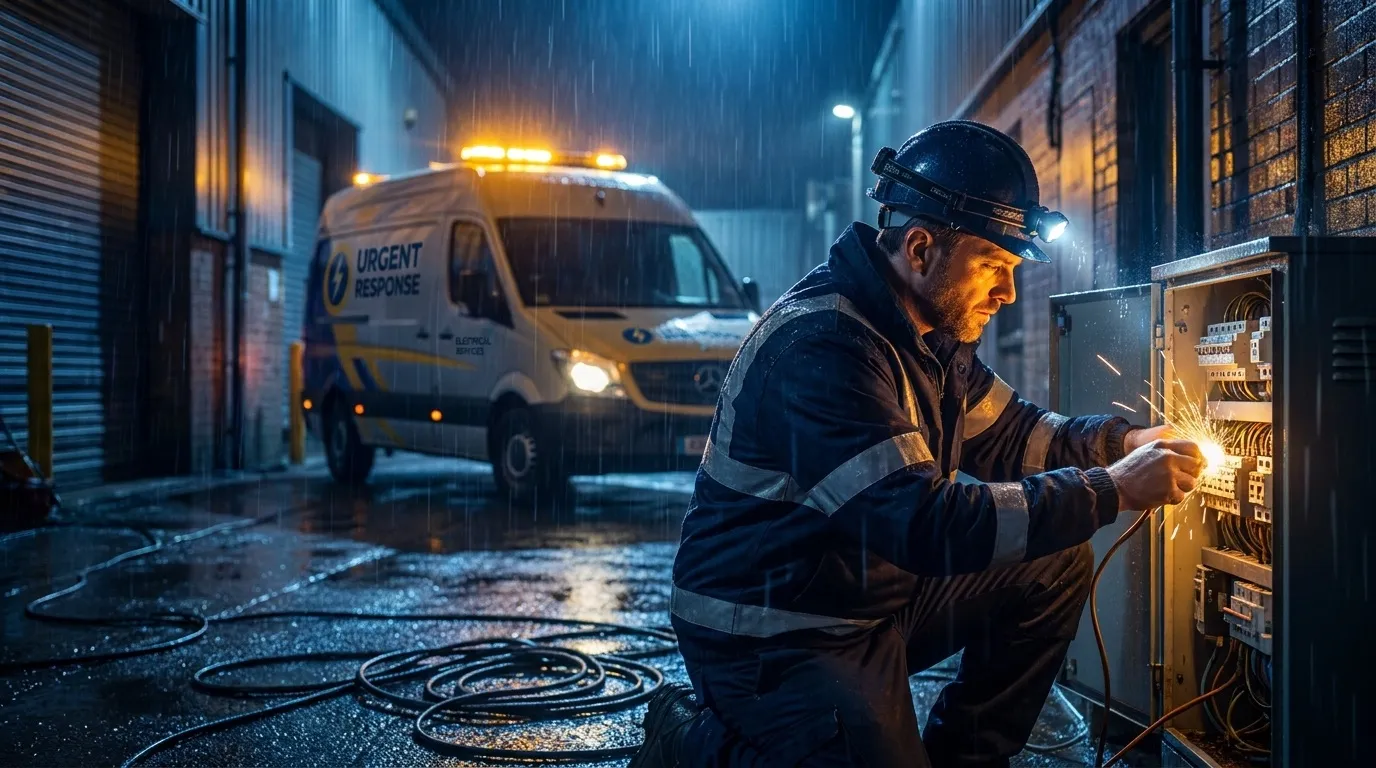
Emergency Electrician
24/7 rapid response to outages, faults, and storm damage — make-safe and continuity when it matters.
Learn more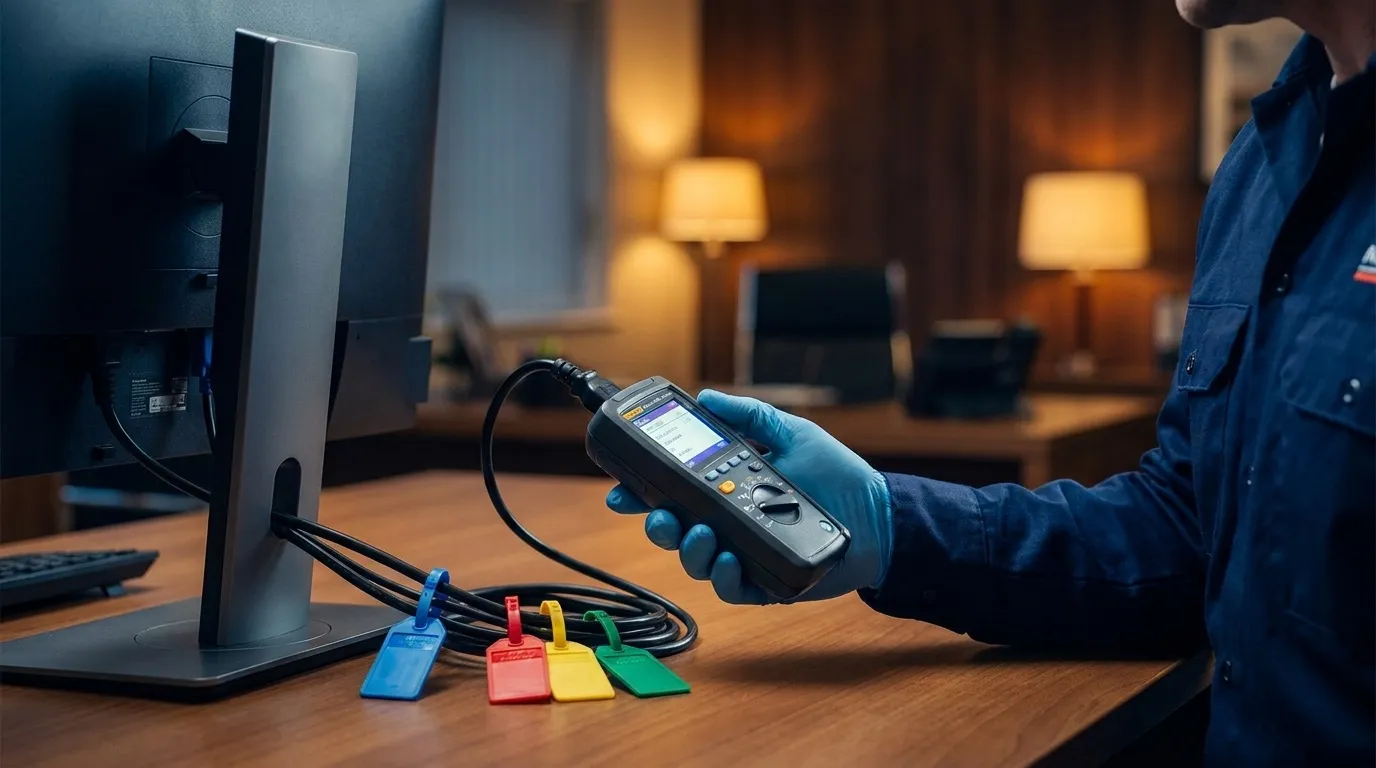
Test & Tag
Portable appliance testing and RCD testing to AS/NZS 3760, with asset registers and scheduled compliance.
Learn more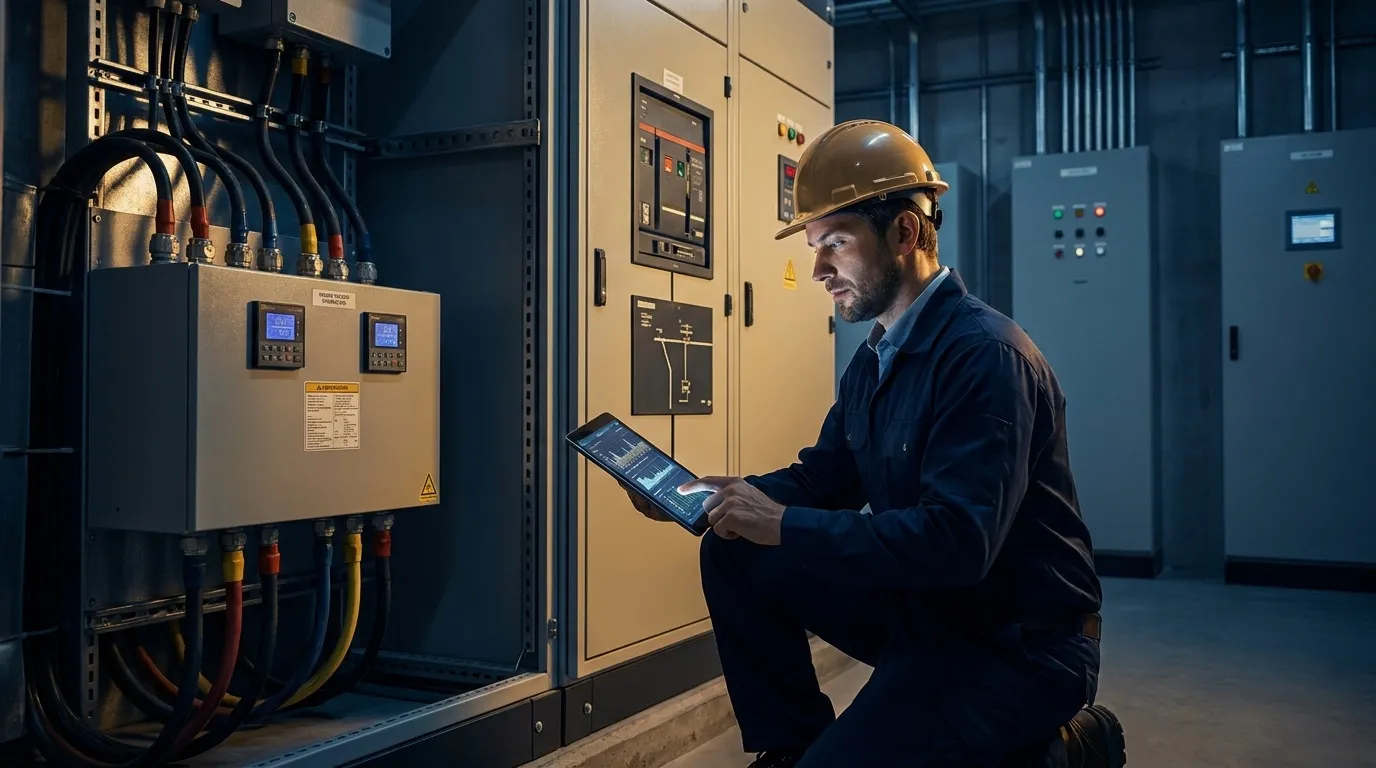
Energy Efficiency Audits
Metered energy audits, power-factor correction, and upgrade roadmaps that cut your energy spend.
Learn moreReady to scope your fault finding & diagnostics project?
Our licensed electricians and estimators will assess your site, define a compliant scope, and deliver a clear fixed quote — with no obligation.