Electricity prices across Australia have climbed significantly over the past several years, and the temptation is to treat cutting your power bill as an all-or-nothing project requiring solar panels, a battery system and a completely new approach to daily life. The truth is more nuanced and more accessible than that. Many of the most effective changes are small, inexpensive and can be made this week.
1. Switch Every Globe to LED If You Have Not Already
If your home still contains halogen downlights or incandescent globes, replacing them with quality LED equivalents is the single fastest return on investment available in residential energy. A halogen downlight draws 50 watts. A quality LED replacement draws 7 to 9 watts and produces equivalent light. In a home with 20 downlights running four hours per evening, that single change saves roughly 300 to 350 kilowatt-hours per year. At current Australian electricity rates, that represents a meaningful annual saving for a one-time outlay of well under $200.
2. Add Dimmers to Your Most-Used Lighting Circuits
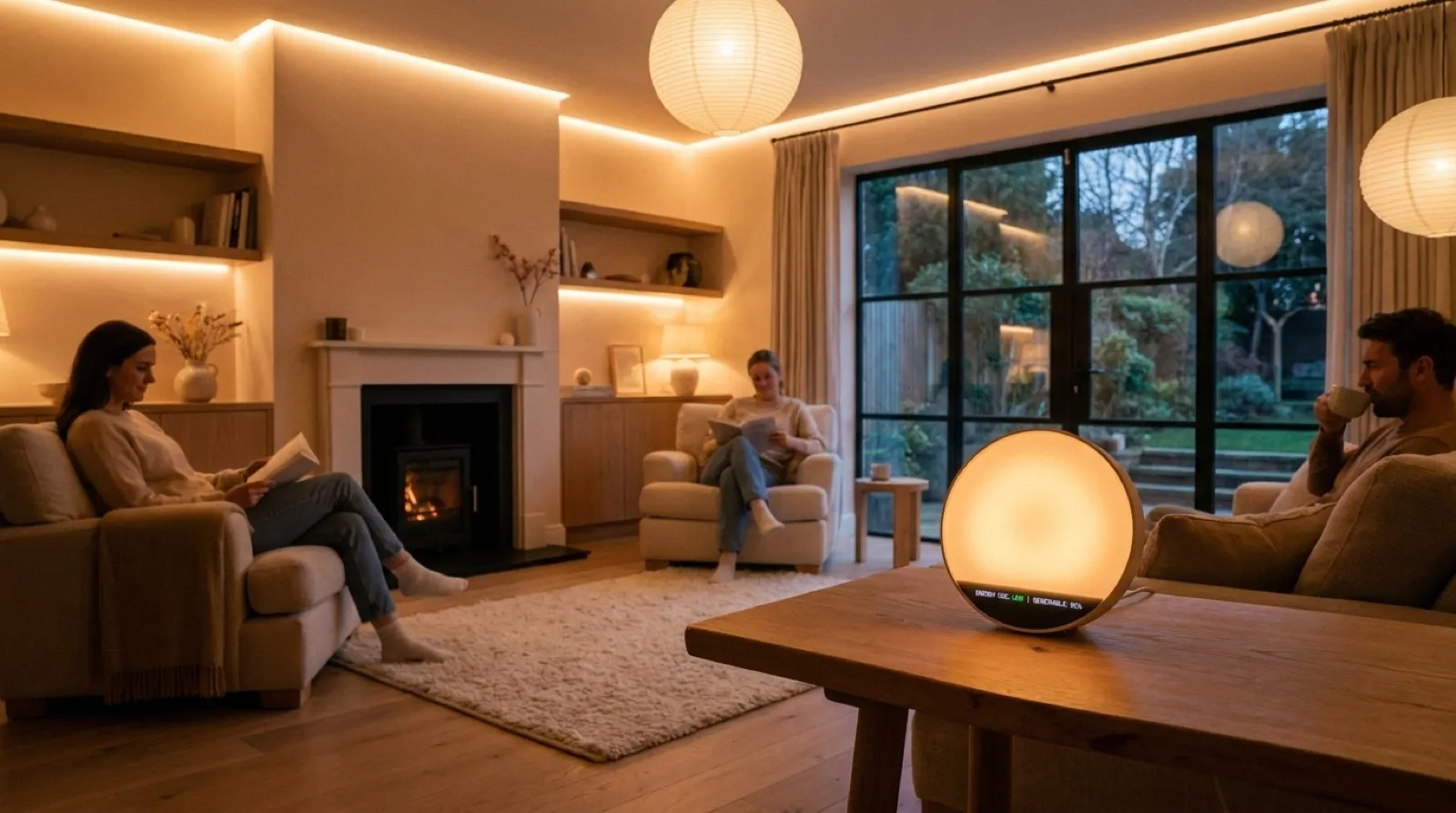
Dimmable LED circuits use less power when dimmed. Running your living room lights at 60 percent brightness through an evening saves 40 percent of that circuit's consumption. More importantly, dimmed warm light in the evening tends to create an environment where you use your lighting more intentionally rather than leaving full-brightness overheads running in empty rooms out of habit.
3. Audit Your Standby Power
Standby power, sometimes called phantom load or vampire power, is the electricity drawn by devices left plugged in and switched on at the wall while not actively in use. Studies in Australian homes have found standby power accounting for between 5 and 10 percent of total household electricity use. Televisions, games consoles, set-top boxes, phone chargers, and older appliances are the main contributors. A simple power meter from a hardware store will reveal exactly which devices are costing you money overnight.
- Switch off home entertainment systems at the wall when not in use rather than leaving them on standby.
- Use smart power strips that cut standby power automatically when a primary device such as your television is switched off.
- Replace appliances rated poorly on the Australian Energy Rating label when they come up for replacement rather than keeping them running until complete failure.
- Move your router and modem to a smart switch or timer if you do not need internet access overnight.
- Check the Energy Rating label on your fridge, which runs continuously — an upgrade from a two-star to a four-star rated model typically saves $100 to $150 per year in running costs alone.
4. Review Your Electricity Tariff
Many Australians remain on a flat-rate tariff out of inertia, unaware that time-of-use tariffs, which charge less for electricity consumed off-peak overnight, can deliver significant savings for households able to shift discretionary loads such as dishwashers, washing machines and EV charging to late evening or early morning. Your retailer's website or a quick call to their customer service team will clarify what tariff options are available to you.
5. Install a Smart Thermostat
Heating and cooling typically account for 40 to 50 percent of a household energy bill. A smart thermostat that learns your schedule and adjusts temperature only when you are home — and brings the home to a comfortable temperature just before you arrive rather than running all day — can reduce HVAC consumption by 15 to 25 percent without any sacrifice in comfort.
6. Seal Your Home Before Adding More Capacity
Before investing in solar or a larger air conditioner, assess how well your home retains temperature. Gaps around doors and windows, uninsulated ceilings and poorly sealed downlight penetrations in the ceiling cavity are among the most common contributors to a leaky thermal envelope. Draught sealing and ceiling insulation have relatively low installation costs and improve the effectiveness of every heating and cooling dollar you spend.
7. Consider Rooftop Solar, Particularly If You Work From Home
Rooftop solar is most effective for households that can use power during daylight hours, which increasingly includes people working from home, families with children, and small businesses operating from residential premises. Feed-in tariffs have reduced considerably in most Australian states, meaning the financial case for solar now depends primarily on self-consumption of generated power rather than export income. Pairing a modest solar system with conscious daytime use of appliances, including smart scheduling of your EV charge, dishwasher and washing machine, typically delivers a payback period of four to seven years at current installation costs and electricity prices.
None of these strategies requires a dramatic change to how you live. Together they form a quiet, cumulative approach to energy that tends to save meaningfully over time while making your home more comfortable in the process. If you would like help understanding which changes make the most sense for your specific situation, we are always glad to have that conversation.