Electrical faults are one of the leading causes of house fires in Australia, and the frustrating truth is that most are preventable. The good news is that identifying risk does not require a trade qualification. A calm, systematic walk through your home with the right checklist will surface the majority of common hazards, and knowing what to look for means you can act before a minor issue becomes a dangerous one.
Switchboard and Safety Switches
Your switchboard is the heart of your home's electrical system and the first place to assess. A properly maintained switchboard should have circuit breakers rather than old ceramic fuses, and it should have at least one safety switch, also called an RCD or residual current device, covering power circuits and lighting circuits. In Queensland and many other Australian states, safety switches are now mandatory on all circuits in new homes and renovations.
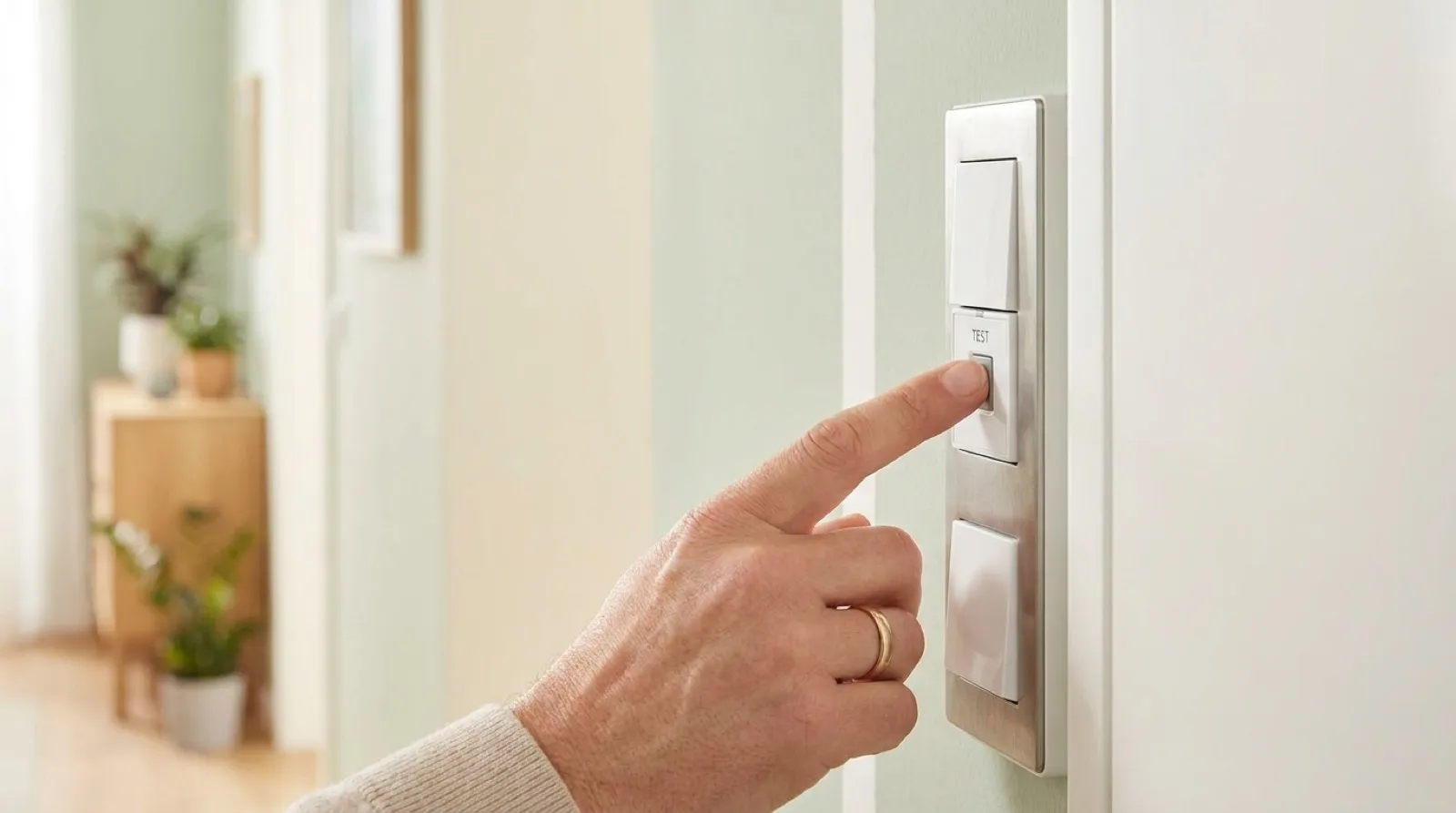
- Test your safety switches every six months by pressing the Test button on each device. It should trip immediately and restore when reset.
- Look for signs of scorching, burning smell, or discolouration around the switchboard, and call a licensed electrician immediately if found.
- If your switchboard still uses ceramic rewireable fuses, arrange an upgrade. These are outdated, offer limited protection, and can be a fire risk.
- Ensure the switchboard panel door closes fully and is not obstructed by storage or clutter.
- Check that all circuit breakers are labelled clearly so you can isolate individual circuits quickly in an emergency.
Power Points and Wiring
Power points are handled daily but rarely inspected. Cracked faceplates, loose fittings that shift when a plug is inserted, scorch marks or discolouration, and power points that feel warm to the touch are all signs that something is not right. These should be assessed by a licensed electrician rather than treated as a DIY project: in Australia it is illegal for homeowners to carry out electrical work beyond the most basic tasks such as replacing a light globe.
Extension leads and double adaptors used as permanent solutions are one of the most common household hazards we encounter. They are intended for temporary use only. If you find yourself permanently powering appliances from extension leads, the right solution is to have additional power points installed.
Lighting and Ceiling Fixtures
Recessed downlights in contact with insulation in the ceiling cavity are a significant fire risk, particularly in older homes fitted with halogen globes before the LED transition. If your home was built or last rewired before 2010, it is worth asking a licensed electrician to inspect the ceiling cavity. Fire-rated downlight covers and IC-rated fittings provide the protection needed when insulation is present.
Outdoor and Wet Area Safety
- All power points in bathrooms, kitchens, laundries and outdoor areas should be protected by a safety switch.
- Outdoor power points and light fittings must carry an appropriate IP weatherproof rating. Standard indoor fittings are not suitable outside.
- Pool and spa electrical work must be carried out by a licensed electrician and compliant with Australian Standard AS 3000.
- Garden lighting using low-voltage LED systems is safer than mains-voltage outdoor fittings and easier to install legally.
- Check that any external power points have secure, weatherproof covers that close properly when not in use.
When to Call an Electrician
Any flickering lights that persist after the globe is replaced, frequently tripping circuit breakers, a burning smell from any outlet or fitting, tingling sensations when touching appliances, or visible sparking are all reasons to stop using the affected circuit and call a licensed electrician the same day. These are not situations to monitor and reassess. Electricity does not give second warnings.
A periodic electrical inspection by a licensed professional, sometimes called a safety audit or condition report, is one of the most cost-effective investments a homeowner can make. We recommend one every five to ten years for homes over fifteen years old, and immediately upon purchasing an older property. Peace of mind in your own home is genuinely worth the call.