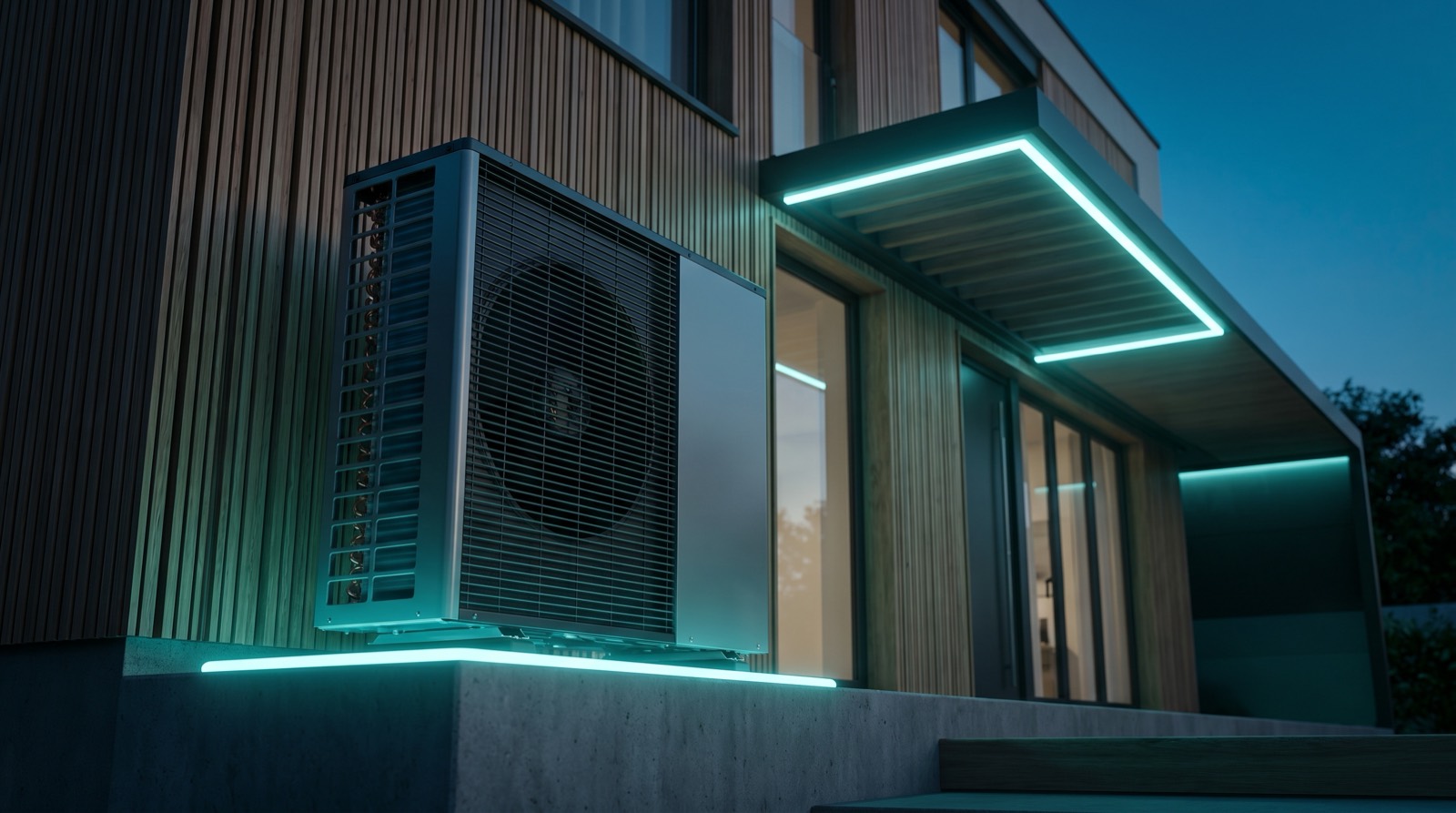
Thermal load is the most stubborn segment of decarbonization because combustion is cheap, dense, and entrenched. Heat pumps break that lock-in by moving heat rather than generating it, delivering three to four-and-a-half units of thermal energy per unit of electricity consumed. That coefficient of performance is what makes electrification economically defensible rather than merely virtuous: a SCOP of 3.5 means the effective cost of delivered heat can undercut gas even where electricity carries a per-kWh premium.
Sizing against the real load curve
Oversizing is the most common and most expensive error in heat pump deployment. We size against the actual hourly thermal load curve, not nameplate peak, using a balance-point analysis that pairs a correctly dimensioned heat pump with a supplementary resistance or retained combustion stage for the few extreme-design-day hours. This avoids short-cycling, preserves COP, and keeps capital cost proportional to the load that genuinely needs electrifying.
For cold climates, modern variable-speed air-source units maintain useful capacity and a COP above 2.0 down to ambient temperatures of −25 °C, with cold-climate models rated to −55 °C. Where ground area or boreholes are available, ground-source systems exploit the stable 12–15 °C subsurface reservoir to hold SCOP in the 4.0+ range year-round, at a higher capital cost recovered over a longer horizon.
- Balance-point analysis to right-size against the hourly load curve
- Variable-speed inverter compressors for part-load COP retention
- Ground-loop and borehole thermal-conductivity testing pre-design
- CO₂ and propane refrigerant options for low-GWP compliance
- Cascade and hybrid configurations for high-temperature process heat
Tariff arbitrage and demand impact
Electrifying heat shifts a combustion cost onto the electricity meter, where it interacts with time-of-use rates and demand charges. We engineer dispatch around this: thermal storage buffers and the building's own thermal mass let the heat pump pre-charge during off-peak windows, harvesting the arbitrage spread between off-peak and peak energy rates while flattening the kW draw that would otherwise inflate demand charges. The result is electrification that lowers the bill rather than relocating it.
We also model the marginal grid impact. A poorly scheduled electrified building can add a sharp coincident peak; a well-controlled one stays nearly flat. Our control sequences keep the system off the monthly peak interval and coordinate with on-site PV and storage where present, so the electrification does not consume the interconnection headroom that other loads may need.
High-temperature process heat
Beyond space heating, cascade and CO₂ transcritical heat pumps now deliver supply temperatures of 90 °C and above, opening industrial process heat, sterilization, and district loops to electrification. We assess each thermal demand by its required supply temperature and duty cycle, applying the heat pump where its COP is defensible and reserving alternative measures for the genuinely high-grade loads where electrification does not yet pencil out.