A solar asset is financed on a yield forecast, and every percentage point of underperformance erodes the IRR the investment was underwritten against. Undetected, an array silently bleeds energy—soiling, a tripped inverter, degraded strings, failed optimizers. Performance-based O&M exists to close the gap between modeled and actual production and to protect the asset over a 25-year life.
Performance monitoring & diagnostics
The core metric is performance ratio (PR): actual energy output versus the output the array should produce given measured irradiance and temperature. We monitor PR continuously at the inverter and, where available, string level, so a fault that costs even 2-3% of production triggers an alert the same day rather than surfacing in a quarterly bill review. Continuous monitoring routinely recovers 5-10% of yield that would otherwise be lost.
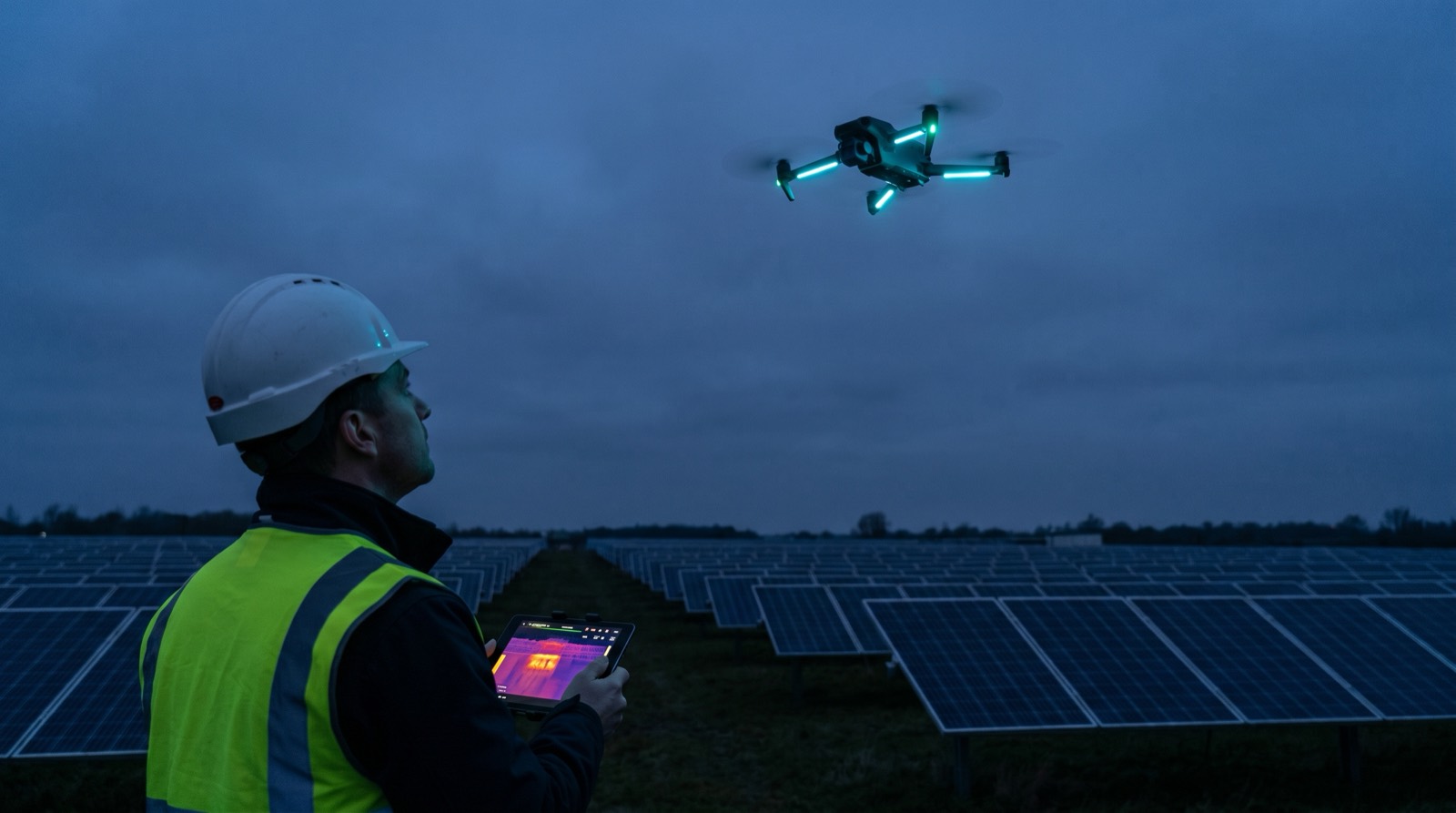
Diagnostics go beyond dashboards. Periodic IV-curve tracing and aerial thermography identify hot spots, cracked cells, diode failures, and PID (potential-induced degradation) before they propagate, distinguishing recoverable faults from genuine module degradation.
Preventive & corrective maintenance
Preventive maintenance follows a condition-based schedule, not a calendar alone: torque checks on connections to prevent arc faults, inverter cooling and filter servicing, combiner-box inspection, and vegetation and soiling management. Soiling can cost 1-6% of annual yield depending on climate; data-driven cleaning intervals hold that loss near 0.5% without over-spending on unnecessary washes.
- Continuous performance-ratio monitoring with same-day fault alerting
- Aerial thermographic and IV-curve diagnostics for module-level faults
- Condition-based preventive servicing of inverters, connections, and combiners
- Data-driven soiling management to minimize cleaning cost and yield loss
- Inverter availability SLA with guaranteed sub-4-hour fault response
Reliability guarantees & asset value
We back the service with contractual commitments: greater than 99% inverter availability and sub-4-hour response to production-impacting faults, with a managed spares program so a failed inverter is a same-week repair, not a multi-week outage. Corrective work is prioritized by lost-kWh impact, so the highest-revenue faults are cleared first.
The deliverable is asset protection. Defending performance ratio and minimizing downtime keeps lifetime energy production on its modeled trajectory, preserves the array's IRR, and protects resale and refinancing value—because a buyer pays for documented, sustained yield, not nameplate capacity.