Get yourself out, and your mates too
When the track gets serious, the right recovery gear and a properly mounted winch are the difference between a story and a stranding. We fit it rated and ready.
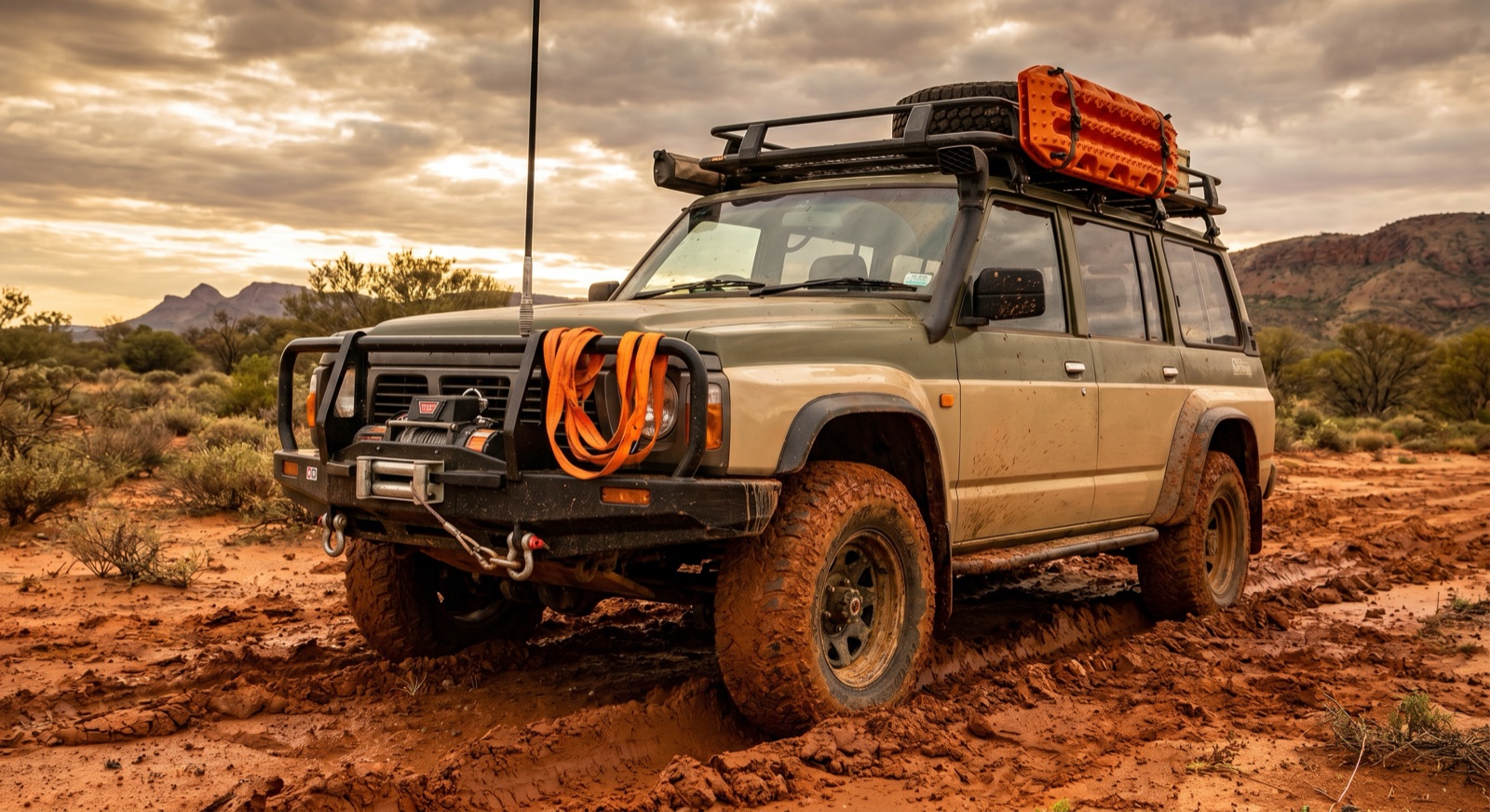
A winch is only as good as what it is bolted to, and a recovery is only as safe as the weakest point in the chain. We build recovery fitouts that work as a complete, rated system, from the winch and its mounting through to your recovery points, straps and traction boards. When you are bogged to the axles on a remote beach or buried in mud kilometres from help, that system is what gets you moving again, safely.
We supply and fit Warn and Bushranger winches matched to your vehicle's weight. As a rule a winch should be rated to at least one and a half times your loaded vehicle mass, so a heavy tourer needs serious line pull. We mount the winch in a cradle engineered for the load, wire it through a properly rated isolator and solenoid, and fit a synthetic or steel rope to suit how you use it. We also size the battery and charging system to cope, because a winch draws enormous current under load and a tired battery will leave you stalled halfway through a pull when you need the winch most.
Rated recovery points, not tow hooks
The most common and dangerous mistake we see is recovering off a factory tie-down or a tow ball. Those are not designed for snatch loads and can launch a heavy projectile when they let go. We fit engineered, rated recovery points bolted to the chassis with the correct grade hardware, front and rear, so you can winch or snatch with confidence. We will also check your shackles, straps and dampers and replace anything that is rated incorrectly or past its service life.
- Warn and Bushranger winches sized to your loaded weight
- Engineered winch cradles and rated isolators and wiring
- Front and rear chassis-mounted rated recovery points
- Synthetic and steel winch rope, fairleads and damper blankets
- MaxTrax traction boards, snatch straps and soft shackles
- Recovery kit reviews and safe technique walkthrough
The kit that finishes the job
A winch is not always the answer. Often a set of MaxTrax under the tyres, a snatch strap from a mate or a careful tyre pressure drop gets you out faster and safer. We set you up with quality soft shackles, a rated snatch strap, an equaliser, a damper and traction boards, then walk you through using them safely. The best recovery is the one you never need because you were prepared and aired down before you got stuck. We can put together a complete recovery kit in a hard-wearing bag so everything you need lives in one place and nothing is missing when the moment comes.
Compressors and tyre management
Half of all bogging happens because tyres are run at too high a pressure for the surface. Airing down spreads the footprint and floats the vehicle across sand and mud, but you have to be able to air back up before you hit the bitumen. We fit quality onboard air compressors, often the same compressor that drives your ARB Air Locker, plumbed to a quick coupling so you can inflate all four tyres quickly at the end of a track. Pair that with a good gauge and a deflator and you have the tools to manage traction properly, which is the cheapest and most effective recovery aid of all.
Knowing how to use the gear safely matters as much as owning it, so we take the time to show you how each piece works and how to rig a recovery without putting anyone at risk. If you are heading remote, do not leave it to chance. Give the workshop a call and we will make sure your recovery setup is rated, complete and ready for the worst day on the track.
Recovery & Winch Fitouts questions
A good rule is at least one and a half times your fully loaded vehicle weight in line pull. A heavily built tourer often needs a twelve thousand pound class winch or larger. We confirm the right size once we know your laden weight.
A tow ball is not designed for shock loads and can snap and become a deadly projectile during a snatch. Always use engineered, chassis-mounted rated recovery points, which we fit front and rear with the correct hardware.
Synthetic rope is lighter, safer if it breaks and easier to handle, which makes it popular for touring. Steel is more abrasion resistant and cheaper, suiting rocky, dirty work. We help you choose based on where and how you wheel.
Let's get this one built
Honest advice, fixed pricing and trail-proven fitment. Book your build consult with The Overlander today.