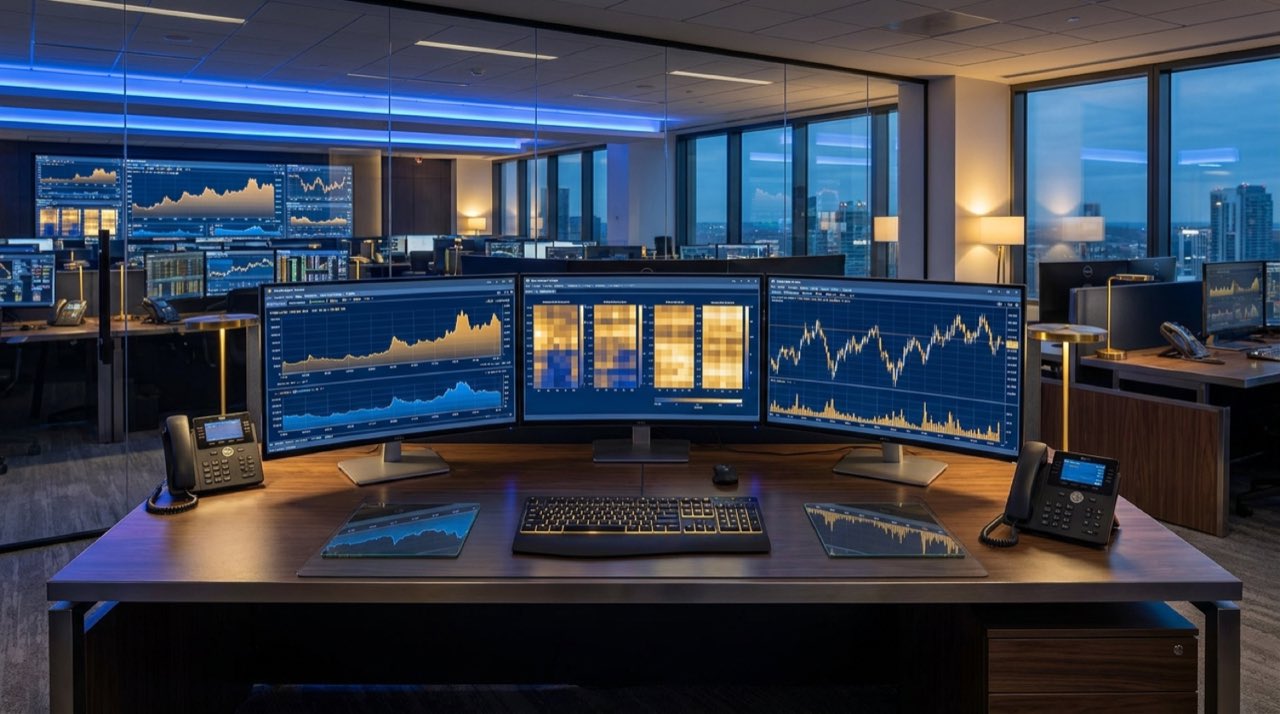
Australia's National Electricity Market is one of the most volatile wholesale power markets in the world. Spot prices swing from near-zero during sunny midday periods to hundreds or thousands of dollars per megawatt-hour during evening peaks, storms or generation shortfalls. For the majority of electricity users that volatility is a risk managed by their retailer. For businesses and asset owners with dispatchable storage, it is an opportunity — provided the dispatch decisions are made fast enough, at the right times, and within a risk framework that protects against adverse outcomes.
Zenith's energy trading service connects your battery storage assets to AEMO's dispatch mechanisms and to physical or financial wholesale market positions. Our optimisation engine runs a continuous forward-looking dispatch model using NEM five-minute price forecasts, your site's load data, the current state of charge of your battery and the output of your solar array. Every five minutes it decides whether to charge from the grid, charge from solar, hold, export, or respond to a frequency control ancillary services (FCAS) signal — and it executes that decision automatically without any action required from your operations team.
Revenue streams available to storage assets in 2026
- Spot market arbitrage — buy energy cheaply during low-price intervals, sell stored energy during high-price events
- FCAS markets — earn availability and enablement payments for frequency regulation (raise and lower services across six AEMO market bands)
- Demand response — reduce grid draw during retailer-nominated peak windows in exchange for contracted payments
- Network tariff avoidance — time discharge to eliminate or reduce demand charges that can represent 30–50% of a commercial electricity bill
- Wholesale energy hedge — lock in a forward price for a portion of your export volume to reduce revenue variability
- VPP participation — pool your asset with others in the Zenith virtual power plant to meet the minimum bid size thresholds for wholesale and FCAS markets
How dispatch optimisation works
Raw spot market exposure without optimisation is not a viable strategy for most asset owners — the price distribution is highly skewed, with a small number of extreme events driving a disproportionate share of annual revenue, and poorly timed dispatch can crystallise costs rather than capture value. The Zenith dispatch engine is built on a stochastic optimisation model that simultaneously forecasts price, manages battery state-of-charge across a rolling dispatch horizon, respects degradation limits that protect your battery warranty, and applies configurable risk parameters that set a ceiling on the market exposure you are willing to accept.
In practical terms, this means your battery does not simply chase the highest five-minute price — it positions across the trading day to maximise the expected value of its capacity while holding enough charge in reserve for the demand events and FCAS signals that represent your most reliable revenue. The model recalibrates continuously as forecast conditions change, and performance is reported to you in a live dashboard that shows dispatch history, revenue by stream, and projected annual outcomes against the model's initial forecast.
Risk management and who takes the market risk
Zenith offers energy trading under two engagement models. Under a managed-service arrangement we operate your assets and share in the upside under a revenue-split agreement — our incentive is aligned with yours, and we absorb the operational complexity. Under a platform-licence arrangement you retain full economic ownership of the market position and pay a flat monthly platform fee; this suits larger operators or sophisticated energy teams who want visibility and control over every dispatch decision. Both models include AEMO registration, metering, settlement reconciliation and monthly reporting.
For businesses considering storage primarily as a bill-reduction tool, trading revenue provides a meaningful uplift to the investment case. For assets that are large enough to participate in wholesale and FCAS markets directly — generally 100 kWh and above — trading income alone can justify a significant portion of the battery capital cost, and we will show you the realistic revenue range across a range of market scenarios in your feasibility model.
Frequently asked
What size battery do I need to participate in energy trading?
Meaningful arbitrage and FCAS participation generally requires 100 kWh or more of usable capacity. Smaller assets can still benefit from demand charge management and VPP-pooled dispatch, which Zenith manages on your behalf without the minimum size requirement.
Does active trading degrade my battery faster?
The Zenith dispatch engine includes explicit degradation management: it respects state-of-charge limits, avoids high-rate charge-discharge cycles except in high-value events, and operates within the cycle budget that underpins your battery manufacturer's warranty. We provide a degradation report quarterly so you can track actual versus modelled wear.
How do I get paid for energy I export to the grid?
Settlement flows through your existing electricity retailer arrangement or through a Zenith-arranged market participation agreement, depending on your site configuration. For FCAS markets, AEMO settles directly to a registered entity — for most customers that is Zenith acting as your market participant, with proceeds remitted monthly net of our platform fee.