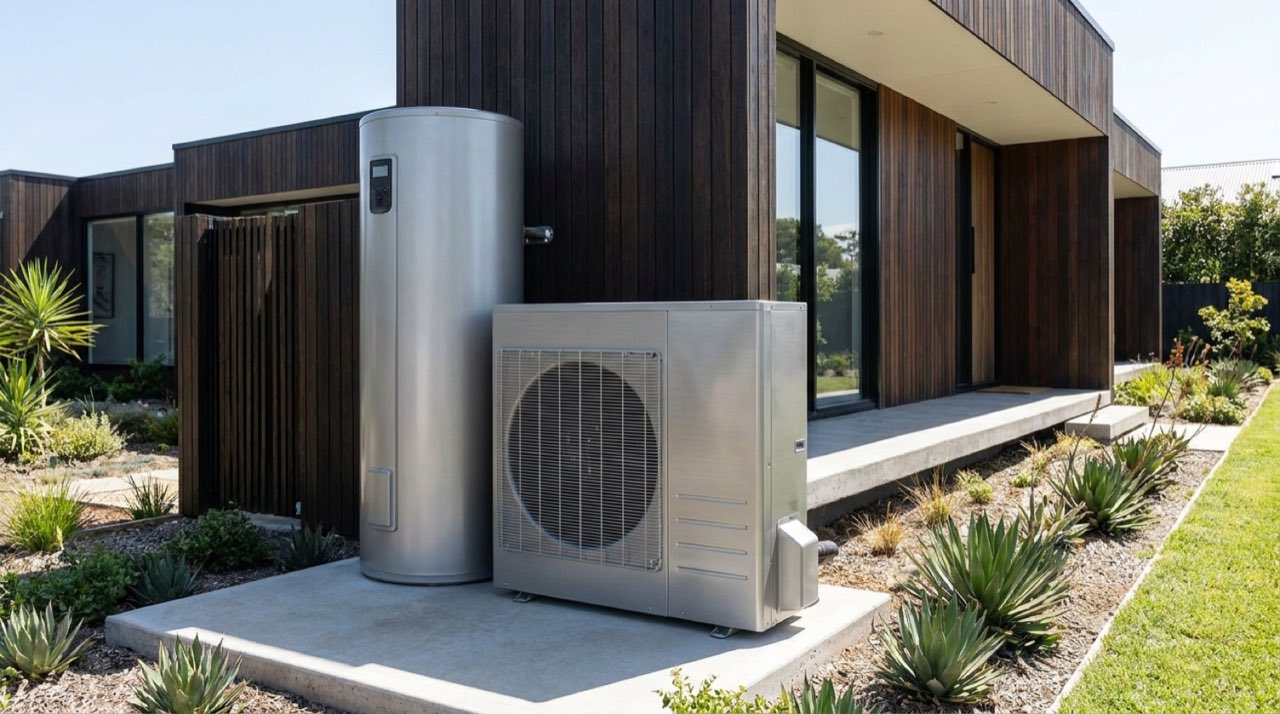
Gas was once the sensible choice for heating, hot water and cooking. The economics have reversed. With household gas tariffs climbing, solar generation costs at record lows and heat pump technology now delivering coefficients of performance above three — meaning three kilowatt-hours of heat from one kilowatt-hour of electricity — an all-electric home running on rooftop solar costs materially less to operate than one with even a modest gas commitment. The question for most households is not whether to electrify, but in what order and how to stage the investment.
At Zenith we treat electrification as a whole-home engineering exercise rather than a series of unrelated appliance swaps. Before anything is specified, we audit your current gas consumption by appliance, model the electrical load each replacement will add, and confirm that your solar array, battery and switchboard have headroom to absorb it. That means no nasty surprises when the heat pump water heater and the EV charger both run on a winter morning, and no undersized solar system that sends you back to the grid for the heating you just electrified.
What electrification typically includes
- Heat pump hot water systems — up to 70 per cent more efficient than electric resistance, and schedulable to run on midday solar surplus
- Reverse-cycle HVAC replacement or augmentation of gas ducted heating, right-sized for your floor plan and climate zone
- Induction cooktop substitution for gas hobs, including switchboard upgrades where the existing circuit capacity is insufficient
- Gas meter disconnection coordination with your distributor once all appliances are replaced
- Integration with a home energy management system so heat and hot water shift to solar windows automatically
- Assessment and application for Victorian, NSW, SA or QLD state rebate schemes applicable to your circumstance
Running on your own solar
The financial case for electrification is strongest when the new electric loads run on generation you already own. A heat pump hot water system scheduled to heat between 10 am and 2 pm draws on solar surplus rather than grid electricity, effectively giving you free hot water for nine or ten months of the year in most Australian climates. We configure the scheduling during commissioning and, if a HEMS is already in place, hand control to the automation layer so the hot water timer adjusts each day to match the solar forecast.
Staging the transition
Few households replace every gas appliance at once. We build a prioritised roadmap based on the remaining life of your existing appliances, the rebates available in your state in the current financial year, and the load each step adds to your solar and battery system. Hot water is typically first — the energy use is large, the replacement cost is manageable and the rebates are most generous. Space heating follows, then cooking. Gas standby charges disappear once the meter is removed, adding a flat annual saving on top of the consumption savings.
By the time the last gas appliance is retired, most Zenith households are running heating, cooling, cooking, hot water and transport almost entirely on rooftop solar generation. The ongoing energy bill, net of any remaining grid top-up, typically falls to between ten and twenty per cent of the pre-electrification total. That is a structural reduction, not a seasonal fluctuation — it compounds every year as gas prices continue their upward trajectory and your solar investment depreciates to near-zero operating cost.
Frequently asked
Do heat pump hot water systems work in cold climates?
Modern heat pump water heaters operate effectively down to ambient temperatures of minus ten degrees Celsius and are widely used in alpine regions of Victoria and New South Wales. We specify units rated for your local climate zone and, where overnight temperatures are regularly below five degrees, configure the boost element to activate on solar rather than cold-night grid draw.
What rebates are available for electrification in Australia?
Rebates vary by state and change with each budget cycle. Current programs include Victorian Energy Upgrades (VEU) point-of-sale discounts on heat pump hot water and HVAC, NSW Energy Savings Scheme certificates and a federal Cheaper Home Batteries program launched in 2025. We identify every rebate that applies to your property and handle the paperwork as part of the project.
Is my switchboard large enough to handle electrification?
Many homes built before 2005 have 60-amp single-phase services that will need a tariff upgrade or load management before adding multiple large electric appliances simultaneously. We assess your existing switchboard capacity in the audit phase and include any required upgrades in the project scope and quote — there are no surprises at installation.