Solar panels do not have moving parts, but that does not mean they are maintenance-free. Soiling — the accumulation of dust, bird droppings, pollen and organic debris — reduces output by two to eight per cent in most Australian climates, and up to fifteen per cent in agricultural or desert-fringe locations. Connections corrode. Inverter capacitors age. Bypass diodes fail without triggering an obvious alarm. A professionally managed O&M program catches each of these before they compound into a measurable yield loss or, in the worst case, a safety event.
At Zenith we offer O&M contracts for residential, commercial and utility-scale systems regardless of who originally installed them. Our starting point is always an independent baseline inspection: we review the existing monitoring data, clean the array, carry out a thermal and electrical test, and establish what the system is actually producing against what it should be producing at its age and soiling level. That baseline becomes the benchmark against which every subsequent service visit is measured — so performance is always tracked to a number, not to an impression.
What an O&M program includes
- Scheduled panel cleaning using purified water and soft-brush systems that do not scratch glass or void warranty coatings
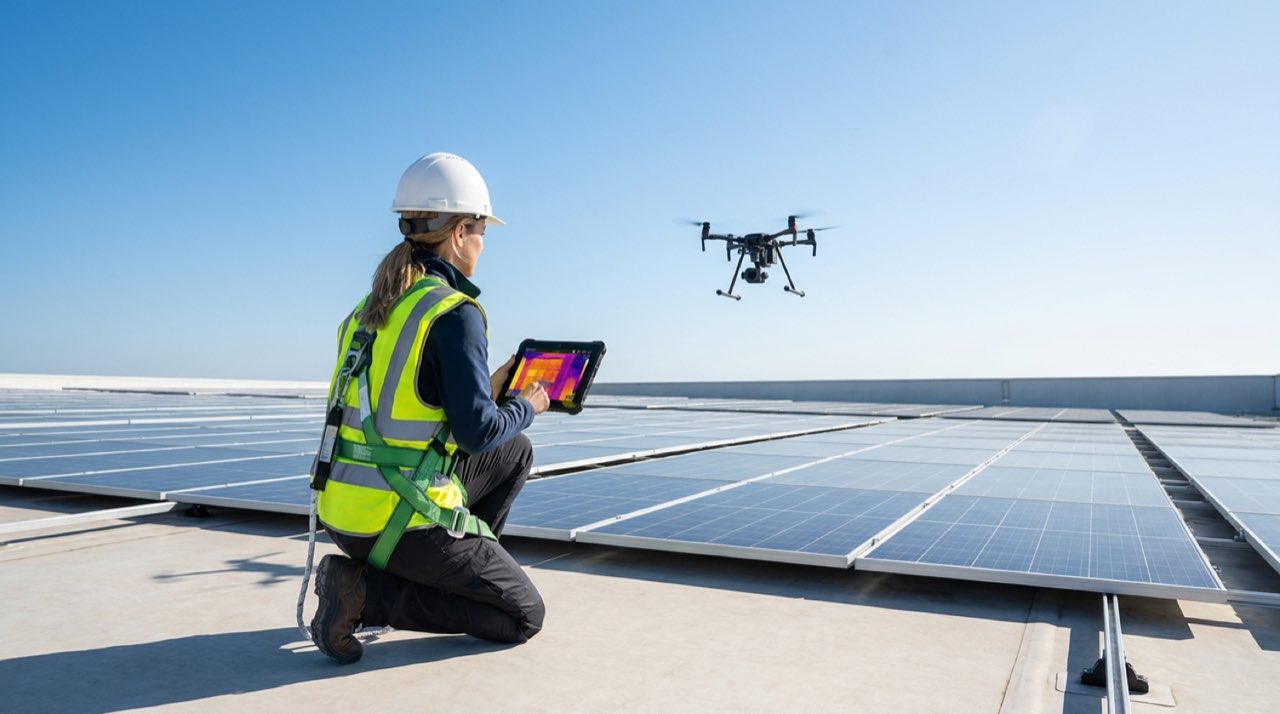
- Drone-based thermal imaging to identify hot cells, bypass diode failures, shading anomalies and delamination not visible from ground level
- Inverter servicing including firmware updates, capacitor health checks, cooling fan inspection and DC connection re-torque
- String-level electrical testing — open-circuit voltage, short-circuit current and insulation resistance measured against installation baselines
- Continuous monitoring review with monthly performance reports showing generation versus modelled yield and any deviation flags
- Priority fault response — site attendance within four business hours for faults that take generation offline, and same-day remote diagnosis for inverter alarms
Thermal and drone inspection
Infrared thermography is the most effective diagnostic tool available for operating solar arrays. A failed bypass diode runs hot; a shading mismatch shows a characteristic temperature gradient; a developing cell crack produces a distinctive thermal signature weeks before it affects measured output. Our drone inspection service images an entire commercial rooftop or ground-mount array in a single site visit, producing a geo-referenced thermal map that identifies every anomaly by panel serial number. The report is actionable: each finding is classified by severity and matched to a recommended intervention with an estimated yield-recovery value.
Performance monitoring and reporting
Monitoring is only useful if someone is reading it. Our platform ingests data from the leading inverter brands — Fronius, SolarEdge, SMA, Sungrow, Enphase, Huawei — and applies performance ratio and specific yield calculations at fifteen-minute intervals. Deviations beyond a configurable threshold trigger an automated alert to our operations desk, where a technician reviews the inverter event log before contacting you. For commercial clients, a monthly performance report is delivered with generation actuals, modelled versus actual comparison, any fault events and the status of open maintenance actions.
Unmanaged systems routinely operate five to twelve per cent below their design yield for years without the owner knowing. Across a 100 kW commercial system, five per cent underperformance costs approximately $3,000 to $5,000 in lost generation and self-consumption value annually. A structured O&M program typically recovers that gap and more — making it a straightforward financial decision, not an optional extra. We can demonstrate the economics for your system size before you sign anything.
Frequently asked
How often should solar panels be cleaned in Australia?
In most urban and suburban locations, once or twice per year is sufficient to recover the bulk of soiling losses. Coastal sites, properties near busy roads or agricultural areas, and flat-tilt commercial arrays accumulate soiling faster and typically benefit from quarterly cleaning. We recommend the interval based on your location and the tilt angle of your array rather than a generic schedule.
Can you take over O&M for a system you didn't install?
Yes. We carry out a baseline inspection first to document the system's current condition and establish accurate performance benchmarks. Depending on what the inspection finds, we may recommend remedial work before commencing the ongoing program — we will not guarantee performance figures against a system with unresolved faults.
What happens when a fault is found during a service visit?
Minor faults — loose connections, firmware updates, blocked air vents — are rectified on the same visit at no additional charge under a Zenith O&M contract. Major component replacements such as inverters or string combiner equipment are quoted separately, though we coordinate warranty claims with the manufacturer on your behalf where the fault is covered.