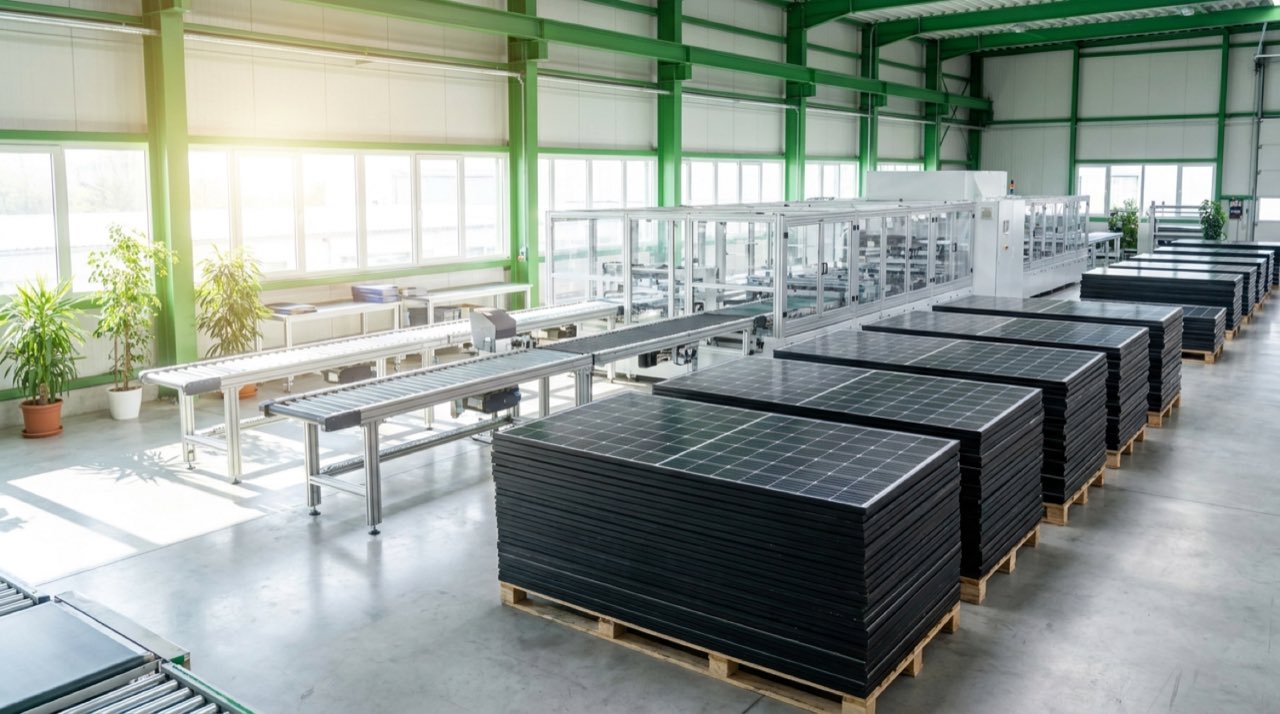
The first generation of large-scale Australian solar installations is now approaching end-of-life, and a second wave of residential systems installed in the early 2010s is not far behind. By 2026 the country is producing more than 100,000 tonnes of solar panel waste annually, a figure set to quadruple by the mid-2030s. Most of that material is recoverable — tempered glass alone accounts for around 75% of a panel's weight — yet without deliberate stewardship it flows to landfill, where the cadmium and lead compounds used in some cell technologies present a long-term leaching risk. Regulation is catching up fast, but responsible disposal is the right outcome regardless of what the law requires.
Zenith's panel recycling service is built around certified processes, not box-ticking. We work exclusively with recyclers that hold current Australian Government accreditation and that publish verified recovery rates by material fraction. Before any decommission begins, we survey the system, record serial numbers against the Clean Energy Regulator's database, and confirm the recycling pathway for each component type — crystalline silicon panels, thin-film modules, lead-acid and lithium-chemistry batteries, and power electronics all require different handling chains.
What happens to the materials
- Tempered glass — cleaned, cullet-graded and returned to glass manufacturing or road-base production
- Aluminium frames — direct return to smelter; aluminium recycling uses 95% less energy than primary production
- Silicon wafers and cells — thermally treated to recover semiconductor-grade silicon for re-entry into the PV supply chain
- Silver contacts — wet-chemical extraction; silver recovery rates exceed 95% in certified facilities
- Copper wiring and junction boxes — stripped and returned to copper refinery
- Lithium battery cells — shredded under inert atmosphere; lithium, cobalt and nickel recovered for battery re-manufacturing
Navigating 2026 e-waste regulation
Australia's Product Stewardship Act was strengthened in 2024 to include photovoltaic panels as a designated product category, and state-level schemes are adding reporting obligations on installers and asset owners through 2026 and beyond. For commercial and industrial system owners this creates genuine compliance exposure: documenting the disposal of decommissioned equipment with certified weight certificates, recycler accreditation numbers and destruction confirmations is no longer optional in several jurisdictions and is standard expectation in NABERS and Green Star reporting frameworks.
Zenith handles the paperwork as part of every decommission. We provide a Certificate of Responsible Recycling that itemises each component stream, the certified facility used and the verified recovery percentage. That document satisfies current Product Stewardship reporting requirements and is structured to meet the expanded obligations expected under the government's 2027 PV stewardship roadmap. For portfolio owners managing multiple sites, we consolidate reporting across the portfolio into a single annual submission.
When to plan for end-of-life
Early planning consistently delivers better outcomes. Panels removed in good condition from a technology upgrade — rather than those that have delaminated or shattered — yield higher material recovery rates and in some cases retain residual value in secondary markets for off-grid and humanitarian applications. If you are replacing a first-generation system with higher-efficiency panels, Zenith can assess your existing modules for secondary-market suitability before defaulting to recycling, potentially offsetting part of the removal cost.
For building owners, property developers and large commercial operators, embedding an end-of-life plan into the original solar asset documentation is increasingly expected by lenders, insurers and sustainability auditors. We can back-cast a decommissioning plan to any existing system and provide a lifecycle cost that accounts for removal, transport and recycling against the expected remaining generation value — giving you a complete picture of your solar asset from install to retirement.
Frequently asked
Is panel recycling mandatory in Australia?
Mandatory obligations vary by state and system size, but are expanding under the federal Product Stewardship Act. Regardless of your specific obligations, certified recycling is the only outcome that prevents panel materials entering landfill, and it is increasingly required for NABERS, Green Star and corporate sustainability reporting.
How much does decommissioning and recycling cost?
Cost depends on system size, access conditions and the current secondary-market value of recovered materials. We provide a transparent estimate after a remote or on-site assessment — in some cases, aluminium and silver recovery offsets a meaningful share of the removal cost.
Can old panels be reused rather than recycled?
Panels that retain more than 70% of their nameplate output and are free from delamination or hotspot damage are assessed for secondary-market placement — typically off-grid community energy projects or export to emerging markets. Where reuse is viable it ranks above recycling in the circular-economy hierarchy and we will flag it in your decommission plan.