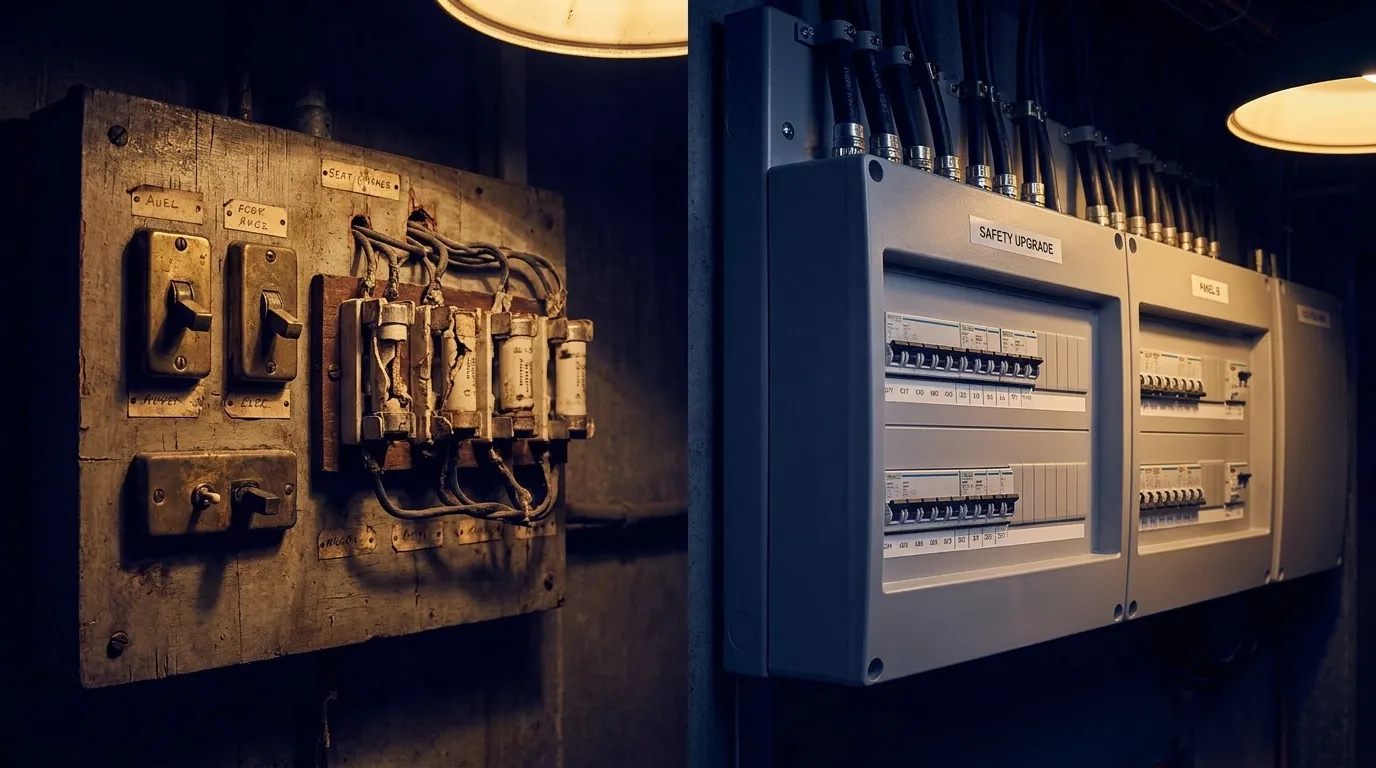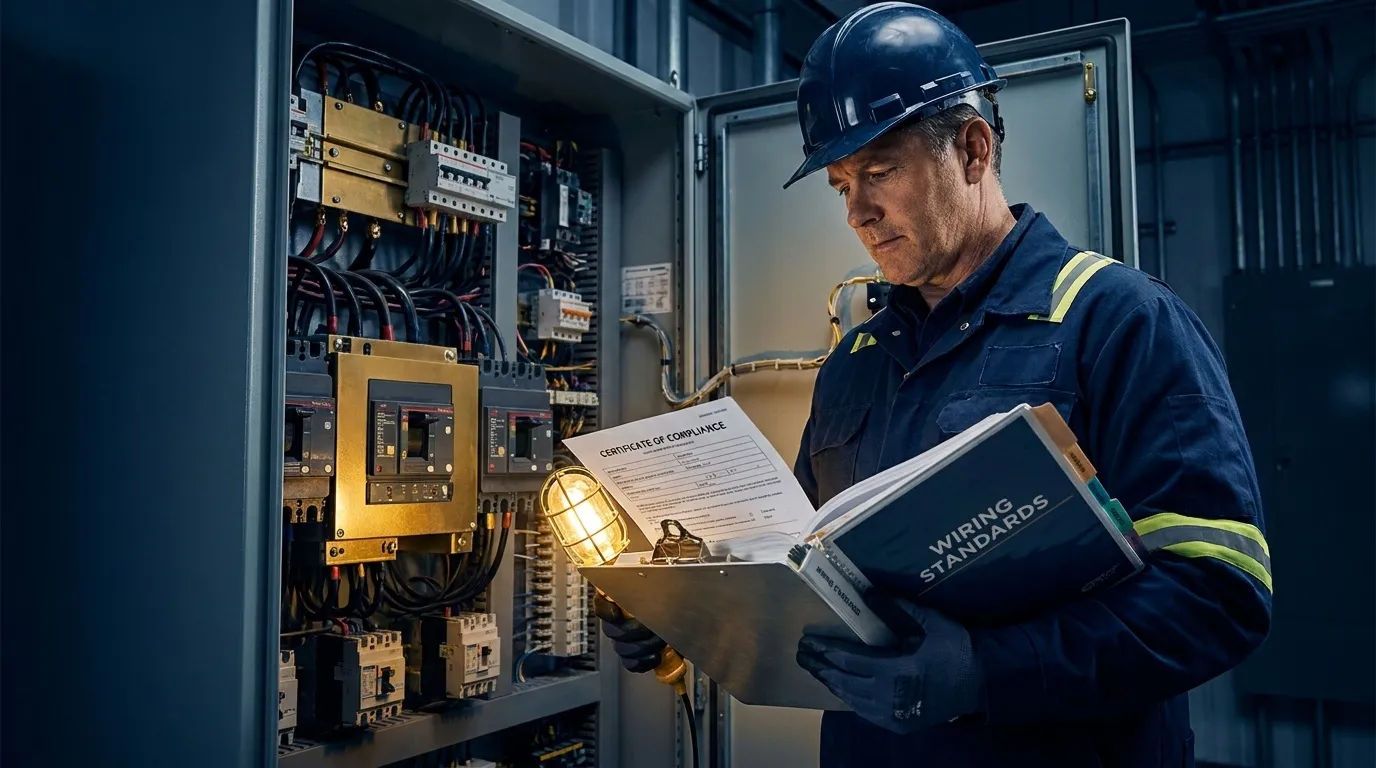
AS/NZS 3000, widely known in the industry as the Wiring Rules, is the foundational Australian and New Zealand standard governing the design, construction, and verification of electrical installations. First published in its modern binational form in 1986 and now in its 2018 edition, it specifies the requirements for every element of a fixed electrical installation: from the selection and sizing of cables and protective devices through to earthing, bonding, switchboard construction, and the conditions under which specific types of protective devices must be provided. Every electrician who performs fixed wiring work in Australia is legally obligated to comply with its provisions.
For building owners, property managers, and strata committees, AS/NZS 3000 sits at the centre of a web of responsibilities that most have never been directly advised about. Understanding its scope — not at an engineering level, but at the level of ownership obligations — is important because non-compliance with the Wiring Rules can affect insurance coverage, regulatory liability under work health and safety legislation, and the enforceability of lease obligations. This article sets out the key provisions that matter most to property owners and the obligations those provisions create.
What the Wiring Rules Actually Cover
The Wiring Rules apply to all fixed electrical installations in Australia, which means every circuit from the point of supply to the final outlet, switch, or connected appliance. They govern the selection of wiring systems and cable types appropriate to the environment, the calculation of conductor sizes to prevent overloading under normal and fault conditions, the selection of overcurrent protection devices calibrated to the circuit they serve, the requirements for earthing and equipotential bonding, the conditions under which RCD protection is mandatory, the clearances and access requirements for switchboards, and the testing and inspection procedures that must be completed before an installation is energised.
Critically, the standard does not apply only to new construction. Its requirements apply to any electrical work performed on an existing installation, including extensions, modifications, and repairs. When a licensed electrician undertakes fixed wiring work and issues a Certificate of Electrical Safety (known variously as a Compliance Certificate, Certificate of Compliance Electrical Work, or CCEW depending on the state), they are certifying that the work they performed, and the installation as altered, complies with AS/NZS 3000 and any applicable state amendments to that standard.
Certificates of Compliance: What They Mean and Why They Matter
A Certificate of Electrical Safety is not an optional administrative formality. It is a legal instrument issued by the licensed electrical contractor who performed the work, certifying compliance with the Wiring Rules and registered with the state electrical safety regulator. In every Australian jurisdiction, it is unlawful for electrical work to be performed without the appropriate certificate being issued and lodged. A building owner who accepts electrical work — an upgrade, a new circuit, a sub-board installation — without receiving a copy of the certificate has no documented evidence that the work was performed by a licensed tradesperson to the required standard.
- In Queensland, the certificate is a Form 5 issued by the licensed electrical contractor and registered with the Electrical Safety Office
- In New South Wales, it is a Certificate of Compliance (Electrical Work) lodged with Fair Trading
- In Victoria, the form is a Certificate of Electrical Safety issued to the owner and retained by the contractor
- In South Australia, the Work Order Completion Certificate is issued to the customer and retained by the contractor
- In Western Australia, the electrical contractor issues a compliance certificate under the Electricity (Licensing) Regulations 1991
Property owners should maintain a file of all certificates issued for their premises. When a tenancy changes, when a property is sold, or when an insurance claim arises following an electrical incident, the availability of those certificates is the most direct evidence available that the installation was maintained by a licensed tradesperson to a compliant standard. An insurance assessor who discovers that no compliance certificates were issued for works performed over a number of years has a legitimate basis for querying coverage.
RCD Requirements Under AS/NZS 3000
The 2018 edition of the Wiring Rules extended and clarified the requirement for residual current device protection across domestic and commercial installations. For new work, the standard requires RCD protection on all final subcircuits in domestic premises, on all socket-outlet circuits in commercial premises, on all lighting circuits in domestic premises, and on circuits supplying equipment in locations of increased risk such as bathrooms, kitchens, swimming pools, and outdoor areas.
The practical implication for property owners is that any significant electrical work triggers an assessment of whether the existing protective devices serving the installation meet the current standard. An electrician who installs a new sub-board or extends circuits from a switchboard that lacks adequate RCD protection cannot simply ignore that deficiency; the Wiring Rules require that the work as completed complies, and compliance in that context typically means rectifying the deficiency. Property owners who defer this conversation with their electrical contractor — or who engage contractors who are willing to overlook it — are trading short-term cost savings for long-term liability.
Owner Obligations: The Compliance Responsibility
A persistent and understandable misunderstanding is that compliance with AS/NZS 3000 is the sole responsibility of the electrician who performs the work. In a technical sense that is correct: the licensed contractor certifies the work. But building owners carry their own regulatory obligations. Under work health and safety legislation in every Australian jurisdiction, a person conducting a business or undertaking (PCBU) — which includes a commercial building owner who allows work to be performed in their premises — has a duty to ensure so far as is reasonably practicable that the workplace is without risks to health and safety. An electrical installation that is known to be non-compliant and has not been rectified is, under that framing, a known risk that has not been addressed.
For strata committees, the obligation is reinforced by the common property management duties that flow from strata legislation in each state. Common property electrical infrastructure — main switchboards, distribution boards serving common areas, external lighting, car park circuits — is the committee responsibility. The committee that defers a recommended switchboard upgrade or fails to obtain compliance certificates for work performed on common property is not merely accepting a technical shortcoming; it is carrying an unquantified liability exposure that sits with the lot owners collectively. Engaging a master electrician to conduct a periodic electrical installation inspection and report is the most straightforward way to convert that unknown exposure into a documented, managed risk with a clear remediation pathway.