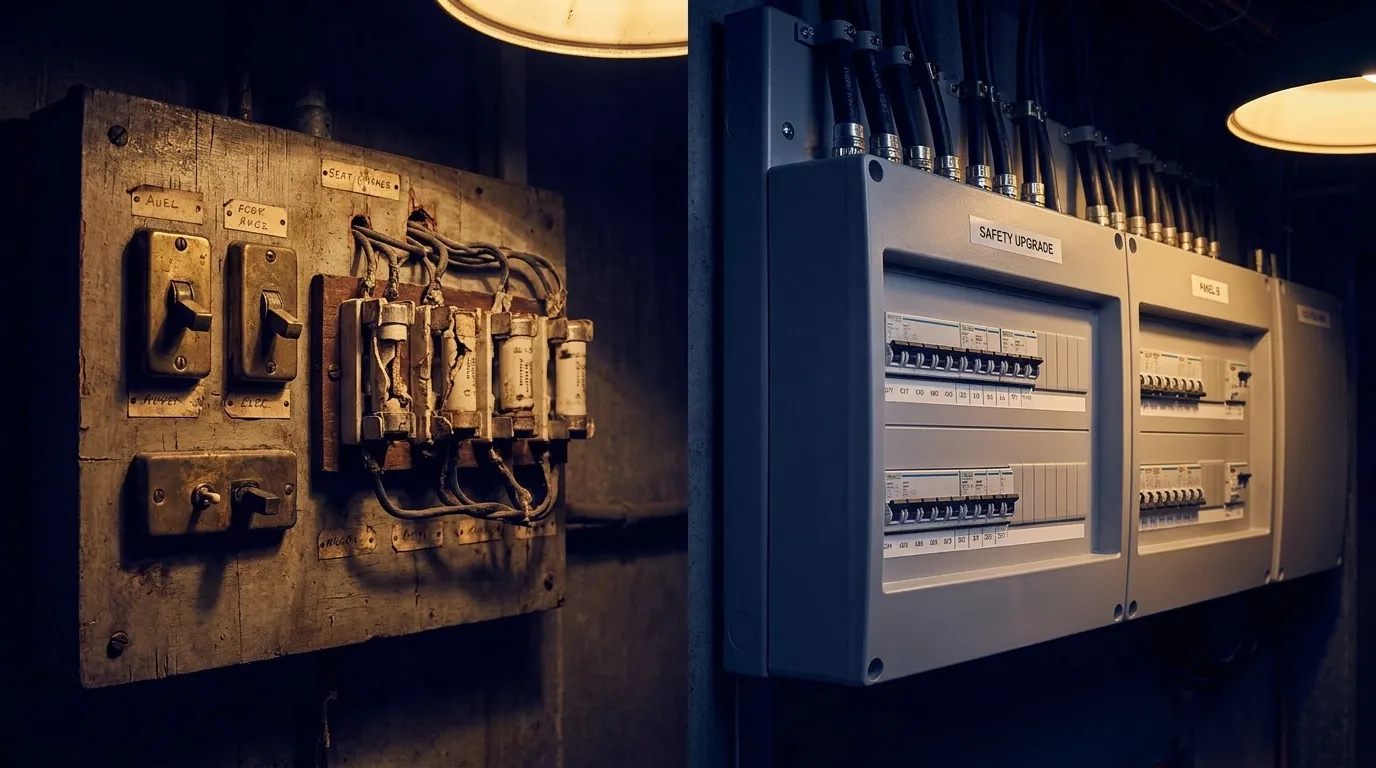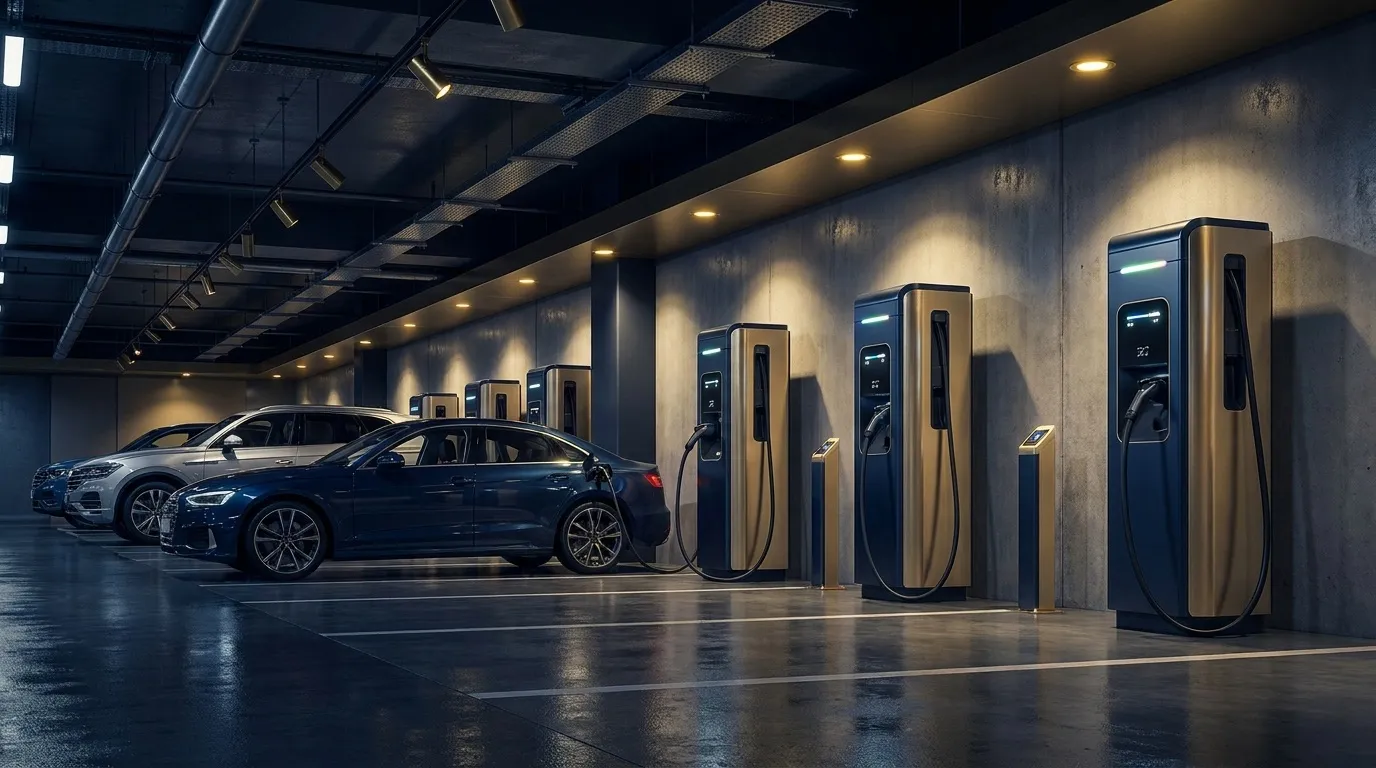
The electrification of commercial vehicle fleets and the rising proportion of employees who drive battery electric vehicles are transforming the electrical infrastructure demands of commercial premises faster than most building owners or strata committees anticipated. What began as a request for one or two charging points in a car park has become, for many facility managers, a site-wide infrastructure question involving load capacity, network supply, commercial billing, and future-proofing obligations. Approached reactively, EV charging infrastructure is expensive to retrofit and operationally awkward. Planned correctly, it is a straightforward civil and electrical project that positions a building competitively for years to come.
The starting point for any serious EV infrastructure project is not a conversation about charger brands or connector types. It is a rigorous load assessment of the existing electrical infrastructure and a frank discussion about the trajectory of demand over the next ten to fifteen years. Deploying charging points without that foundation is the single most common mistake seen on commercial sites, and it routinely results in expensive remediation work within two to three years of installation.
Load Assessment and Supply Capacity
A standard AC EV charger operating at 7.2 kilowatts per vehicle represents a load broadly equivalent to a domestic air-conditioning system running continuously. Ten bays of 7.2 kW charging — a modest target for a commercial car park of, say, 80 spaces — represent a simultaneous peak demand of 72 kilowatts if all vehicles charge at the same time. For buildings whose main switchboard was sized for lighting, power outlets, and HVAC, that increment of demand is significant and may not be available without a supply upgrade from the local distribution network service provider (DNSP).
The first step is obtaining and analysing interval data from the site energy meter for the preceding twelve months. This reveals the existing peak demand, its timing, and the headroom between peak demand and the authorised supply capacity. Where headroom is limited, the options include negotiating a supply capacity increase with the DNSP — a process that can involve substantial cost and a lead time of six to eighteen months depending on the network — or implementing dynamic load management to ensure EV charging draws only on capacity that is genuinely available without triggering penalty demand tariffs.
AC Versus DC Charging: Matching Technology to Use Case
The distinction between AC and DC charging is not merely technical; it determines charging speed, equipment cost, installation complexity, and the use cases the infrastructure can serve.
- AC Level 2 charging (3.6 kW to 22 kW) uses the vehicle onboard charger to convert AC to DC; it is appropriate for workplace charging where vehicles dwell for four or more hours and a moderate charge rate is sufficient
- DC fast charging (50 kW to 350 kW) converts AC to DC within the charger unit itself, enabling much faster replenishment; it is suited to fleet depot operations, hospitality and retail sites where dwell time is short, and public or semi-public charging applications
- The per-port capital cost of DC fast charging is four to ten times that of equivalent AC equipment, and installation requirements — particularly civil works and cable sizing — are commensurately more demanding
- For most office, strata, and light commercial applications, a phased approach deploying AC infrastructure now with civil provisions for DC upgrade later represents the most defensible capital allocation
Dynamic Load Management and OCPP
Dynamic load management is the technology that allows a fleet of charging points to collectively respect a site power budget, automatically redistributing available capacity between active sessions as vehicles arrive and depart. Without it, a site operator must either provision for worst-case simultaneous demand — which is expensive and wasteful — or accept the risk of demand spikes that attract tariff penalties. With a properly configured load management system, the same peak demand budget supports two to three times the number of charging bays, materially improving the return on the infrastructure investment.
The Open Charge Point Protocol (OCPP) has emerged as the open standard governing communication between EV chargers and charge point management systems (CPMS). Specifying OCPP-compliant hardware from the outset protects the operator from vendor lock-in, enables integration with energy management systems and building management controllers, and ensures the infrastructure can participate in demand response programs as those markets develop in Australia. Proprietary charging networks that do not support OCPP should be regarded with caution; the short-term convenience of a single-vendor solution frequently becomes a long-term constraint.
Billing, Access Control, and Revenue Models
Commercial EV charging infrastructure that serves multiple users — tenants in a strata building, employees of several organisations in a shared car park, or the general public in a retail centre — requires a billing and access control layer. This layer determines who can initiate a charging session, at what rate the energy is billed, and how the revenue or cost allocation flows between parties. The technology options range from simple RFID card access with fixed-rate billing to app-based user authentication with dynamic pricing and detailed reporting.
For strata schemes and commercial buildings with multiple tenants, the billing architecture requires particular care. Where the building buys energy at a commercial tariff and on-sells it to EV users, the arrangement may be subject to energy retail licensing requirements in some jurisdictions. Engaging an electrical contractor with specific experience in commercial EV infrastructure ensures that the metering and billing configuration is structured correctly from the outset, avoiding costly changes after installation.
Future-Proofing: The Civil and Electrical Provisions That Matter
The most important and least expensive decision in any EV infrastructure project is the extent of civil and electrical provisions installed ahead of the chargers themselves. Conduit from the main switchboard to the car park, sub-board capacity and physical space for future expansion, earthing infrastructure, and structural provisions for cable routes are all dramatically cheaper to install during initial works than to retrofit later. A staged rollout plan that deploys five chargers in year one with infrastructure in place to support twenty-five in year five is not speculative; it is rational engineering practice that avoids the disruption and cost premium of repeated works.
Apex Current Solutions brings master electrician expertise and specific experience in commercial EV charging infrastructure to every project. From load assessment and DNSP supply upgrade negotiations through to OCPP-enabled charger installation, load management system commissioning, and billing integration, the team manages the full scope. For facility managers and building owners who want EV infrastructure done once and done correctly, that breadth of capability is the difference between infrastructure that scales and infrastructure that frustrates.