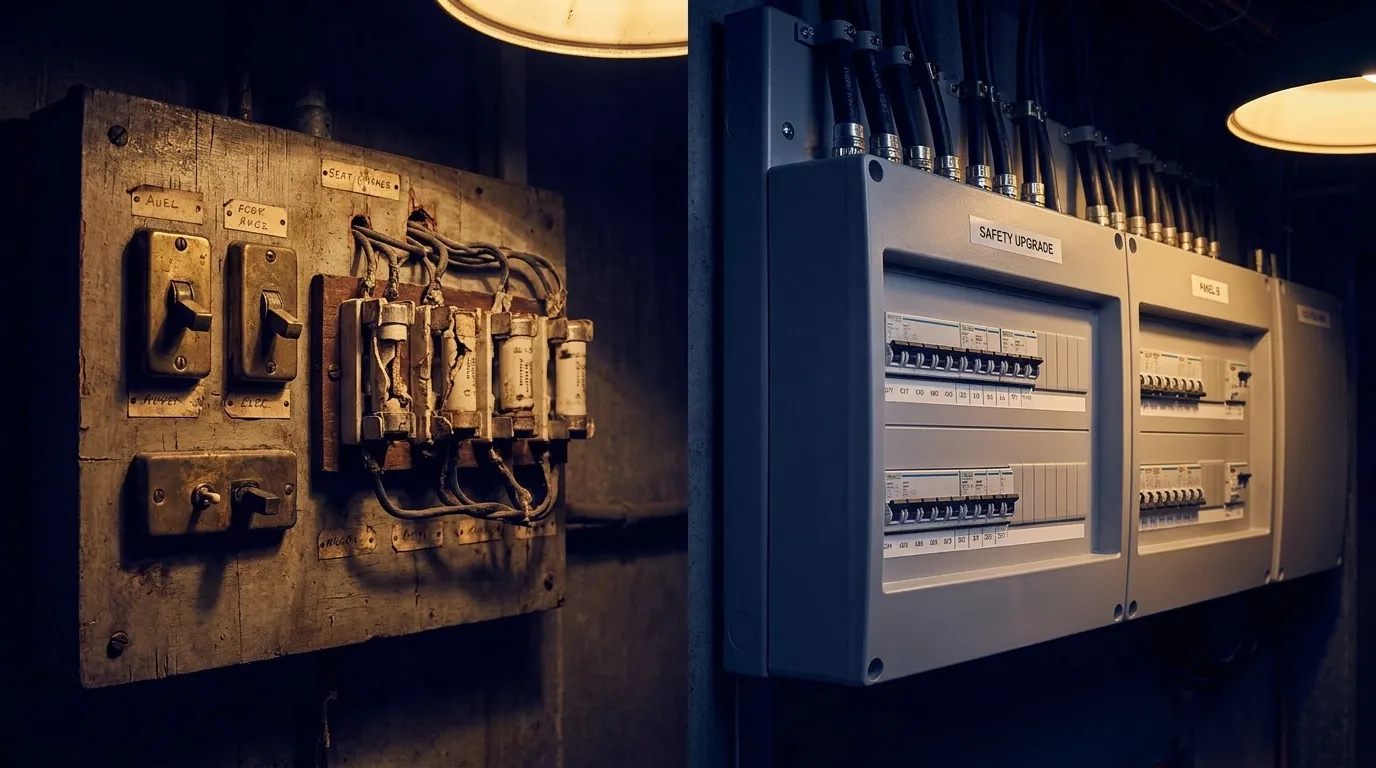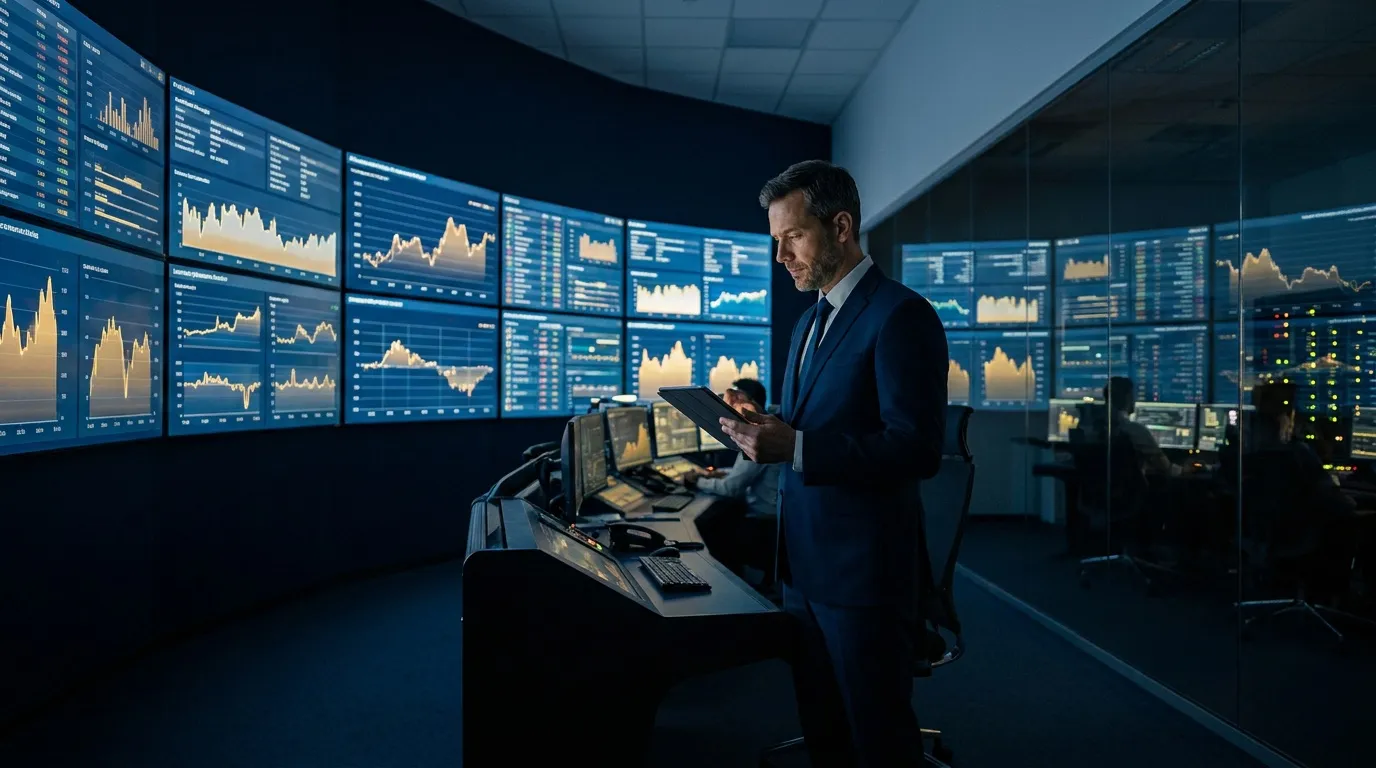
Energy expenditure is, for most commercial buildings, the second or third largest operating cost after labour and occupancy. Despite that scale, the majority of facility managers have less visibility into their energy consumption than they have into almost any other cost category. Bills arrive, accounts are paid, and consumption is rarely interrogated beyond a comparison to the same period in the prior year. In an environment of structurally higher electricity tariffs and increasing pressure to demonstrate sustainability credentials to tenants and investors, that level of visibility is no longer adequate.
An energy efficiency audit is the structured process by which a building changes that. Done properly, it converts an opaque energy bill into a detailed understanding of where power is consumed, when it is consumed, what is driving peak demand, what losses are occurring invisibly, and which interventions will deliver the greatest return at the lowest implementation risk. This playbook sets out the process a facility manager should follow to commission and use an audit effectively, and the categories of finding that typically emerge from rigorous investigation.
Establishing the Metering Baseline
An audit that is not grounded in measured data is an opinion. The first task is therefore to establish a metering baseline that characterises actual consumption at a level of granularity sufficient to identify where power is going. At the entry level, this means obtaining twelve months of interval data — typically half-hourly readings — from the site meter and the network operator. Interval data reveals not just total consumption but the shape of consumption: the time of day when demand peaks, how quickly load rises and falls, and whether consumption is tracking occupancy or running through unoccupied periods.
Where the site has sub-metering — meters on individual circuits, floors, tenancies, or equipment groups — the granularity available is vastly greater and the audit can target specific systems for detailed analysis. Where sub-metering is absent, the audit process itself will often identify sub-metering installation as an early recommendation, because the intelligence it provides pays for the hardware cost many times over in optimised decisions. For large commercial sites, installing sub-metering on HVAC plant, lighting circuits, and process loads as the first phase of an efficiency programme is rarely contentious when the cost and benefit are presented clearly.
Power Factor and Reactive Power Losses
Power factor is one of the most consistently misunderstood items on a commercial electricity bill, and one of the most actionable. Power factor is the ratio of real power — the work actually performed by electrical loads — to apparent power, which is the total current drawn from the network including the reactive component required to energise inductive loads such as motors, transformers, and fluorescent lighting ballasts. A power factor of less than unity means the installation is drawing more current from the network than the real power consumption would imply, and distribution networks charge for that excess through power factor penalties or reactive energy charges.
The correction is straightforward: power factor correction capacitors are installed at the main switchboard or at the terminals of large inductive loads to supply the reactive power locally rather than drawing it from the network. For commercial sites with significant motor load — pump plant, lifts, compressors, air-handling units — power factor correction commonly delivers a saving of five to fifteen percent on the network charges component of the electricity bill, with a simple payback of one to three years. The audit should examine the billing data for power factor penalties and, where they appear, recommend a power factor survey and correction design.
Peak Demand: The Most Expensive Kilowatt
Peak demand charges — the component of the electricity tariff based on the highest half-hour interval of consumption recorded during the billing period — are frequently the fastest-growing element of a commercial electricity bill. Network operators have structured tariffs to recover the cost of infrastructure built to serve peak loads, and the logic means that a single expensive half-hour can influence the entire month bill even when the remaining 1,439 half-hours are modest.
- Staggered HVAC start-up sequences prevent all air-handling units from ramping simultaneously at building open, a common source of avoidable demand peaks
- Demand limiters on large motor loads shed non-critical loads when demand approaches a set threshold
- Battery energy storage systems can discharge during peak demand windows, reducing the interval reading that determines the demand charge
- Shifting flexible loads — electric water heating, refrigeration pre-cooling, EV charging — to off-peak periods reduces both demand charges and energy costs where time-of-use tariffs apply
- Reviewing the demand threshold at which the tariff structure changes can reveal whether a modest behavioural change in load profile would allow a step down to a lower tariff category
Quick Wins Versus Capital Projects
A good audit report distinguishes clearly between measures that can be implemented immediately at minimal cost and those that require capital investment and a longer payback horizon. The most valuable quick wins are typically behavioural or control-based: correcting heating and cooling setpoints that have drifted outside the specified range, ensuring time clocks governing after-hours HVAC and lighting are accurate and have not reverted to default following power interruptions, and decommissioning equipment that is no longer in use but remains energised. These measures cost almost nothing and frequently yield two to five percent savings with no capital outlay.
Capital projects — lighting retrofits, motor replacements, variable speed drive installations, sub-metering, power factor correction, and building management system upgrades — require a formal financial case. The audit report should provide sufficient data to construct that case: the current consumption attributable to the affected system, the projected consumption post-upgrade, the resulting dollar saving, the installed cost of the measure, and the resulting payback period and net present value at the applicable discount rate. Where state-based incentive schemes apply — the Victorian Energy Upgrades program, the NSW Energy Savings Scheme, or equivalent — the eligible incentive should be incorporated to present the net cost to the building owner.
Acting on the Findings
An energy audit report that sits in a filing cabinet is money left on the table. The practical discipline of converting audit findings into implemented savings requires a structured action plan that assigns responsibility for each measure, sets a target completion date, defines the baseline against which savings will be verified, and schedules a review to confirm that projected savings have materialised. For facility managers overseeing multiple buildings, this disciplines becomes even more important: the learnings from one site — whether a particular control strategy delivered its projected saving, or a specific product performed as specified — should inform the approach at every other asset in the portfolio.
Apex Current Solutions conducts energy efficiency audits calibrated to the commercial sector, combining licensed electrical expertise with metering analysis, power quality measurement, and practical knowledge of the incentive landscape. The output is not a report for the sake of compliance; it is a prioritised, costed action plan that a facility manager can take directly to a capital expenditure committee. For organisations that want their energy spend managed with the same rigour applied to every other cost line, that is where an effective audit programme begins.