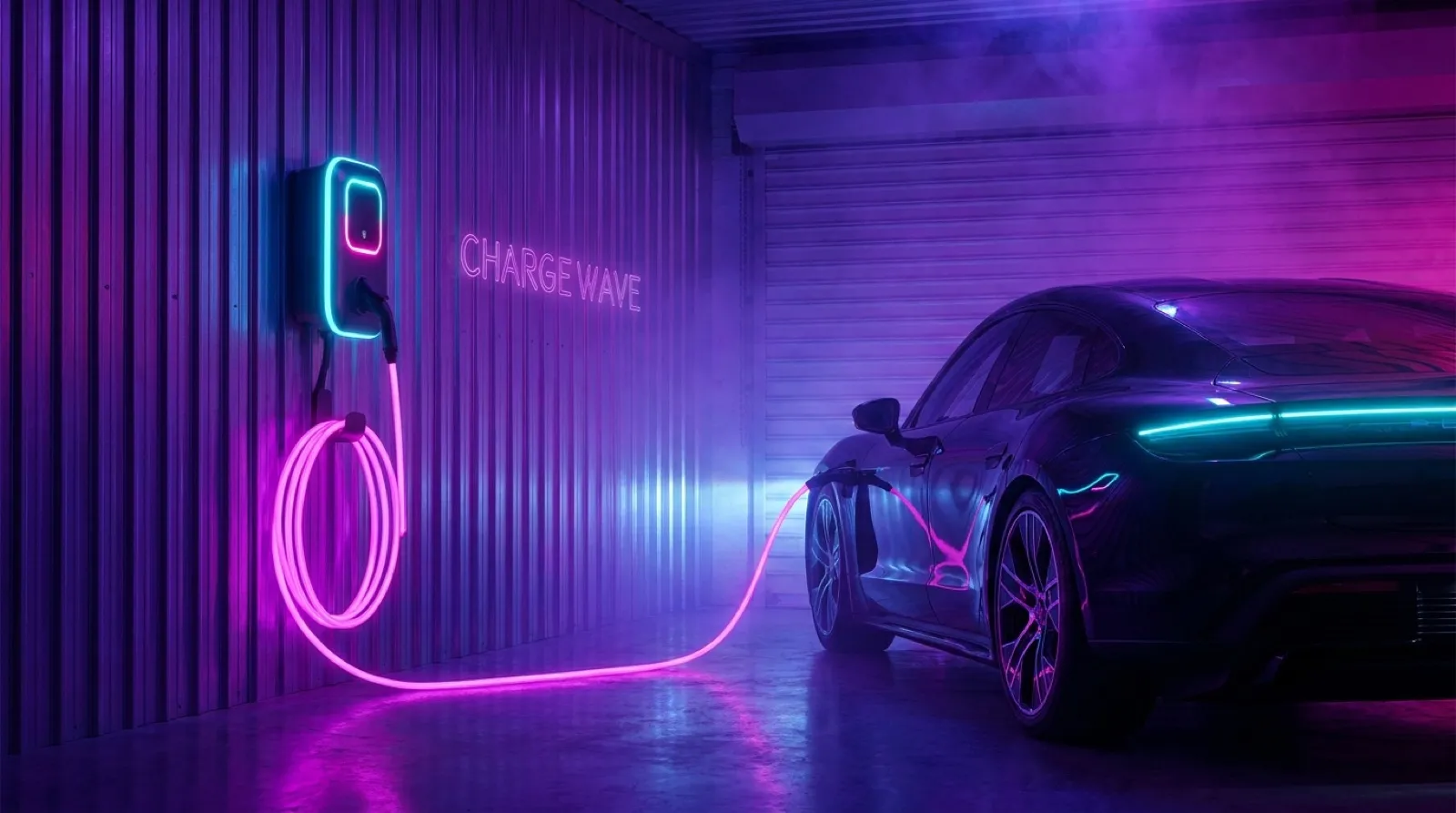
Australia's EV uptake has been accelerating, and the charging infrastructure conversation has largely focussed on public fast-chargers along highways and in shopping centre car parks. But the reality for most EV owners is that 80 to 90 percent of their charging happens at home, overnight, on a properly installed wall box. A Level 1 charge through a standard 10-amp outlet will add roughly 8 to 12 kilometres of range per hour — adequate if you drive 50 kilometres a day and plug in religiously, miserable if you drive more than that or forget to plug in. A 7.4kW dedicated home charger adds 40 to 50 kilometres of range per hour. A 22kW three-phase unit, for vehicles that support three-phase AC charging, delivers up to 130 kilometres per hour. The difference is not incremental — it is transformational for how you actually use the car.
The switchboard assessment comes first — always
Before any charger goes on any wall, SynthWire assesses your switchboard. This is not a box-ticking exercise — it determines everything that follows. We are looking at your main fuse rating, the current diversity allowance across existing circuits, available spare ways in the board, the main earthing arrangement, and whether your existing RCD protection is Type A or Type F. A 7.4kW single-phase charger draws approximately 32 amps on a dedicated circuit. A 22kW three-phase charger draws approximately 32 amps per phase. Your switchboard needs to accommodate that additional demand without the main fuse or service neutral being pushed beyond its rated capacity under normal household load conditions. If the board cannot support the charger's demand without risk, we tell you plainly, quote the upgrade, and do it right.
One specific item that catches out a lot of EV charger installations is RCD type. Standard Type A residual current devices — the kind in most Australian switchboards installed before 2020 — may not reliably detect DC fault currents produced by some EV chargers and inverter charger circuits. Many modern chargers require a Type A EV or Type B RCD on the dedicated circuit. SynthWire specifies the correct RCD type for the charger model being installed and upgrades where necessary. This is not optional — it is a fundamental safety requirement, and leaving an incompatible RCD in place creates a genuine risk.
7kW single-phase versus 22kW three-phase: which is right for your home
Most Australian homes are on a single-phase supply, which limits AC charging to a maximum of around 7.4kW from a 32-amp circuit. For the majority of daily driving profiles — up to 200 to 250 kilometres per day — a 7.4kW overnight charge is perfectly adequate. You plug in when you get home, the car is full by morning. If your home has three-phase supply, or if you are considering upgrading to three-phase for other reasons (a large solar system, high-demand HVAC, a workshop), then a 22kW three-phase charger is worth considering — but only if your vehicle can actually accept three-phase AC charging. Most current EVs cap at 7.4kW or 11kW AC regardless of what the charger can deliver. SynthWire will confirm your vehicle's onboard charger specification before recommending the infrastructure investment.
Dynamic load management and OCPP smart charging
Dynamic load management is the technology that prevents your EV charger from tripping the main fuse when the oven, air conditioner, and dishwasher are all running simultaneously. A current transformer installed on the main supply monitors total household demand in real time and signals the charger to reduce its draw when the home is near its supply capacity limit — then automatically ramps charging back up when demand drops. For homes where the supply capacity is genuinely tight, dynamic load management can be the difference between a 7.4kW charger running safely and an infrastructure upgrade that costs considerably more.
OCPP — the Open Charge Point Protocol — is the industry-standard communication protocol for smart EV chargers. A charger with OCPP support can be integrated into home energy management systems, scheduled to charge only during off-peak tariff periods, and in some cases enrolled in grid demand-response programs that credit you for allowing the grid operator to briefly pause charging during peak events. SynthWire installs OCPP-capable chargers and can assist with integration into your existing home energy management platform or solar and battery system.
Fleet and multi-vehicle installations
Businesses running a fleet of EVs — trade vehicles, delivery vans, pool cars — face a different set of challenges to the residential owner. SynthWire designs and installs multi-charger commercial deployments with proper load balancing across all units, OCPP-based charge management software that tracks energy use per vehicle and per session, and the sub-board infrastructure to scale the installation as the fleet grows. We work with your energy retailer and, where applicable, help you navigate state government fleet EV charging incentive programs. A commercial EV charging installation done correctly from the start is significantly cheaper than a residential-grade installation that needs to be replaced when the fleet doubles in size.
- Switchboard capacity assessment and main fuse verification before hardware selection
- Type A EV or Type B RCD installation where required by charger specification
- Dedicated 32-amp circuit with correctly rated cabling and conduit from switchboard to charger location
- 7.4kW single-phase and 22kW three-phase charger supply and installation
- Dynamic load management with current transformer on main supply
- OCPP 1.6 and 2.0 smart charger configuration and home energy management integration
- Multi-vehicle fleet installations with per-session energy metering and load balancing
Frequently asked
Not when the installation is carried out by a licensed electrician and a certificate of electrical compliance is issued — which is exactly what SynthWire provides on every job. An uncertified DIY installation or one carried out by an unlicensed person, on the other hand, could absolutely create issues with your insurer in the event of a claim. We recommend you notify your home insurer when any significant electrical upgrade is completed, as some policies require disclosure of material changes to the property. We issue a formal certificate of compliance for every EV charger installation and can provide a copy to your insurer on request.
Incentive programs vary by state and territory and change over time — this is an area where you should check current state government energy websites for the latest information. Several Australian states have at various times offered rebates or interest-free loans for home EV charging infrastructure as part of broader EV uptake programs. Some electricity retailers also offer off-peak EV charging tariffs that significantly reduce the cost of charging. SynthWire will give you honest, current information about what is available in your state at the time of your assessment, but we do not promise rebates that may no longer be active.
A straightforward residential installation — charger mounted in a garage or carport, single-phase supply, adequate switchboard capacity, no major obstacles between the board and the charger location — is typically completed in three to five hours in a single visit. We arrive, assess the final installation path, install the dedicated circuit and RCD, mount and connect the charger, test, and issue the certificate of compliance before leaving. More complex jobs — three-phase upgrade, long cable runs, switchboard replacement, outdoor installation requiring earthing works — will take longer and may require a second visit. We give you a realistic timeframe when we quote, not an optimistic one.