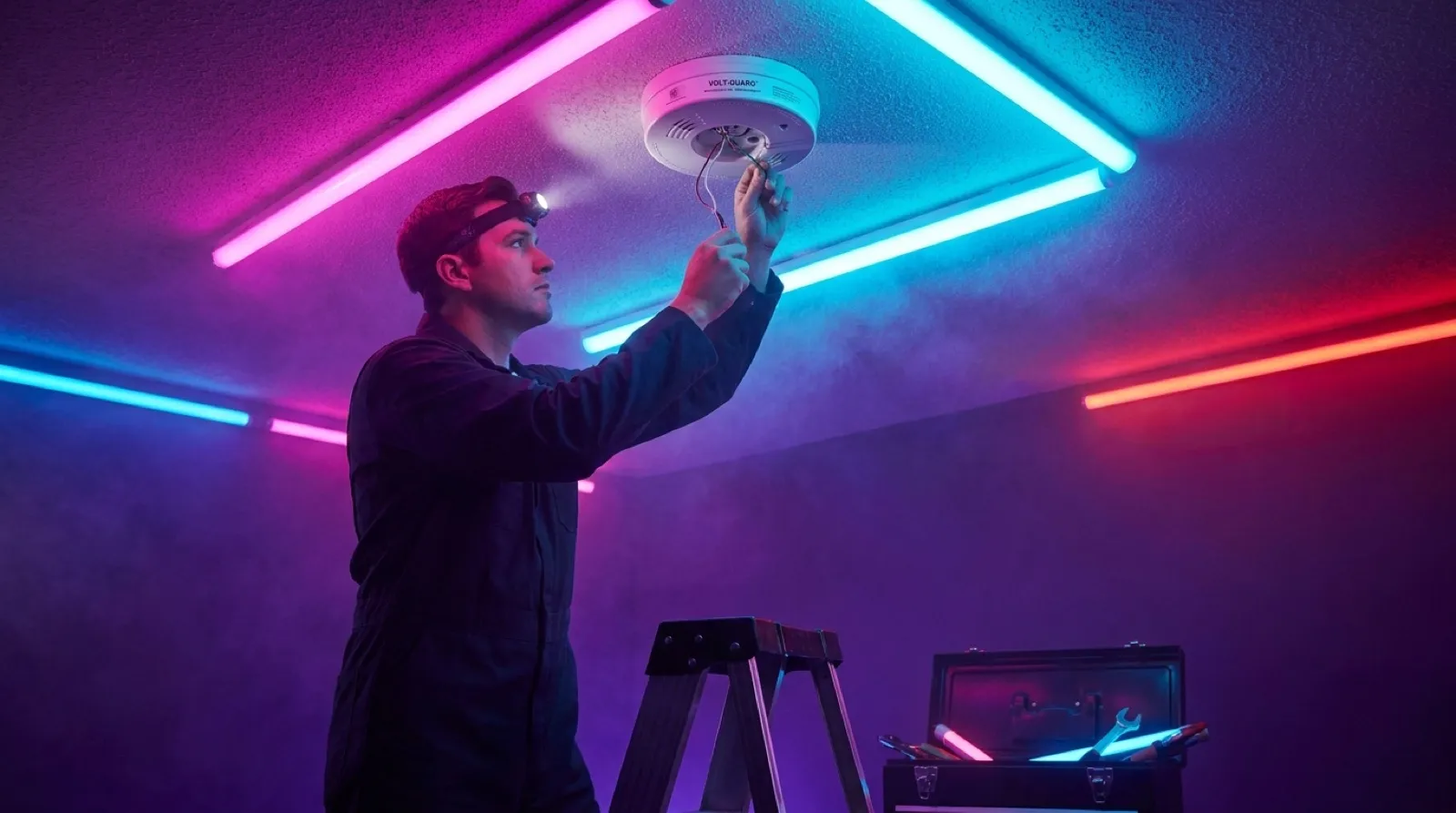
Fire alarm systems sit at the intersection of electrical engineering and life safety, which is exactly why you want a licensed master electrician — not a handyman or a smoke alarm subscription company — doing the work. SynthWire Electrical installs and maintains fire detection equipment under Licence EC-1985, carries full public liability cover, and issues Certificates of Compliance for all installation work. We work to the relevant Australian Standards and the current state-specific residential smoke alarm legislation, and we can brief you plainly on exactly what your property is required to have and by when.
Residential smoke alarm legislation — what you need to know
Australian states and territories have progressively tightened smoke alarm legislation since the 2011 amendments to the Building Code of Australia. Queensland, New South Wales, Victoria, Western Australia, and South Australia have all enacted requirements for hard-wired, interconnected, photoelectric smoke alarms in residential dwellings. The specifics vary by state and by the age and classification of the building, but the direction is clear: battery-only, ionisation-type alarms are being phased out in favour of hard-wired 240V photoelectric units with battery backup, interconnected so that all alarms sound when any one detects smoke. If you are selling, renting, or carrying out renovations on a residential property, compliance is not optional — and the penalty for non-compliance at the point of sale or lease commencement is real.
SynthWire installs hard-wired interconnected photoelectric smoke alarms to AS 3786 throughout Queensland and the surrounding regions. We run the 240V supply from the nearest lighting circuit, install the alarm in the correct location per the legislation (every bedroom, every hallway between sleeping areas and the rest of the dwelling, and on each storey), interconnect the units on the same data line, and test the system before we leave. You receive a written installation record documenting alarm locations, interconnection, and test results.
Why photoelectric matters — the technology difference
Photoelectric smoke alarms detect smouldering fires — the slow, smoky type that most commonly occurs at night, producing large combustion particles that scatter a light beam inside the sensing chamber. Ionisation alarms are faster at detecting fast-flaming fires but notoriously slow on smouldering fires, which are responsible for most residential fire fatalities. The research behind the legislative shift to photoelectric is decades deep. If your property still has ionisation alarms — identifiable by the radioactive symbol on the case or by checking the model number — upgrading to photoelectric is one of the highest-value safety improvements you can make. SynthWire carries a stock of compliant photoelectric units and can typically complete a residential upgrade in under half a day.
Commercial fire detection and EWIS basics
Commercial, industrial, and multi-occupancy residential buildings are subject to the National Construction Code's requirements for fire detection and alarm systems, which typically reference AS 1670 (fire detection, warning, control, and intercom) for system design and AS 1851 for routine service. An Emergency Warning and Intercommunication System (EWIS) is required in buildings over a certain occupancy classification and height, providing both alarm annunciation and a warden intercommunication system for evacuation management. SynthWire undertakes commercial hard-wired detector installation, panel connection and commissioning, and routine maintenance servicing for low to medium complexity systems. For large-scale or high-rise EWIS projects requiring a fire protection engineering design, we work alongside accredited fire systems designers to ensure the installation leg of the project is executed cleanly.
- Hard-wired 240V photoelectric smoke alarm installation to AS 3786
- Interconnected alarm systems — all units sound from a single trigger
- Residential legislative compliance assessment and written report
- Annual testing, battery check, and cleaning of detection chambers
- Commercial zone detector installation and panel connection
- EWIS component installation and routine maintenance support
Annual maintenance — why it cannot be skipped
A smoke alarm that is not regularly tested and cleaned has a documented failure rate that should make any property owner uncomfortable. Dust and insect ingress into the sensing chamber can cause both nuisance trips and, more dangerously, a desensitised alarm that is slow to respond to real smoke. The lithium backup battery in most hard-wired units has a ten-year design life, but hard-wired alarms also contain electronic components that are not immortal — capacitors, sensing LEDs, and logic boards all have finite service lives. SynthWire offers annual maintenance programs for both residential and commercial clients: a technician visits, tests every alarm using a calibrated aerosol test agent, cleans the sensing chamber, checks the 240V supply and interconnect wiring, replaces the backup battery where due, and provides a written service report. For landlords managing multiple properties, we can schedule an annual program across your entire portfolio and deliver a consolidated compliance report.
Frequently asked
It depends on your state and the event trigger — sale, lease commencement, or renovation can each trigger a compliance obligation. In Queensland, for example, all domestic dwellings being sold or leased after defined dates must have compliant hard-wired photoelectric alarms. SynthWire can assess your property against the current legislative requirements and give you a clear written answer.
The test button on every unit should be pressed monthly by the occupant — a thirty-second job. Professional servicing including calibrated aerosol testing, chamber cleaning, and wiring inspection is recommended annually. Commercial systems under AS 1851 have mandated six-monthly and annual service schedules that must be documented in a compliance logbook.
Yes. All hard-wired smoke alarm installation work is electrical work requiring a Certificate of Compliance under state electrical safety legislation. SynthWire lodges the certificate with the DNSP and provides a copy to the property owner on completion. This is your documentary evidence of compliant installation.