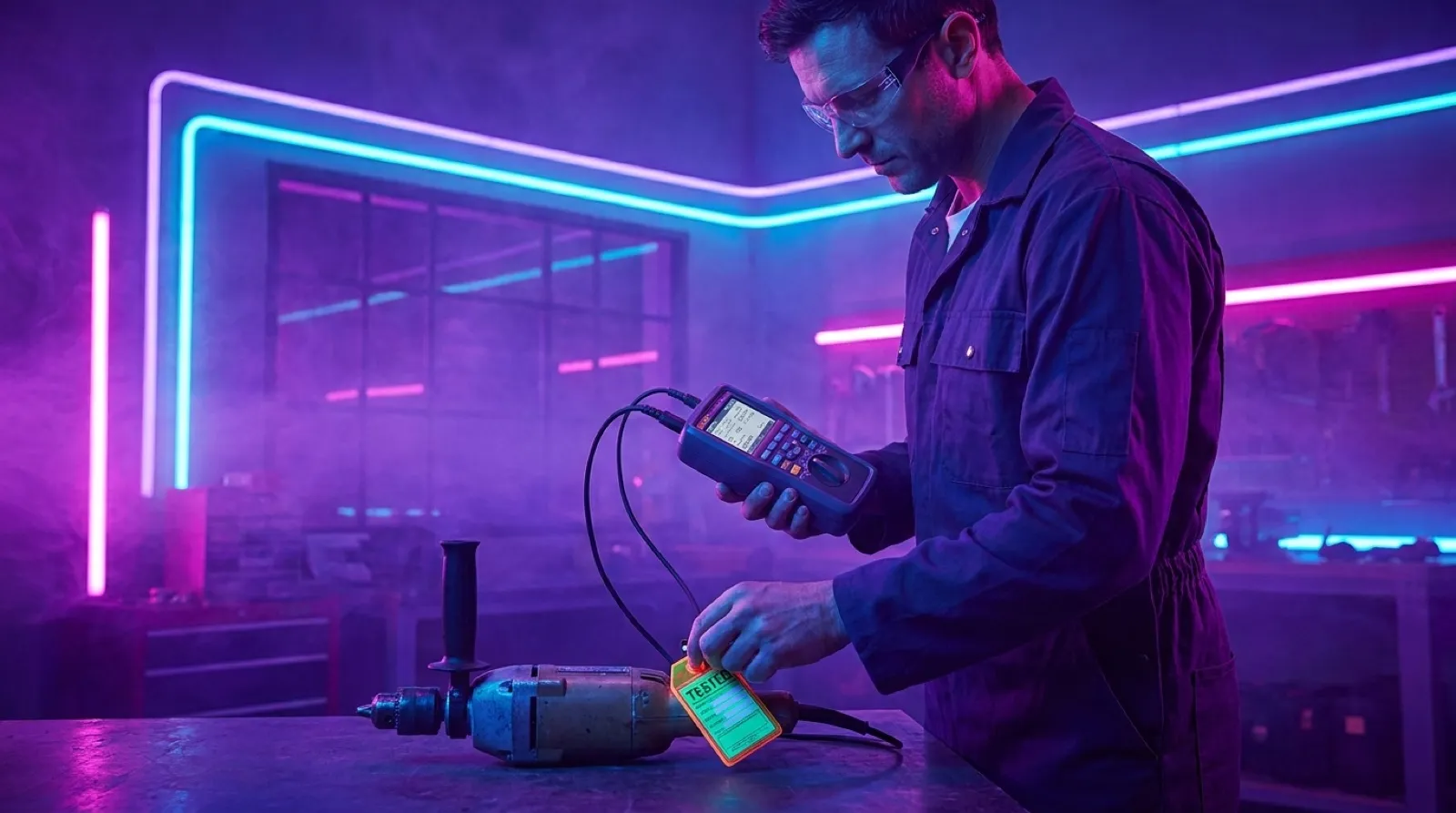
AS/NZS 3760 — the Australian and New Zealand Standard for in-service safety inspection and testing of electrical equipment — sets out the minimum requirements for testing portable electrical appliances in commercial and industrial workplaces. The standard covers inspection frequency, test procedures, pass and fail criteria, and record-keeping obligations. SynthWire Electrical provides fully compliant test-and-tag programs that meet the standard's requirements and satisfy both the Work Health and Safety Act obligations of the person conducting a business or undertaking (PCBU) and the routine audit expectations of workplace safety regulators.
What the testing process actually involves
A test-and-tag service from SynthWire is more than a visual once-over and a sticker. Every appliance goes through a structured process: visual inspection of the equipment, lead, and plug for physical damage; an earth continuity test using a calibrated PAT tester where applicable; insulation resistance testing; and, where the appliance type requires it, a leakage current test. Equipment that passes receives a dated, colour-coded tag showing the next retest date. Equipment that fails is tagged out of service with a clear fail tag and recorded in the register for your follow-up action. Nothing ambiguous, nothing left for you to interpret.
RCD testing — the step many providers skip
Residual Current Devices are the single most effective safety device for preventing electrocution from earth faults in portable equipment. AS/NZS 3760 requires that RCDs protecting portable equipment also be tested as part of a compliant program, not just the appliances themselves. SynthWire tests all RCDs in scope using a calibrated tester that measures trip time in milliseconds against the 30 mA trip threshold — the actual performance metric that determines whether the device will protect a person. We record individual RCD test results in the register, not a blanket pass/fail note. If an RCD is sluggish or fails to trip within the standard's required time, you find out at testing, not during an incident investigation.
Who needs a test and tag program — and how often
The AS/NZS 3760 testing interval depends on the environment the equipment operates in. Construction sites, demolition, mining, and outdoor environments where equipment is exposed to rough handling, moisture, or vibration require testing every three months. Workshops, factories, and other industrial environments typically require six-monthly testing. Commercial offices and retail environments with lower-risk conditions may extend to twelve months for most equipment. If your workplace spans different environments — a manufacturing floor with an attached admin office, for example — different test intervals apply to different equipment categories. SynthWire sets up your register accordingly and sends reminders when each category is due, so the compliance burden does not fall entirely on your team.
- Construction and demolition sites: 3-monthly testing cycle
- Workshops, factories, and industrial premises: 6-monthly cycle
- Offices, retail, and low-risk commercial spaces: 12-monthly cycle
- Hire equipment: tested before each hire or every 3 months, whichever is sooner
- RCDs: tested every 12 months or in line with the appliance category they protect
The register and what it does for your business
After every test-and-tag session, SynthWire provides a complete itemised register in digital format listing every piece of equipment tested, its unique asset identifier, the test date, the next due date, and the pass or fail outcome. This register is your primary evidence of due diligence under the WHS Act. If a safety regulator audits your workplace, or if an incident occurs and your duty of care is scrutinised, a clean, current, and systematic register is your most important piece of documentation. We retain a copy of every register we produce and can provide historical reports on request. We also offer an asset-labelling service if your equipment does not yet carry unique identifiers — a straightforward step that makes ongoing tracking far cleaner.
Minimising disruption to your operation
SynthWire understands that having a technician moving through a live workplace carrying test equipment and pulling plugs creates disruption. We work with your site manager or office manager to schedule testing during low-activity periods — early mornings, split shifts, or weekends where required. For larger facilities, we can stage the program across areas so a portion of the workplace is always operational. Small to medium offices are typically completed in two to three hours. Larger industrial sites and multi-building campuses receive a staged program proposal before the first visit. The goal is a complete, accurate register delivered with the least possible interruption to your people.
Frequently asked
AS/NZS 3760 covers portable and transportable electrical equipment — items that are plugged into an outlet and can be moved. Permanently hard-wired equipment is covered by separate inspection and maintenance obligations under AS/NZS 3000 and relevant workplace safety legislation, not by the test-and-tag standard. SynthWire can advise on both categories.
Failed equipment is tagged out of service with a red fail tag and recorded as a fail in the register with the reason noted. It must not be used until the fault is rectified and it is retested and passes. We can repair or arrange repair of many common faults — damaged leads, plug replacement, loose earth connections — on the same visit.
AS/NZS 3760 requires testing to be carried out by a competent person using calibrated equipment and following the documented test procedures in the standard. In practice, most businesses engage a licensed electrical contractor or a specifically trained and certified tester. SynthWire holds the relevant licences and carries NATA-traceable calibrated instruments, which provides a clear and auditable chain of competency.