Australia has the highest per-capita rooftop solar penetration in the world, and a significant proportion of those systems were installed during the subsidy-driven rush of the early 2010s on equipment that is now approaching or past its design service life. Even newer systems installed during the second wave of uptake in the 2020s can suffer performance losses that go undetected for extended periods when monitoring is inadequate or not reviewed regularly. The challenge with solar system degradation is that it is usually gradual — a panel that has lost 15 percent of its output still appears to be working fine from the ground. The energy monitoring app still shows generation numbers. The problem only becomes visible when those numbers are compared against what the system should actually be producing for the local irradiance conditions on that day. SynthWire does that comparison methodically, with calibrated equipment, not a quick visual inspection from the driveway.
DC isolator inspection: the safety issue that cannot wait
DC isolators — the switches mounted on the roof near the solar panels that allow the DC string circuit to be de-energised for maintenance — have been subject to significant safety concern in Australia. A number of isolator models installed during the early years of the solar boom were found to develop internal arcing faults under certain conditions, and several house fires have been attributed to failed rooftop DC isolators. The Clean Energy Regulator and Clean Energy Council have issued guidance recommending regular inspection of DC isolators on systems installed before 2018 in particular. SynthWire inspects every DC isolator on every maintenance visit: checking for discolouration, melting, moisture ingress, loose connections, and arc tracking on the internal contacts. Where a DC isolator is found to be compromised or is of a recalled or flagged model, replacement is recommended and quoted the same day.
Inverter diagnostics and fault clearing
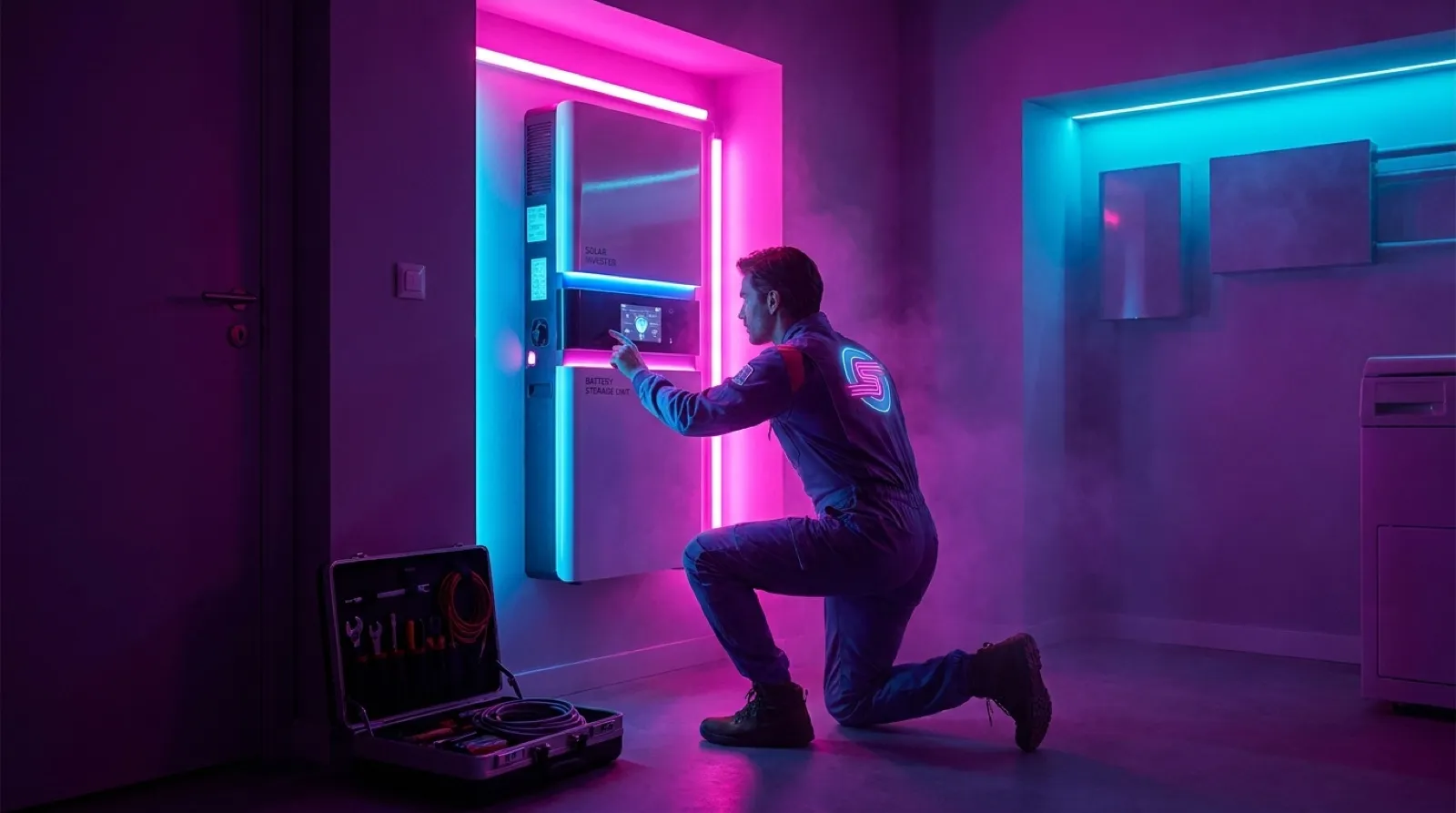
The inverter is the electronic heart of a solar PV system, converting DC power from the panels into 230V AC power for your home and the grid. Modern string inverters log detailed operational data and generate fault codes that are accessible through the manufacturer's monitoring portal — but those fault codes are only useful if someone is reviewing them. SynthWire connects to your inverter's monitoring system, downloads the fault history, and interprets what has been logged. A string inverter that has been regularly throwing 'isolation fault' or 'grid fault' errors and recovering may indicate a deteriorating panel junction box, a damaged cable, or grid voltage events at your connection point. An inverter running at below-rated conversion efficiency may have a failing capacitor bank. We diagnose from the data first, then confirm physically, which keeps the job focused and the quote honest.
For battery storage systems — whether AC-coupled (a Powerwall, Alpha ESS, or similar bolted onto an existing solar system) or DC-coupled (a hybrid inverter with a connected battery bank) — maintenance includes checking the battery management system logs for cell balance issues, verifying that the system is correctly switching between charge and discharge modes, confirming that backup power functionality is tested and operational, and reviewing the current State of Health data from the BMS. Battery capacity naturally degrades over time, but the rate of degradation is affected by operating parameters — charge voltage limits, depth of discharge, and temperature exposure. Where a battery system is operating outside the manufacturer's recommended parameters, SynthWire adjusts the settings to optimise longevity.
Panel inspection and performance testing
Visual panel inspection from the ground using binoculars identifies obvious physical damage — cracked glass, delamination, visible cell cracking, and bird or debris impact. However, a significant proportion of panel performance losses are not visible to the eye. Potential induced degradation (PID), hot spots caused by shading on a single cell within a panel, failed bypass diodes, and cell micro-cracks caused by mechanical stress during installation or wind loading may produce no visible signs while reducing panel output by 10 to 25 percent. SynthWire uses thermal imaging on systems where performance data indicates under-production, identifying hot spots and failed bypass diodes that would otherwise require a full IV curve trace to find. For string-level diagnostics, we measure open-circuit voltage and short-circuit current at the combiner or inverter input terminals and compare measured values against the manufacturer's specifications corrected for module temperature and irradiance.
Monitoring, reporting, and ongoing performance tracking
A properly configured monitoring system is the difference between knowing your solar investment is performing and hoping it is. SynthWire sets up or audits your monitoring configuration, ensures your inverter is correctly connected to the monitoring portal, and reviews historical generation data against the system's predicted yield for your location and system size. Where monitoring data is incomplete or unavailable because the inverter's Wi-Fi connection has been dropping out — a surprisingly common issue — we reconfigure the connection, update the inverter firmware if applicable, and restore data continuity. At the end of every maintenance visit, we provide a written report covering all findings, any work completed, and any recommendations with priority ratings. You should not have to guess at whether your system is healthy — you should know.
- DC isolator inspection and replacement of compromised or recalled units
- Inverter fault history download and diagnostic interpretation for string and hybrid inverters
- Battery BMS log review, cell balance assessment, and operating parameter optimisation
- Thermal imaging for hot-spot detection and failed bypass diode identification
- String-level open-circuit voltage and short-circuit current measurement
- Monitoring system audit and reconfiguration for complete generation data continuity
- Written inspection report with prioritised findings and recommendations
Frequently asked
The Clean Energy Council recommends a professional inspection every two years for residential systems and annually for commercial installations. In practice, SynthWire recommends a minimum annual check for systems with DC isolators manufactured before 2018, systems over ten years old, any system that has experienced a storm event or significant weather, and systems that have not been monitored regularly. Battery storage systems benefit from annual inspection because BMS firmware updates and operating parameter reviews can meaningfully extend battery service life. If your system has never been professionally inspected since installation, treat that as urgent regardless of apparent performance.
Not necessarily, and this is one of the most common misconceptions SynthWire encounters. Monitoring apps show what the inverter is reporting, and an inverter that is functioning within its error-handling parameters will report normal-looking generation numbers even when string performance has degraded noticeably. The relevant comparison is not 'is it generating something' but 'is it generating what it should be generating given today's conditions.' A system that should be producing 25 kWh on a clear summer day but is actually producing 18 kWh looks fine on the app unless you know what the expected number is. SynthWire benchmarks measured performance against predicted yield using your system's rated capacity, location, orientation, and local irradiance data.
Yes, and this is a significant part of what we do. SynthWire is not tied to any single solar brand or installer network, which means we can assess and service any AS/NZS 5033-compliant system regardless of who installed it or when. We can also access the manufacturer monitoring portals and diagnostic tools for most major inverter brands including Fronius, SMA, SolarEdge, Enphase, Growatt, and Sungrow, among others. If your original installer is no longer trading — which is unfortunately not uncommon in the solar industry — SynthWire can pick up the ongoing maintenance and monitoring relationship from that point forward.