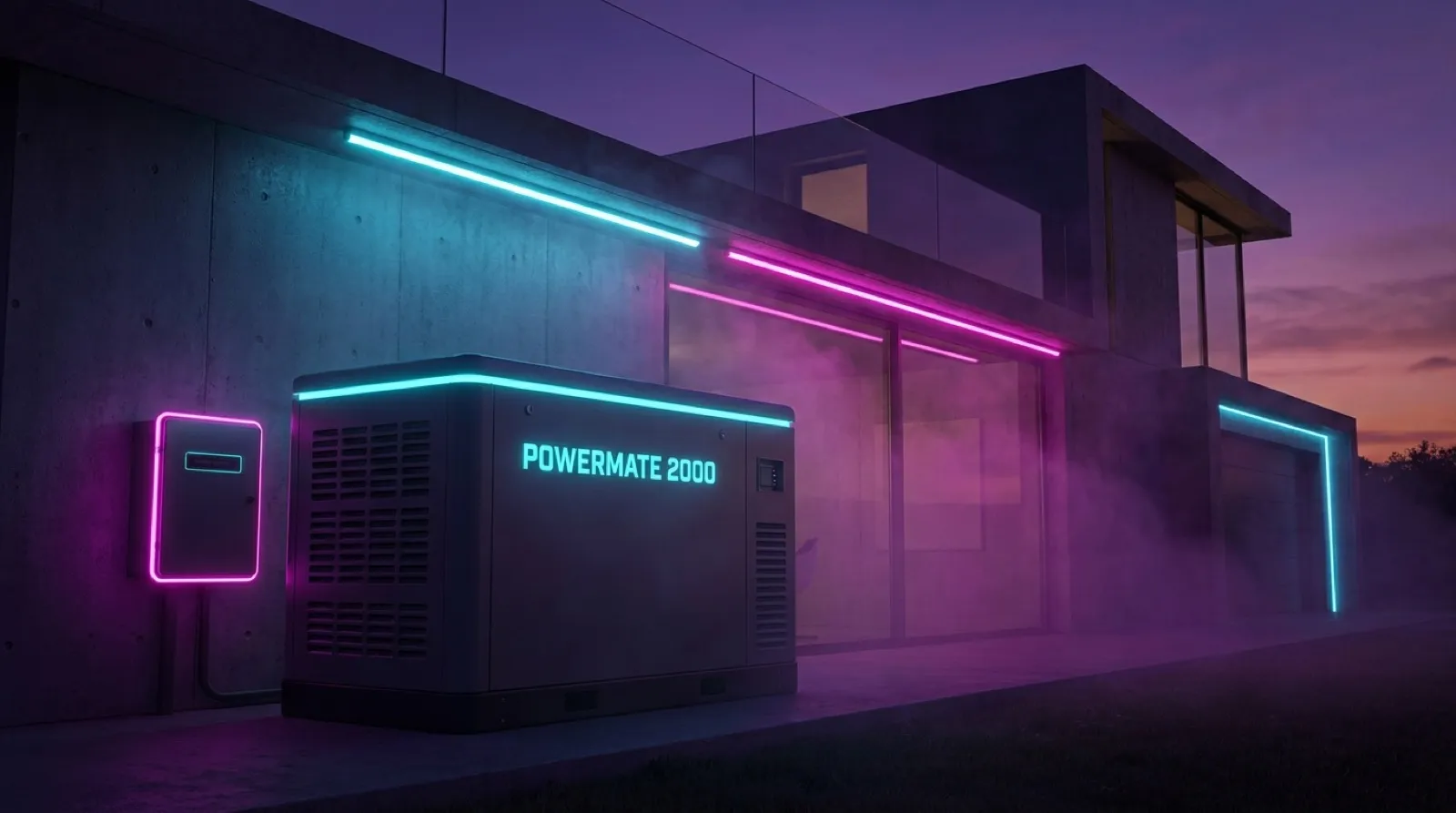
A grid outage is a minor inconvenience for most households. For a home with a family member on powered medical equipment, a business with refrigerated stock, a data centre rack, or a farm with motorised irrigation, it is a genuine emergency. SynthWire Electrical (Lic. EC-1985) designs, installs, and commissions standby and backup generator systems for residential, commercial, and light industrial premises across the region. Every installation is built to AS/NZS 3000, includes an automatic or manual transfer switch that isolates the generator from the DNSP network (a legal requirement, not an option), and is load-tested and certified before handover.
Sizing: getting the generator right for the load
Generator undersizing is the most common and most expensive mistake in backup power installations. A generator that is too small will overload under starting current from motors (air conditioning compressors and refrigeration equipment draw three to seven times their running current at startup), causing nuisance tripping and, over time, damage to both the generator and the connected equipment. We carry out a load analysis before specifying any generator — we list every load you want to run simultaneously, identify the motor starting loads, and specify a generator with sufficient continuous kVA rating and sufficient subtransient reactance to handle those starting spikes. We also account for future loads you are likely to add. Buying a generator once and buying the right one is almost always cheaper than upsizing in two years.
Diesel generators are the standard choice for standby applications — they are robust, fuel-stable for long-term storage, available in a wide range of sizes, and well-supported for service in Australia. Petrol generators are appropriate for portable or occasional-use applications but are not suited to automatic standby duty in most commercial or residential critical-load applications. LPG and natural gas generators are available where reticulated gas supply makes them convenient, and we specify them where the fuel supply and application suit. We do not have a commercial relationship with any generator manufacturer that influences our recommendations.
Automatic Transfer Switches (ATS)
An Automatic Transfer Switch monitors the incoming DNSP supply continuously. When voltage or frequency falls outside the acceptable band — indicating a grid outage — the ATS signals the generator to start, waits for the generator to reach stable voltage and frequency (typically ten to thirty seconds), and then transfers the connected loads from the DNSP supply to the generator supply. When grid power is restored, the ATS transfers the loads back and shuts the generator down after a cool-down period. The entire sequence is automatic and requires no human intervention. Critically, the ATS uses a mechanical and electrical interlock that physically prevents the generator and the DNSP supply from being connected to the load simultaneously — the anti-islanding requirement that protects DNSP line workers from a generator back-feeding an apparently dead network. This interlock is not optional under AS/NZS 3000 and the DNSP connection standards; any installation without it is illegal and creates serious safety and liability risk.
Critical load panels and selective backup supply
For most residential and commercial premises, a generator that supplies the entire electrical load is expensive and often unnecessary. A more cost-effective approach is a critical load panel — a sub-board fed from the generator supply via the ATS that contains only the circuits designated as essential: medical equipment, refrigeration, emergency lighting, a subset of power outlets, and heating or cooling. Non-critical loads such as air conditioning in unoccupied areas, decorative lighting, and non-essential appliances remain off during the outage. SynthWire designs critical load panels as part of the generator installation, clearly documenting which circuits are generator-backed and which are not, and labelling the sub-board accordingly. This approach reduces generator size requirements and fuel consumption significantly without compromising the protection of loads that genuinely matter.
Fuel systems, acoustic enclosures, and site considerations
Generator installation involves more than running cable. The generator needs a stable, level concrete pad or anti-vibration mounting system sized for the unit's weight and operating loads. Diesel generators require a fuel system — either a built-in base-tank or a remote day-tank with an appropriate fuel transfer pump — compliant with Australian Standard requirements for fuel storage. In residential areas or on commercial premises where noise is a constraint, acoustic enclosures significantly reduce the operational noise level, and we specify these where the site and council requirements demand them. Exhaust must be routed to discharge away from building openings and in a direction that does not create a nuisance for neighbours. We manage all of these site considerations as part of the installation scope — we do not leave the civil or fuel-system work to chance.
Load testing, commissioning, and maintenance
A generator that has never been tested under load is a generator whose reliability is unknown. Every SynthWire generator installation is commissioning-tested under a representative load before handover — we apply a resistive load bank if the site loads are not available at the time of commissioning, or we run the generator under actual site load where this is practical. We measure and record voltage, frequency, and current on all phases during the load test. We carry out the ATS transfer sequence test — power removed, generator start confirmed, transfer confirmed, power restored, transfer back confirmed, generator cool-down confirmed. You receive a commissioning test record with the handover documentation. We also recommend (and can arrange) a maintenance schedule that includes annual load testing, oil and filter service to the manufacturer's intervals, fuel quality check, battery condition check, and ATS exercise cycle verification.
- Generator sizing and load analysis for residential, commercial, and light industrial
- Diesel, petrol, LPG, and natural gas generator installation
- Automatic Transfer Switch (ATS) supply and installation — DNSP anti-islanding compliant
- Manual transfer switch installation for portable generator connection
- Critical load panel design and installation
- Concrete pad, anti-vibration mounting, and exhaust routing
- Fuel system installation — base tanks and remote day-tanks
- Commissioning load test, ATS transfer test, and full documentation
Frequently asked
It depends on what you need to run simultaneously. A typical three-bedroom home running a refrigerator, a few lights, a television, phone chargers, and a gas hot water system with an electric ignition can manage on a 5–8 kVA generator. Add a ducted reverse-cycle air conditioner and you typically need 10–15 kVA to handle the compressor starting current. A fully-loaded home with electric cooking, hot water, and climate control may need 20 kVA or more. We carry out a proper load analysis rather than guessing — the right answer is specific to your home and your priorities.
No. Direct connection of a generator to a switchboard without an approved transfer switch that positively isolates the generator from the DNSP supply is prohibited under AS/NZS 3000 and by every DNSP in Australia. A generator back-feeding an apparently dead network line is a lethal hazard for line workers and for neighbours whose own installations are not expecting voltage. The ATS interlock is a legal requirement, not an optional extra, and any licensed electrician who installs a connection without one is in breach of the wiring rules.
Manufacturer service intervals vary, but as a general guide, diesel standby generators require an oil and filter change every 200–250 hours of operation or annually (whichever comes first), a coolant system check annually, a fuel quality and tank inspection annually, and a load test and ATS exercise at least quarterly. Batteries for the electric start system are typically replaced every two to three years. A generator that sits in a shed for two years untested is not a reliable backup — regular exercise cycles and serviced maintenance keep it ready when you actually need it.