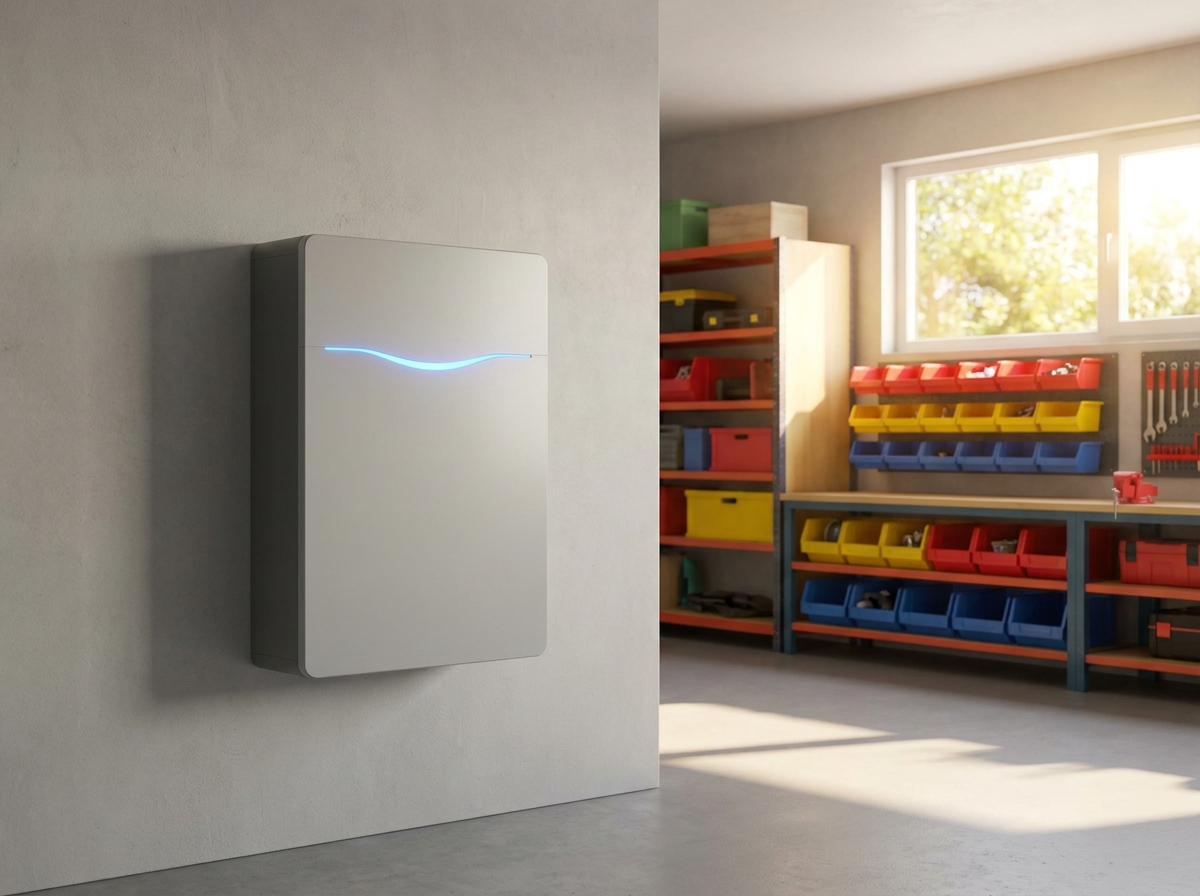
Battery storage is not a product decision — it is a system engineering decision. The correct chemistry, cell format, battery management system (BMS), power conversion system (PCS), and thermal management architecture depend entirely on the use case: peak shaving, FCAS market participation, solar self-consumption maximisation, demand response, or backup power. Apex Grid does not sell a battery brand. We engineer a storage system for your specific dispatch profile, revenue target, and network constraints, then procure the component stack that delivers that outcome at the lowest total cost of ownership across the warranted asset life.
Chemistry and Technology Selection
Lithium iron phosphate (LFP) is the dominant chemistry for stationary storage in Australia due to its cycle life exceeding 6,000 cycles, inherent thermal stability, and rapidly declining capital cost trajectory. Nickel manganese cobalt (NMC) chemistry remains appropriate where volumetric energy density is a hard constraint — typically in space-constrained commercial or transport-adjacent applications where LFP's larger footprint per kilowatt-hour is impractical. Apex Grid is chemistry-agnostic and technology-agnostic: we specify what the use case requires, not what a distribution agreement or inventory position incentivises. All battery systems are tested in accordance with IEC 62619 and UN 38.3 transport certification, and must satisfy the requirements of AS/NZS 5139:2019 for installation in Australian environments, including fire detection integration, thermal runaway containment, and mechanical protection of battery modules.
- Residential and small commercial BESS from 10kWh to 100kWh with VPP-capable hybrid inverter integration
- Commercial behind-the-meter BESS from 100kWh to 2MWh for demand charge elimination and TOU arbitrage
- Grid-scale BESS from 2MWh to 200MWh for FCAS market participation, network support, and renewable firming
- AS/NZS 5139 compliant installation with integrated fire detection, suppression, and thermal runaway containment
- Battery management system (BMS) integration with energy management system (EMS) for stacked-value dispatch optimisation
- AEMO FCAS registration support for grid-scale assets including unit commitment modelling and AEMO dispatch integration
- Cell-level warranty structuring negotiated directly with tier-one manufacturers — not passed through distributor standard terms
Revenue Optimisation and Dispatch Strategy
A battery storage system configured to perform only a single function — solar self-consumption, for instance — leaves substantial revenue on the table throughout the day and overnight. Apex Grid's energy management system is designed for stacked-value dispatch: the EMS simultaneously optimises for self-consumption, demand charge peak avoidance, wholesale energy arbitrage during high-price intervals, and FCAS market participation, with the dispatch priority hierarchy configured according to your contracted obligations, network tariff structure, and financial return targets. For grid-scale assets, the EMS integrates directly with AEMO's 5-minute dispatch cycle through a registered Market Ancillary Service Provider arrangement. Co-optimised bidding across energy and FCAS markets is managed algorithmically, with human oversight from our trading desk during high-volatility periods.
Grid-Scale BESS: FCAS and Network Support
Frequency Control Ancillary Services (FCAS) represent the primary revenue stream that makes large-scale battery storage commercially viable in the NEM. The NEM procures eight FCAS services — raise and lower regulation, and six contingency bands at fast, slow, and delayed response timescales. Grid-scale batteries hold a structural competitive advantage in regulation and fast contingency services due to their sub-second response speed, which outperforms synchronous generation on ramp rate. Apex Grid structures grid-scale BESS projects with FCAS participation from day one of commissioning: this includes registration as a Market Ancillary Service Provider, co-optimised energy and FCAS bid modelling calibrated to your asset's state of charge constraints, and integration with wholesale trading algorithms that adjust bid strategy in response to real-time market conditions.
Network Support and Control Ancillary Services (NSCAS) agreements with Transmission Network Service Providers are evaluated as an additional revenue layer for appropriately located grid-scale assets. NSCAS contracts provide contracted payment for voltage and frequency support that is independent of spot market conditions, offering revenue diversity that strengthens project finance bankability. Every Apex Grid battery system is delivered with a 10-year operations and maintenance agreement covering preventive maintenance, remote monitoring, firmware management, cell health trend reporting, and emergency response. Capacity degradation is tracked against the warranted fade curve quarterly. Where cell replacement is required under warranty, Apex Grid manages the OEM claim and replacement logistics on your behalf.