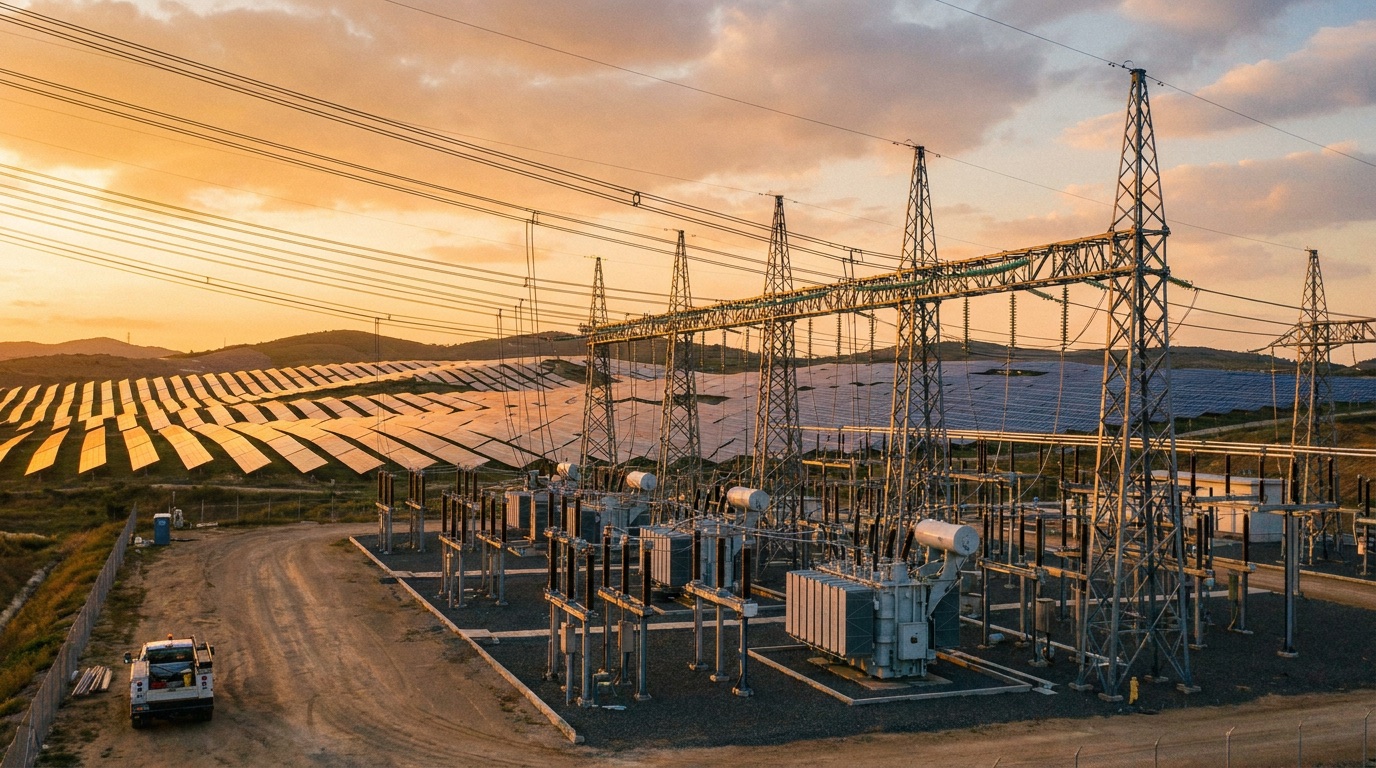
Grid connection is the critical path for every large-scale renewable and storage project. It is also the phase where projects most frequently stall, blow budget or fail to reach their registered capacity. The reasons are well-documented: inadequate power systems modelling at the application stage, underestimation of protection coordination complexity, failure to engage early with system strength requirements and inexperienced handling of the AEMO technical rules negotiation. Apex Grid's Grid Interconnection service exists to remove these failure modes from your project. We have run the NEM connection process for generation projects from 5 MW to 150 MW and we understand every leverage point in the DNSP and AEMO assessment pipeline.
Power Systems Studies and Technical Documentation
A compliant connection application requires a suite of power systems studies prepared to AEMO and network service provider specifications. Apex Grid's engineering team delivers load flow analysis, short-circuit fault level studies, protection coordination studies and power quality assessments using PSS/E, DIgSILENT PowerFactory and PSCAD simulation environments. For inverter-based resources — solar, wind, BESS — we also prepare the electromagnetic transient (EMT) models required under the Generator Performance Standards and submit them through the AEMO model registration portal. These models are often the longest lead-time item in a connection program. Starting them late is the single most common cause of project delay.
System Strength and Fault Level Compliance
System strength is the defining technical constraint for inverter-based generation in the NEM. AEMO's System Strength Impact Assessment methodology requires each new connecting plant to demonstrate it does not adversely impact the fault level at its connection point or at designated fault level nodes. Where system strength is deficient, the connecting party must either install Synchronous Condensers, grid-forming inverter technology or Fault Level Limitation Equipment — all of which carry material capital and operating costs. Apex Grid quantifies system strength obligations early in the process, allowing these costs to be included in the project development budget before equity commitments are made rather than discovered post-financial close.
- Preliminary connection enquiry management and network capacity confirmation
- Load flow, fault level, protection coordination and power quality studies to AEMO and NSP specifications
- PSCAD and PSS/E EMT model preparation and AEMO model registration
- Generator Performance Standards negotiation and compliance demonstration
- System Strength Impact Assessment coordination and mitigation design
- Protection relay specification, settings verification and DNSP witness testing
- AEMO Registered Participant application and metering installation management
- First dispatch coordination and transitional technical requirements compliance
AEMO Registration and Commissioning
Registration as an AEMO Market Participant — whether as a Generator, Market Small Generator Aggregator or Scheduled Load — requires a parallel documentation stream to the physical connection process. Apex Grid manages both simultaneously. Our team prepares the Registration Application, coordinates the Metering Installation inspection and certification, and manages the Pre-commissioning Notification and Testing Notification processes with AEMO's Registration and Metering team. We attend commissioning milestone inspections as the technical representative and manage the punch-list resolution process with equipment vendors and the NSP.
Reactive power management is a frequently underestimated dimension of the connection process. AEMO's Generator Performance Standards require that generating systems maintain a power factor of between 0.9 lagging and 0.95 leading at the connection point across their full operating range. For large inverter-based systems, meeting this requirement across the full generation and export range — including at low irradiance or partial state of charge — requires careful inverter mode configuration and, in some network locations, reactive power compensation equipment at the transformer primary. Apex Grid's power systems team tests reactive power compliance in simulation before equipment is procured, avoiding costly field modifications to inverter settings or the late addition of capacitor banks that have derailed commissioning timelines on projects managed without this foresight.
The interconnection phase should be the last thing that stops a project from generating revenue. With Apex Grid managing the connection program, it will not be. Our team has navigated every variation of the AEMO and DNSP assessment process — including contentious system strength negotiations, disputed protection settings and metering disputes — and we deliver connection outcomes within the contracted program, not around them.